Journalism of Courage
 4 min read



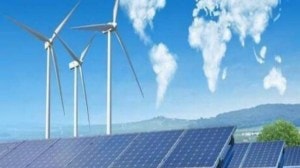
The world has been in a flap ever since the first Intergovernmental Panel on Climate Change IPCC released its first report on climate change this February. The developed countries have come around to the view that an expensive plan to cut carbon emissions now may be much less than the price of inaction in the long run. The first phase of the Kyoto protocol that called for developed countries to cut emissions by 5 per cent below 1990 levels is ending in 2012. The discussions at the G-8 meet in Germany will set the tone for the plan post 2012. Much heat is expected today as the 8216;outreach nations8217; five developing countries put up an aggressive defence against the richest countries. Sonu Jain explains
8226; Why is climate change being discussed in G-8?
Angela Merkel, president of Germany, is pushing the G-8 nations to cut emissions by 50 per cent, from 1990 levels, by the year 2050. This would set a cap of 2 degrees Celsius on global temperature increases, the tipping point which will lead to droughts, floods and rise in sea levels. The levels set in the first Kyoto period 5 per cent of the 1990 level are no longer seen as enough.
8226; What is the US8217;s role?
George Bush, who for years did not acknowledge climate change, now says, he wants 8220;substantial8221; reductions in global emissions in the long term. The rider is, he wants to do it without shackling his economy to any binding targets. He wants to convene talks on targets for emissions cuts as long as fast-growing developing countries such as China and India are bound into the process.
Bush said his plan would 8220;fold into the UN framework8221; on tackling climate change. Many European nations had expressed concerns that Bush8217;s plan might undermine UN talks on a global deal to replace the Kyoto Protocol. The US is the only G8 nation not a signatory to Kyoto.
8226; Why do developed countries want India and China to be included?
G-8 nations are realising that they can8217;t solve global problems without the help of the new economic powers. China is already the fourth-largest economy and the second-largest producer of greenhouse gases. India is number four after the US, China, Russia.
8226; What is India8217;s stand?
Prime Minister Manmohan Singh has said that the Outreach countries would press for acceptance of the widely-accepted position of 8220;common but differentiated8221; responsibility and respective capabilities between developed and developing countries. He said while fighting the problem of climate change was imperative, it should not be at the cost of stunting the process of development in developing countries.
8226; Is India justified in saying this?
In all the major energy intensive sectors 8212; steel, aluminium, fertiliser, paper, cement 8212; levels of energy efficiency are at global levels, India claims. In the cement sector, the energy efficiency of Indian plants is among the world8217;s highest.
India contributes only 4 per cent of the total global green house gas emissions, and in terms of per capita emissions it is about 23 per cent of the global average.
India has set up a Bureau of Energy Efficiency, done power sector reforms, promoted clean coal technologies and is now focusing on renewables. The outcomes of all these initiatives is that India8217;s primary energy sector growth rate is 2.76 per cent per year, against GDP growth exceeding 8 per cent.
8226; What can India negotiate for at Berlin?
India has been pressing at the UN Framework Convention on Climate Change for collaborative development of clean technologies and immediate transfer of existing green technologies. There is need to reach an agreement on IPRs on technologies necessary on the same lines as compulsory licensing of pharmaceuticals for addressing epidemic disease. Collaborations could be funded by a Venture Capital Fund, located in a multilateral financial institution, with the resulting IPRs being held by the Fund, and worked at concessional cost in developing countries.

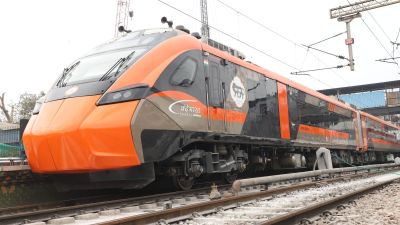
Railway Minister Ashwini Vaishnaw on Saturday said Vande Bharat Sleeper trains will be introduced across all states, including Kerala. He made the comments during a press briefing at New Delhi railway station after inspecting the Howrah–Guwahati–Howrah Vande Bharat Sleeper rake, which is set to be launched this month.