Journalism of Courage
 4 min read



Education, unlike most other sectors, has not been touched by liberalisation. The removal of the license-permit raj released industry from the shackles that had prevented its growth. Telecom blossomed after entry into the sector was liberalised. The aviation sector gave consumers access and low prices. But education has been left mostly untouched.
Consider this. To open a school an association or group of individuals first has to register as a society with a non-profit motive. Next, the society needs to apply for a license called the 8220;Essentiality Certificate8221; EC. The EC is like the industrial license of the old days and is issued if the government decides that there is a need for another school in the area.
The number of ECs the Department of Education of a state decides to issue each year for each zone and each kind of school 8211; primary, upper primary and secondary 8211; are decided by the department in an arbitrary manner, without any objective criterion. It is supposed to depend on its estimate of demand and supply made by the department.
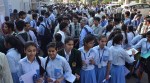
This restriction on supply often creates a situation where there are more children in the school-going ages than the number of seats available in schools. Students then have to queue up for school admissions, little children have to take entrance interviews and parents have to pay capitation fee. The well connected always have recourse to political and social networks.
This is reminiscent of telephone connections in the days before telecom liberalisation. The story does not end there. After obtaining an EC, the school gets land, then applies for recognition, then affiliation with a board, and if it wants to become an aided school, for aid to the government who then pays teachers salaries. After this the school management pays bribes to school inspectors every year. It often takes more than Rs 1 crore and between 3 to 17 years to achieve all these.
It is hardly surprising that managements of existing schools today do not want the license raj to be removed. They have already paid the costs. After all, when did the incumbents in any closed club want entry to be freed up for all? Through restrictions on entry, private schools have acquired monopoly status.
The policymakers 8211; politicians and bureaucrats 8211; whose children get to study in private schools, thanks to their connections and money, are not too keen to take away the exclusivity of such education.
The situation with higher education is no different. Both Indians and foreigners are prevented from opening universities and offering education regardless of how large the demand might be. The rich can always put money in and send their children to universities abroad. If the government allowed universities like Harvard, MIT and Stanford, which are reported to be interested in opening campuses in India, with lakhs of seats at a cost much lower than what it takes to send a child abroad, higher education would be accessible for lakhs of middle class children who cannot afford to go abroad today.
It is again not surprising that our policymakers, who can afford to send their children abroad and get them degrees from universities like Harvard and MIT, are not keen to have such campuses in the country.
Until the netas and the babus have the will to crush entrenched interests in the sector, take away the clear advantages their children have, and liberalise this sector, good education in India will remain the exclusive domain of the rich and privileged.