Journalism of Courage
 6 min read



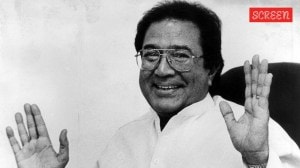
Pramod Mahajan believed that he was destined to be prime minister. Perhaps it was over-confidence. That was shaken by the BJP8217;s defeat in 2004. But not for long. He soon recovered and began networking. He used to say that very few politicians and parties understand the power of a negative vote. People were bound to be frustrated soon with Congress rule. It was necessary therefore to generate an alternative programme that could attract and garner those negative votes.
However, that would not be possible, he used to say, by reinventing Hindutva. You cannot depend on the same shibboleths which have been consumed by the electorate. Rath yatra and hyper-Hinduism were justified in the early nineties, but would not inspire people again. Moreover, the BJP-led government had not built the Ram Mandir, had not introduced a uniform civil code and had not amended the Constitution to suit the ideology of Hindutva. Pramod used to say that the BJP had failed to deliver on its promise and it was useless now to invoke the same campaign strategy.
It was in this context that his famous 8220;India Shining8221; slogan came. He thought that the time had come to show to the Indian people that the BJP could be a modern, technology-friendly and ultra-liberal party. That it must not fight shy of being described as 8220;corporate8221;. He thought the future belonged to corporates and Indian giants should compete with global giants, sometimes by collaborating, at other times by competing. For him the politics of Hindutva was passe and right-wing economic policies were in.
There were a few who thought that Pramod was moving with the times and deserved a fair hearing in the party. But the party which had grown in the conservative-traditional mould could not be convinced. There were others who were convinced but felt that rightist economic policies would not attract the masses. For getting votes, either you have to be a populist of the 8220;garibi hatao8221; variety or inspire the fire of ancient traditions and dharma! Many leaders tried to reconcile these two viewpoints. Pramod said that it would not be possible to do so and that is why he became a persona non grata in the Sangh Parivar.
It would not be possible for the BJP to replace Pramod Mahajan. His aggressive pragmatism and accompanying corporate lifestyle was enough to put off many. There are many 8220;socialist types8221; in the Parivar who would rather be in Medha Patkar8217;s movement rather than in development politics. There are hardliners who oppose multinationals and, in the name of Swadeshi, talk of political stagnation. Then there are those who, in the name of simplicity, defend poverty. Pramod had grown impatient with them. The more impatient he became, the more enemies he made. Many may not appreciate it to be said, but he had become a man in a hurry, almost like Sanjay Gandhi.
It would not be possible for the BJP to find anybody else who could build an alliance with a party like the Shiv Sena. It may sound hyperbolic to say this but it is true that only Pramod could have managed a maverick character like Balasaheb Thackeray and dealt with both Uddhav and Raj in a kind of political trapeze act. Indeed, if the affairs of the Sena were handed over to him, he could have handled them more deftly. But when the Sena was imploding, the BJP too was passing through a fratricidal crisis.
Today the Shiv Sena is split without any hope of reuniting. Mahajan had established an equation of sorts with all the quarelling Thackerays and also with the former chief ministers of the saffron alliance, Manohar Joshi and Narayan Rane. Now Rane has joined the Congress and is waiting in the wings to become chief minister. Raj has left and formed his own party. There is nothing left of the Sena to have an alliance with.
Though Mahajan was born a brahmin, he was neither proud of it nor ashamed of it. That is why he could easily mingle with OBC and dalit leaders. Having grown in Ambajogai, a small village in Marathwada, former Nizamabad, he was fluent in Urdu and Hindi. Though his party emphasised Sanskritised Hindi, Mahajan could easily cross the language barrier while conversing with the Muslim electorate or with the Muslim leadership. Perhaps that also helped him to evolve broader, even secular, but right-wing politics. India does not have an articulate and outspoken right-wing politician who has thrown away communal baggage. 8220;Shining India8221; could have changed that. The slogan may have misfired but the agenda has not.
He was clearly upset with L.K. Advani8217;s remarks on Mohammad Ali Jinnah. He could not understand what had provoked Advani to make the observations he made. He thought that the Jinnah episode would keep reverberating and make the party vulnerable because most Indians, including Indian Muslims, did not appreciate the divisive politics of Jinnah. Many of them believed that they had to suffer a secondary status because of Partition and they held, not Gandhiji, but Jinnah responsible for it. He felt that the blunder was committed by no less than his mentor, icon and leader.
Mahajan was emerging as a leader of the economic and political right, but without the conservative contours of Hindutva. There is nobody who is able
to take that line further. Mahajan has left behind a line but
not a legacy.
kumar.ketkarexpressindia.com