Journalism of Courage
 6 min read



The Battle for Africa
While Minister for State for External Affairs Anand Sharma is bravely flying the flag in Africa, India is yet to match the relentless momentum behind the Chinese diplomatic onslaught in the continent.
President Hu Jintao has just completed his second visit to Africa in two years. Trailing behind him is Japanese Prime Minister Junichiro Koizumi, who was in Africa this week.
Emerging as a hot diplomatic destination, Africa is beginning to break out of its old colonial connections to Europe and waking up to the new economic giants in Asia. India, however, is some distance away from catching the African wind. If you discount Mauritius for a moment and the non-aligned summit in Durban in 1998, it is almost a decade since an Indian Prime Minister went to Africa.
Throughout his trip, which took him from Nigeria in the west to Morocco in the north to Kenya in the east, Hu projected a five-point programme that would lead to strategic partnership between China and Africa. Beijing8217;s intensive diplomacy in Africa is expected to culminate in a China-Africa summit later this year in Beijing. The China Africa forum set up a few years ago has already held three ministerial level meetings.
While China is purposefully working towards this year8217;s planned summit-level conclave, Japan has joined the race for oil and influence in Africa. Koizumi, who was in Ethiopia and Ghana, is the first-ever Japanese prime minister to visit these countries.
While Japan8217;s leaders cannot be blamed for neglecting Africa, India has no excuse for not having prime ministerial visits to Africa, which is part of India8217;s extended neighbourhood.
Anand Sharma, who has been in Africa three times since he came to South Block a few months ago, is trying to make up. He is heading one more time shortly to attend the meeting of Team 9 8212; a group of West African countries.
The Foreign Office says India8217;s effort is focused on consolidating relationships with various sub-regions of Africa. When asked about China8217;s summit with African leaders, officials say India is working hard to creating a similar institutional mechanism for India8217;s engagement with Africa as a whole.
Oil and Militants
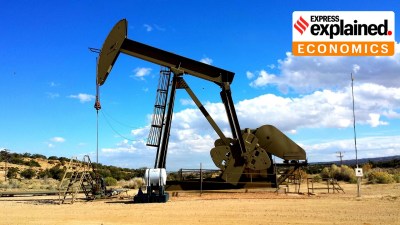
The search for oil, which tops the Chinese national security agenda, figured prominently during President Hu8217;s latest trip to Africa. Days before he was in Nigeria, China National Offshore Oil Corporation CNOOC, China8217;s largest offshore oil producer by output, bought for US60 million a 35 per cent stake in a venture to explore oil in the Niger Delta.
Earlier in 2006, CNOOC bought a 45 per cent share in Nigeria8217;s undeveloped Akpo field for 2.27 billion. State-run China Petroleum 038; Chemical Corporation has stakes in three oil blocks in Nigeria, two of which haven8217;t started production, while one produces 4,000 barrels a day of crude.
Yet China8217;s growing economic profile in Nigeria and West Africa is not without problems. A militant group called 8216;8216;Movement for the Emancipation of the Niger Delta8217;8217;, fighting against foreign companies, has warned Beijing that its nationals in the oil business would be legitimate targets in their campaign.
The Niger Delta has been in the grip of political unrest for decades. While people of the region live in immense poverty, their ire has increasingly focused on the foreign oil companies which stand to earn billions of dollars from local resources.
As India follows China in Africa in search of oil, Delhi should be fully aware of the potential dangers. Even more important for India is to develop an enduring framework of cooperation with Africa that is sensitive to the human conditions there and focuses on capacity building rather than mere extraction of energy and mineral resources.
A sweetheart deal in Kenya
While China8217;s interest in West African oil has been widely noted in India, China8217;s entry into East Africa 8212; which forms a part of the Indian Ocean littoral 8212; is bound to raise some important questions in New Delhi.
Oil experts believe that a petroleum-bearing belt stretches from the Gulf into East Africa. Betting on this thesis, the CNOOC has embarked on exploration of the unproven offshore oil and gas resources on the Indian Ocean coast of Kenya.
The company says the agreement covers production-sharing contracts for six blocks. It also allows China free access to explore the blocks, with a total area of about 115,343 sq km, with payments to be made only if reserves are discovered.
India is bound to deliberate upon the strategic consequences of China8217;s oil exploration activity in western Indian Ocean. India has also been carefully tracking Chinese naval activity in the Indian Ocean. New Delhi recently supplied a naval ship to Seychelles, which was being wooed with a similar offer by the Chinese.
Mombasa calling
That the Chinese will explore offshore fields near Kenya8217;s Mombasa port would raise eye-brows among those deeply wary of Beijing8217;s so-called string of pearls strategy in the Indian Ocean. As the Indian Ocean littoral increasingly supplies China8217;s oil needs and Beijing underlines the importance of protecting its maritime and energy security interests, its naval presence has inevitably expanded in the region.
China8217;s attempts to secure maritime infrastructure and reliable access to key ports of the region has been widely described as the 8220;string of pearls8221; strategy. Could Mombasa become a part of the network of Chinese maritime facilities in the Indian Ocean that include Gwadar in Pakistan, Hambantota in Sri Lanka, and Chittagong in Bangladesh?
Strategically located, Mombasa always drew the attention of sea-farers in the Indian Ocean. The Arab traders built the town in the 11th century. In the 17th it came under the control of the Portuguese, who put it under the Administration of Goa in India.
After periods of control by the Sultans of Oman and Zanzibar, Mombasa fell under the charge of the British at the end of the 19th century. The British imported labour from India to build the railway lines and the port infrastructure in Mombasa.
After independence in the second half of the 20th century, Kenyan rulers were willing to offer naval access to great powers in return for economic assistance. Mombasa under China could be one potential scenario for future great power politics in the Indian Ocean.
raja.mohanexpressindia.com
Due to a technical error, the version of 8216;Chinese Takeaway8217; that appeared on these pages on May 8 was a repeat of an earlier column. This column is the one that should have been carried.