Journalism of Courage
 5 min read



Reality is catching up furiously with those who believe that Pakistan8217;s principal problem is a poor international image. The world can hardly be expected to admire a country where, in addition to frequent terrorist attacks and violence, the executive branch of government succeeds in sacking three chief justices in less than a decade.
Apolitical Pakistani professionals and technocrats often join the establishment in arguing that if only everyone highlighted the positive, things would look good and the flaws and weaknesses of the Pakistani state would somehow disappear. But how can anyone find anything positive in General Pervez Musharraf8217;s sacking of Supreme Court Chief Justice Iftikhar Muhammad Chaudhry, the latest assault on an already weakened and docile judiciary?
Here are the facts as an outsider would see them: Pakistan8217;s army chief, who took power seven and a half years ago after sacking an elected prime minister because the prime minister wanted to replace the army chief, has now 8220;suspended8221; the country8217;s chief justice. The chief justice was allegedly involved in misconduct, just as the sacked prime minister was termed 8220;corrupt8221; and 8220;undermining national security.8221;
Earlier, the sacked prime minister had got rid of another chief justice by getting supporters of the ruling party to storm the Supreme Court building. And the army chief who removed the latest chief justice had earlier got rid of another chief justice by insisting that the chief justice and his fellow judges swear an oath of loyalty to him before the court could decide the constitutionality or otherwise of the army chief8217;s coup d8217;etat.
How many countries in recent times have a track record like that?
General Pervez Musharraf appointed Justice Iftikhar Muhammad Chaudhry as chief justice almost two years ago and clearly found nothing wrong with him at that time. But Justice Chaudhry proved to be a maverick, all too willing to take cases that the government did not want heard. He gave judgments that made life complicated or plain embarrassing for the military-intelligence bureaucracy such as the one relating to Pakistan8217;s 8220;disappeared.8221;
This unprecedented event 8212; the firing of the chief justice followed by keeping him incommunicado 8212; proves that regime survival has trumped national survival under Pakistan8217;s authoritarian rulers. The result has been the erosion of all Pakistani institutions, including the army, which has lost effectiveness through politicisation.
The uproar resulting from the removal of the chief justice of Pakistan comes on the heel of a burgeoning loss of credibility in Pakistan8217;s status as a frontline American ally in the war against terrorism.
Pakistani officials arrested Taliban official Mullah Obaidullah Akhund in Quetta while US Vice President Dick Cheney was visiting Pakistan to encourage General Musharraf8217;s fulfillment of his promises in dealing with the Al-Qaeda and Taliban menace. Instead of impressing the Americans, Mullah Obaidullah8217;s arrest raised several questions.
For the last four years, Pakistani officials had denied reports, including statements by Afghan officials, about the presence of senior Taliban figures in Quetta. Now suddenly, with Cheney in Islamabad, the Taliban No. 3 appeared as if out of nowhere in the city where for four years no Taliban presence was known to Pakistani authorities. It is contradictions such as these, in addition to the general lack of adherence to constitutional or legal norms, that are reflected in the chief justice8217;s high-handed removal.
Apart from his role in the war against terrorism, General Musharraf has invoked the economic performance of his regime as a substitute for legitimacy and as justification for his remaining in power. But concerns are now surfacing over the rapidly increasing trade deficit and simultaneously declining textile exports.
It now appears that the much touted economic miracle of the last five years was less a function of the wizardry of Shaukat Aziz and more a reflection of America8217;s largesse towards a crucial ally. In addition to the over 5 billion dollars received from the US in economic and military assistance, General Musharraf8217;s regime has been receiving an additional 100 million per month from Washington as reimbursement for costs incurred on Pakistan8217;s counter-terrorism activities. That brings the transfer of funds from the US to Pakistan to a total of at least 10 billion. The exact amount of covert payments is not known even to US researchers and most Congressional aides.
Pakistan8217;s image cannot improve until its elite understands the value and importance of straightening out the country8217;s politics 8212; deciding once and for all who will wield power, under what terms and for how long 8212; as the central question facing the country. At this point in time, Pakistan8217;s image is a secondary issue that can be addressed once the reality improves.
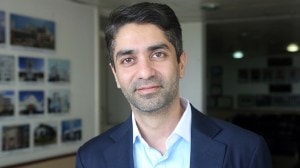
Husain Haqqani is Director of Boston University8217;s Center for International Relations