4 min read

Journalism of Courage




Zaroor hi kujh panchhi sham nu ghar partde honge Maaf karna mein uh panchhi nahin Naan hi mera koi ghar hai8230;.. Surely, some birds must be returning home in the evening. Forgive me I am not one of them. And neither do I have a home.
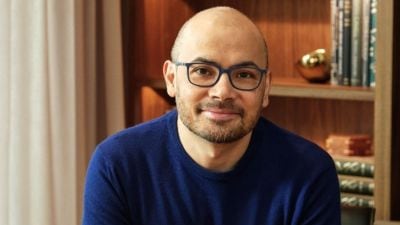
This crude translation of lines from European painter and Punjabi poet Dev8217;s poem Parinde included in his sixth and latest anthology of poems entitled Shabdaant quite sums up his relation with India. Dev agrees. 8220;I am a gypsy,8221; he says. 8220;For me, homes are places where you die slowly,8221; he adds trying to sum up years of separation from his family in one sentence.
It was over two decades ago that Dev, now 51, broke all ties with his family and went to Europe. Ever since, he has lived in Berne where he owns a studio and sometimes in Barcelona where he owns two more, returning to India every six to seven years for the release of his poetry anthologies. That8217;s what brought him here this time 8212; the release of Shabdaant in New Delhi last fortnight. And it was the longing to see his friends that brought him to Chandigarh from where he travelled to parts of Punjab. 8220;I don8217;t change my friends, galleries or restaurants,8221; he smiles, sipping his beer at an old friend8217;s place in Chandigarh.
Born in Jagraon in Ludhiana, Dev spent his childhood and youth in Narobi, came to India, joined the National School of Drama NSD in 1966 only to quit an year later. 8220;I met a producer from Bombay who said he admired my work and gave me his card saying I would make it big. When I went to Bombay, he didn8217;t even recognise me,8221; Dev reminisces. It was then he quit theatre and stuck to painting and poetry and later moved to Berne. And though Dev is a photographer too, he says he will never exhibit. 8220;You can8217;t confuse the media, I am a painter, the photographs are for my own self not the galleries.8221;
Paradoxically, though his paintings are very very European, he writes only in Punjabi. 8220;My art has got nothing to do with the Indian art scene,8221; he admits. 8220;The last time I went to Delhi and looked around, I found I did not belong here,8221; he says. And that, he says, is the reason why he has never exhibited in India. 8220;Indian art is both narrative and derivative. Though my work has Indian roots I have been into abstracts for the past 30 years,8221; he explains. He says, his is the style of painting that portrays emptiness.
As far as poetry is concerned, though he speaks either German or Spanish and sometimes English, Dev thinks he can only write in Punjabi 8212; the language that binds him to India. 8220;All thoughts come to me in Punjabi. The nearest I get to communicating my silences is in my mother tongue,8221; says Dev.
Dev says has no plans of coming back to India, he never did. 8220;When I left India, I knew I just had to go. I could have never survived in India,8221; he says with determination. But then things change sometimes. For example, his paintings as he himself admits have moved from colours to hues of greys and whites. And then there is this poem, Faasla gap included in the latest anthology, which he reads out putting aside his glass, and says is for his son Gogo who lives and works in India: Kadde taan mitega eh faasla mere te tere vichkar. You can never tell the way gypsies go!