Journalism of Courage
 3 min read



Taking another step forward in Cancun to get the concerns of developing countries to centrestage, India today told the WTO8217;s fifth ministerial meeting that equal rules could not apply to unequal players.
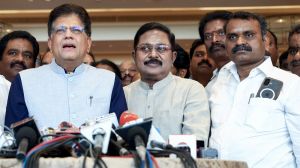
In his address at the conference which got underway today, Commerce Minister Arun Jaitley pointed out the different standards set by the developed world, especially US and the EU, on issues relating to agriculture.
The Indian stand got a further boost when it was endorsed by UN Secretary General Kofi Annan. In his message delivered at the WTO, Annan said: 8216;8216;We must eliminate subsidies that push prices down and make it impossible for poor farmers in developing countries to compete.8217;8217;
This point has been made by India and the Group of 21 which is fighting the 300 billion annual subsidy given by the US and EU to their farmers, distorting world trade in agriculture. Annan said that these barriers and subsidies in developed countries should be phased out 8216;8216;for the sake of humanity.8217;8217;
And as Jaitley expressed the Indian stand, it was seconded by the G-21 countries, including Brazil, South Africa and China. He pointed out that the draft on agriculture, expected to form the basis of negotiations at Cancun, was 8216;8216;inadequate on implementation issues and would severely affect interests of developing countries.8217;8217;
Doing some plain talking, Jaitley said that agricultural subsidies in developed countries were not targeted to keep small, struggling family farms in business but to provide hefty rents to large farmers and corporates.
India and the G-21 have been demanding that the draft resolution on agriculture circulated by them should be discussed at the Cancun ministerial conference alongwith the WTO8217;s existing draft which is more 8216;8216;pro-developing countries.8217;8217;
Jaitley also stated that India was not ready to negotiate or discuss Singapore issues, including foreign investment and competition. Later in the day, Jaitley announced the formal grouping of 15 countries to form a G-15 to oppose the inclusion of Singapore issues in the present round of negotiations. 8216;8216;We do not believe Singapore issues are trade related.8217;8217;
Putting India8217;s concerns on freeing the services sector 8212; India has an advantage in exports 8212; Jaitley stressed that liberalisation of the sector was essential to accelerate growth of developing countries.
He said that these countries needed opportunities to supply services in important overseas markets either from remote locations business process outsourcing and temporary movement of people.
Jaitley also met Chinese Commerce Minister Lu Fuyuan today. The Chinese could play an important role in the two groups set up to fight pressures on the developing countries on agriculture and Singapore issues.
The G-21 of developing countries on agriculture issues and the G 15 on Singapore issues have become important groups which could influence the way negotiations at Cancun progress.