Journalism of Courage
 3 min read



As of last year, Delhi may have overtaken Mumbai as the country8217;s largest city in terms of population, as per a recent study.
For over two decades now, the Census reports have pegged Mumbai as the country8217;s biggest metropolitan area. But two demographers from the Washington DC-based Population Reference Bureau PRB have found that if the same definition for measuring the populations of Mumbai and Kolkata is applied to Delhi, then the national capital8217;s estimated population for 2007 is much more.
8220;It is important that we do not downplay the size of Delhi8217;s metropolitan area, which should account for the entire economic entity of the National Capital Territory NCT,8221; says Carl Haub, co-author of the study, Is Delhi India8217;s largest city? Haub holds the Conrad Taeuber Chair of Population Information at PRB.
As defined in most countries, a metropolitan area is a central city taken together with its suburban areas and towns. These are often defined by criteria such as population density and commuting patterns. In India, such metropolitan areas are defined as Urban Agglomerations UA.
8220;But India defines its UAs in a somewhat quirky way. They cannot cross state boundaries. This has no effect on the population size of Kolkata and Greater Mumbai UA, which are located far from state borders. But it does affect Delhi8217;s official population size,8221; says O.P. Sharma, who is PRB8217;s India consultant and former deputy director of census operations in India.
So while Kolkata8217;s UA includes Kolkata, Nadia, North 24 Parganas and South 24 Parganas, and Greater Mumbai UA takes into account Mumbai, Mumbai suburban and Thane, Delhi UA does not take into consideration its neighbouring areas like Gurgaon, Noida, Ghaziabad or Faridabad which are economically and socially integrated with the city.
8220;Delhi is not actually a state but the NCT. So the 2001 Census only included the NCT population. The census count stood at 1,38,50,507, but since rural population is not included, the Delhi UA population was 1,28,77,470,8221; said Sharma. In comparison, the Census put Mumbai8217;s population at 1,64,34,386 and Kolkata8217;s at 1,32,05,697.
According to the study, the actual population of Delhi Metropolitan Area, which includes the neighbouring towns of Haryana and Uttar Pradesh, should have been 1,62,36,397 in 2001. While this still puts the national capital in second place, the estimated figures for 2007 puts Delhi at 2,20,80,001, much higher than Mumbai8217;s estimate of 1,94,38,973.
Joint Director of Census Operations Babu Lal admits that the study may be right. 8220;But in India, we are bound by the definition of an urban agglomeration, in which we cannot cross state boundaries. If we do so, Delhi is actually the biggest city in India,8221; he said.

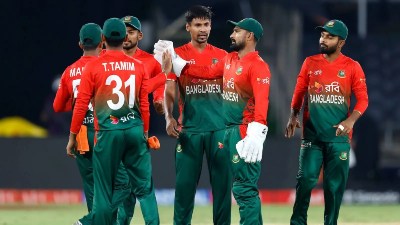
Bangladesh have brought back pacer Taskin Ahmed and dropped Jaker Ali in their squad for the 2026 T20 World Cup. Litton Das will be leading the side and senior pacer Mustafizur Rahman, who has been caught in the middle of a storm after being released by his Indian Premier League (IPL) side Kolkata Knight Riders (KKR), has also been included.