Journalism of Courage
 4 min read



NALIYA, MAY 26: If salt workers were devastated by last year8217;s cyclone, this year it is the maldharis or traditional cattle breeders. Although the cyclone itself spared Gujarat, its tail lashed the Abdasa and Lakhpat talukas, killing more than 15,000 head of cattle. People had been evacuated; cattle hadn8217;t.
Six days after the cyclone strike, the area reeks of death. Debris of huts and houses, wrecked fishing boats, twisted electricity and telephone poles, mangled pylons 8212; the destruction is there to see. But the biggest problem for relief workers is the disposing of the carcasses. From Naliya village to Jakhau port, the 14 km stretch of highway is strewn with over 900 rotting carcasses. It is the same on the roads and dirt paths leading off the highway and in the villages. The stench keeps even vultures and jackals off.
Government officials say it will take at least another three days to clear the area and fear that an epidemic could break out. They tried to burn the carcasses first. But the soggybodies would not burn. Says Dr G S Parmar, a deputy director of the Animal Husbandry Department who is supervising the disposal of carcasses, 8220;We used up 85 litres of diesel trying to burn the carcass of just one buffalo. Only a quarter of the carcass burned completely.8221;
Now, the officials are going for burial. They have brought two excavators to dig pits in which the carcasses are being buried. They want two more.
The other problem for relief workers is to prevent the spread of water-borne diseases. Even though cases of gastroenteritis, diarrhoea or other diseases haven8217;t been reported yet, their threat looms large. Naliya Government Hospital Superintendent Dr Prem Kumar Kunnar says 22 teams of doctors and health workers are going from house to house, conducting on-the-spot tests for gastroenteritis.
The teams are helped by volunteers from the RSS and other organisations. They are also distributing chlorine tablets meant for purifying water and having anti-malarial insecticides sprayed.
Parmar sayshis teams are moving from village to village vaccinating surviving cattle. He says over 1 lakh doses of vaccine will be used to prevent the spread of diseases in cattle. The veterinary office is thronged by people requesting that teams be sent to their villages. Some of them, like Khano Panji of Jatwan Lakharia who lost 35 head of cattle, are from villages that were cut off from other areas till Sunday.
But much more needs to be done. At numerous places people can be seen washing and bathing in ponds with dead cattle lying just a few feet away. Several water-logged areas have to be cleared.
State Industry Minister Sureshbhai Mehta, in charge of relief operations, says, 8220;The problem is compounded by the fact that the devastation is spread over vast area. Till yesterday, 35 villages were cut off. The counting of the perished cattle is still in progress. The Health Minister took stock of the medical situation and is following it up with relief.8221;
But many people do not know of any relief being announcedfor them. They are angry at Chief Minister Keshubhai Patel for not listening to them on his visit to Naliya.
Says Kalabara of Bhadrana village, who is now with family and cattle outside Dhuphi village, 8220;If the Chief Minister wanted to meet officials, he could have done so in Gandhinagar itself. Or he could have phone sic his orders. I have no idea if I will get anything for the 100 head of cattle I lost.8221;
And former minister Babubhai Shah, who is from the area, is angry. 8220;If the Government could evacuate human beings, it should have been alert enough to evacuate the livestock too. Now, instead of organising publicity stunts like flagging off relief vehicles to cut-off areas, the Government should undertake concrete relief measures.8221;

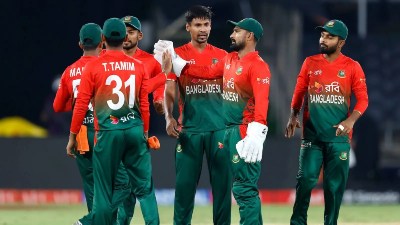
Bangladesh have brought back pacer Taskin Ahmed and dropped Jaker Ali in their squad for the 2026 T20 World Cup. Litton Das will be leading the side and senior pacer Mustafizur Rahman, who has been caught in the middle of a storm after being released by his Indian Premier League (IPL) side Kolkata Knight Riders (KKR), has also been included.