Journalism of Courage
 5 min read



The Northern Areas consisting of Gilgit, Baltistan and Skardu have always been an irritant in Pakistan8217;s Kashmir policy. Unlike the areas of Paki-stan Occupied Kashmir POK, which have a semblance of democracy, the Northern Areas have been directly controlled by Pakistan government.
During my visits to POK in 1990-91, there was a persistent demand for elections in Northern Areas by not only the local inhabitants but also the POK leaders. The reluctance of the Pakistan government to concede a democratic set-up lay in the peculiarity of the people and the land. While the POK areas are Sunni-majority like the Kashmir Valley, the Northern Areas have a Shia-majority population.
Moreover, Pakistan has always considered the Northern Areas to be of great strategic importance, necessitating direct control, especially after the Indian occupation of Siachen in 1984. Incidentally Kargil, which is the starting point for ingress into Zanskar and upper Ladakh, was once an important intersection of trade routes fromKashmir to Baltistan, Afghanistan, Central Asia and Tibet.
Kargil is midway on the 434 km Srinagar-Leh road, which is open from mid-June to mid-October. The road8217;s importance can be gauged by the fact that it was built after the Indo-China war of 1962. In fact, the Ladakh region is vulnerable from two sides 8212; in the West areas like Gumri, Dras and Kargil are exposed to intrusions from Pakistan; the eastern fringe of the Ladakh region Chushul, Changli and Kyari is susceptible to Chinese intrusions.
It is apparent that by occupying the heights overlooking the Srinagar-Leh road, Pakistan wants to isolate the Kashmir Valley from the Ladakh heartland of Leh. Of what used to be Ladakh, Pakistan is already in control the Muslim-majority Skardu 8212; one of its three tehsils Kargil and Leh being the other two. By gaining control over the Dras-Kargil area, which is also Muslim-majority, only the Leh area, which is mainly Buddhist, is left out.Pakistan8217;s recent adventure in Kargil is a brazen attempt to convertits vulnerability in the Northern Areas to advantage. Isolating the Leh area and beyond, which connects with Tibet, could be part of the larger China-Pak game plan to nullify the Indian advantage in Siachen. A few years ago, Pakistan handed over certain areas beyond the Karakoram range to China.
Unfortunately, India has been complacent after its success in Siachen and frittered its dominance away. Pakistan8217;s attempts to dislodge our soldiers in Siachen were blunted year after year. Having failed in its designs along the Line of Control and to widen the conflict to the international border, it was looking for an opportunity to do a Siachen8217; on us. Our lowering of guard in Kargil gave them just the opportunity.
India8217;s failure to guard the area despite its strategic importance is surprising. This despite the fact that the area was captured after intense fighting in 1948. In fact, for eight months Pakistani troops had occupied the vast strategic region from Gilgit in the far north of the valley to Nubra inWestern Ladakh and from the Karakoram Range in the far north-east to the Zojila Pass and Gurez. It was with much difficulty that Kargil, Dras and Zojila were captured by Indian troops.
Apparently taking a cue from our Siachen success, Pakistan prepared well in advance in Kargil. They concentrated on improving supply lines to the craggy hills. A spokesman for the terrorist group Lashkar-e-Toiba has been quoted in the foreign press as saying that they had been preparing since last year and moved in when the snow began to melt in early April. Since the infiltrators were detected only in mid-May, they had four weeks to consolidate their positions.
Besides, we failed to exploit the area. The people of both Dras and Kargil, who are Dards or Baltis from Baltistan, are Shi8217;ite Muslims. Since on the Pakistan side of the Northern Areas they were feeling alienated, efforts should have been made to take them into the mainstream, including induction into the security forces. Even if there wasn8217;t much recruitablepopulation, they could be taken as guides. Speaking a wide variety of dialects including Kashmiri, Urdu, Dardi and Pushto, they would have been useful not only in gathering intelligence but also in the conduct of military operations in this difficult tract. Even Pakistan managed to capture much of this area initially in 1947-48 with the help of Gilgit Scouts, Chitral Scouts and frontier constabulary units and locals.
Since we were caught off-guard, some of our troops had to be inducted into the Dras area to face bitter cold and icy winds without proper equipment or clothing. The IAF, too, was handicapped. Our MiG 23s and MiG 27s are too fast, attack helicopters like the MI-25 are unsuitable for operating in such heights and improvised transport helicopters like the MI-17 are vulnerable to ground fire. Slow-moving ground support aircraft like the US A-10 Warthog, which NATO used in Kosovo, would have been ideal in targeting infiltrators perched on hill-tops.
Infantry operations may have to be suspendedafter October till next April in Kargil. The Zojila Pass is extremely hazardous and the road over the glaciers is wet and slippery. Since Pakistan8217;s game-plan would be to prolong the Kargil action, dislodging the infiltrators from the heights during the next three months is critical.

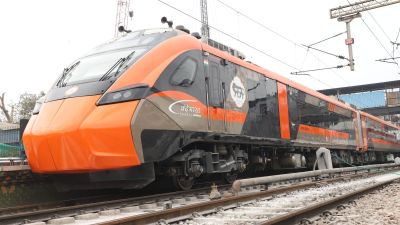
Railway Minister Ashwini Vaishnaw on Saturday said Vande Bharat Sleeper trains will be introduced across all states, including Kerala. He made the comments during a press briefing at New Delhi railway station after inspecting the Howrah–Guwahati–Howrah Vande Bharat Sleeper rake, which is set to be launched this month.