Journalism of Courage
 4 min read



In 8217;05, 8-yr-old died of internal burns and infection after a 8216;rare8217; fire in a laser machine, treating a tumour in his larynx, burnt his airway; HC finds hospital negligent
The death of an eight-year-old boy due to an 8220;accidental8221; laser spark during a surgery at the Indraprastha Apollo Hospital has left the company that runs the country8217;s leading healthcare centre facing criminal action. Charges made out against the Indraprastha Medical Corporation Limited are 8220;culpable homicide not amounting to murder8221; and 8220;causing death by negligence8221;.
Aditya Pal died of internal burns and infection in October 2005, 23 days after a 8220;rare8221; fire in a laser machine that was used to treat a recurrent tumour in his larynx voice box burnt his entire airway. After the surgery on October 3, the boy was kept in the ICU under intensive paediatric care till he died there on October 26, his ninth birthday, said his maternal grandfather Tej Singh, who is fighting the case against the hospital.
It was Aditya8217;s fifth visit to the hospital where he had been undergoing treatment since November 2004 for 8216;recurrent laryngeal papillomatosis8217;.
The postmortem conducted the very next day by a specialist board of doctors from the All India Institute of Medical Sciences AIIMS had found it a 8220;case of gross criminal negligence, and the burn injuries that were the primary cause of death were unwarranted and speak of failure of taking required precautions, care and skill in adopted procedure8221;.
In a recent order, the Delhi High Court agreed with the postmortem report and refused to quash a metropolitan magistrate8217;s direction issued in March 2007 to the Sarita Vihar police to investigate the hospital authorities and the doctors concerned under Sections 304 Part II and 304 A of the Indian Penal Code.
The boy8217;s family named the company running the hospital, its managing director, medical superintendent Ritu Rawat and the ENT consultant who had conducted the laser surgery on October 3, as accused in the complaint.
Rawat and the ENT consultant had moved the HC, seeking to quash the criminal proceedings.
The punishment under Section 304 Part II is imprisonment up to 10 years, but under Section 304 A it is a maximum of two years in jail.
8220;Aditya8217;s father had died of kidney failure in February 2005, but my daughter continued to stay with her in-laws in Meerut. Whenever it was time for Aditya8217;s treatment, I would pick them up from Meerut and later drop them back,8221; recalls Tej Singh, a resident of Loni.
The hospital authorities defended in the court that the postmortem report was 8220;preliminary8221; in nature, and brought the judge8217;s attention to the November 2005 findings of an AIIMS medical board that had inspected the same laser machine and found it 8220;working normally8221;.
Appearing for the hospital, senior advocate Siddharth Luthra argued that the Delhi Medical Council, on inquiry in 2006, had already given his client a clean chit and absolved the hospital of any negligence.
The council8217;s inquiry report termed the laser spark that claimed the boy8217;s life as 8220;rare, and known to occur with the incidence of 0.5 to 1.5 per cent in the USA8221;.
Dismissing Luthra8217;s pleas, the Bench threw its weight behind the postmortem report.
It said the board that conducted the postmortem 8220;had the body of the deceased who is alleged to have died on account of medical negligence with them while the other boards did not have the advantage of examining the body8221;.
Besides, the court observed that the inspection of the laser machine was done 8220;considerably after the incident8221;, rendering the exercise far less conclusive.
The Apollo management, meanwhile, said it regretted the unfortunate incident, calling it 8220;rare but not a case of medical negligence8221;.
8220;We have extended full cooperation to the investigating agency and will continue to do so,8221; their statement read.

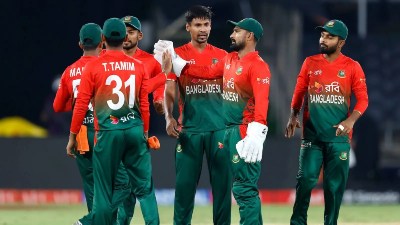
Bangladesh have brought back pacer Taskin Ahmed and dropped Jaker Ali in their squad for the 2026 T20 World Cup. Litton Das will be leading the side and senior pacer Mustafizur Rahman, who has been caught in the middle of a storm after being released by his Indian Premier League (IPL) side Kolkata Knight Riders (KKR), has also been included.