Journalism of Courage
 4 min read



Zbigniew Brzezinski hit the nail on the head. 8220;American primacy is not going to last forever,8221; he reflected at the Centre for Strategic and International Studies in Washington, 8220;and it is therefore important that a secure world order be put in place while this primacy lasts.8221;
This realism leads American thinkers to two approaches. One, as Brzezinski says, secure a world order while this primacy lasts. Second, to work more hawkishly towards the perpetuation of this primacy in a limited sort of way.
The subcontinental nuclear tests have disrupted a process that was proceeding to the West8217;s satisfaction. A pyramid was being secured, at the top of which would be the five permanent members of the Security Council.
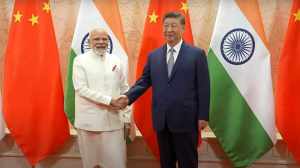
President Clinton8217;s strategic partnership with China was designed to keep it a responsible player at the top of the pyramid. To the agenda of his trip to Beijing has been added an important theme: 8220;How does the subcontinent now relate to the pyramid we were putting in place? They areunwilling to be furniture in the building we design: they wish to join as architects.8221;
After meeting Brzezinski and a host of other US foreign-policy thinkers I am convinced this is no time to take to heart anything the Americans say. Much of what is going on is knee-jerk irritation at our opening up a whole new debate. But there is much consensus on what Fareed Zakaria of the Council on Foreign Relations says: the nuclear powers should ask India and Pakistan to sign various treaties, but as declared nuclear-weapons states.
Brzezinski believes the US has not done enough to seek a real partnership with India. The nuclear tests have highlighted this but to embark on a positive path so soon after the tests would be like responding because you have placed your gun to our head. 8220;So be patient in the short term and say or do nothing that would complicate discussions in the long term.8221;
American protestations on proliferation ring hollow because 8220;the United States never pursued a genuinely universal andnon-discriminatory policy of halting proliferation8221;. Brzezinski says the US openly assisted Britain in its acquisition of nuclear weapons; helped France in its pursuit of nuclear capability. 8220;It more than winked at Israeli efforts,8221; studiously ignoring the 8220;atmospheric nuclear test conducted by 8220;someone8221; in the late 1970s in the Indian Ocean. He should know; he was the National Security Council Adviser to President Carter. Brzezinski had outlined a global design of regional influentials of which India was one, 8220;but your support of Soviet invasion of Afghanistan destroyed8221; the framework in which the US was giving India an important place.
A benign outcome of the tests has been American overtures to Iran. It was feared that the subcontinent8217;s explosions might embolden Iran to go for a bomb of its own. Engaging it would stabilise the Gulf region and ease access to the Central Asian Republics. Brzezinski said Indian and Pakistani nuclear capability, the Gulf and Central Asia were behind the new Iranpolicy.
Brzezinski advocates a non-proliferation policy which binds the US to defend states that have not gone nuclear from those that have. 8220;If either India or Pakistan had not gone nuclear, then the country which did not have nuclear weapons and which was threatened by the one which had would have been entitled to American guarantees.8221; After the tests, the administration had to impose 8220;some8221; sanctions but foreign-policy experts are critical of Congress8217; growing tendency to legislate foreign policy.
The tests have come at a particularly awkward time for Clinton who is facing a series of foreign policy failures: the Mid-East peace process is not moving; the coalition on sanctions against Iraq is weakening; Russia is opposing tough measures against Serbia for its repression in Kosovo. The President is in Beijing with US public opinion totally divided on his China policy, underlined by reports of Chinese nuclear assistance to Pakistan and Iran. It would be most unfortunate if an impression is createdthat New Delhi gloats over Sino-US controversies. We must accelerate our excellent relations with Iran, resume them with China and the US and inaugurate a new era with Pakistan. Our long-term interests demand cooperation with a China growing in power and a US whose primacy is not in doubt in the near future.