A human skeleton, degraded and in a flexed posture, found on the slope of a hillock in a Gujarat village could hold the key to a mystery that’s been puzzling a team of archeologists.
In 2018, archeologists from the University of Kerala, working in collaboration with Krantiguru Shyamji Krishna Varma Kachchh University, Bhuj, had unearthed a mass burial site with 500 graves on the outskirts of Khatiya village in Gujarat’s Kutch district. The question then was: whose graves are these? Was this the burial ground — arguably the largest such — for a big human settlement in the vicinity or was it a common facility for a cluster of smaller settlements? Since then, the team has been looking for the remains of settlements in the vicinity.

Now, the presence of the skeleton, along with pottery artefacts and animal bones, that the team of archaeologists excavated from a hillock, locally called Padta Bet, point to the presence of a 5,200-year-old Harappan settlement that was 1.5 km from the mass burial ground of Juna Khatiya, an Early Harappan necropolis. The latest find bolsters the theory that the graveyard site may have served as a common facility for a cluster of several such smaller settlements.
Rajesh S V, Assistant Professor in the Department of Archaeology at the University of Kerala and co-director of the project, told The Indian Express, “The hillock at Padta Bet may be one of the sites catering to the skeletal remains (in the burial ground) found at Juna Khatiya. Right now it suggests that this was one of the many settlements whose burial site was Juna Khatiya.” The researchers believe that a network of such small Harappan settlements around the necropolis “might have played a significant role in the cultural formation of Early Harappan and subsequent occupations in this arid area.”
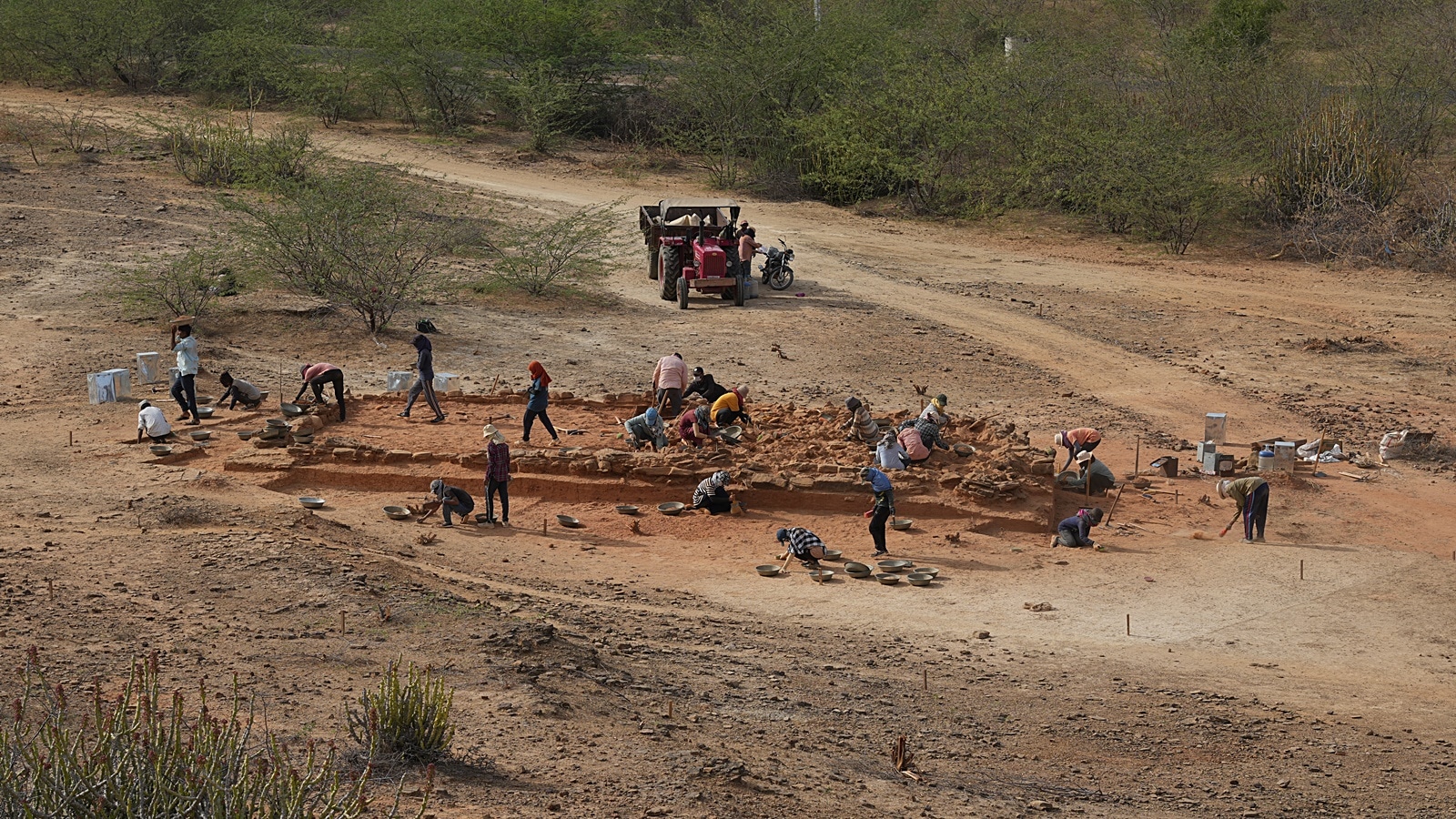
Within the four-hectare area of Padta Bet, the researchers identified two localities where the archaeological deposits were found during excavation – Locality 2 with artefacts from the Early Harappan era (3,200 BC to 2,600 BC), Mature Harappan era (2600 BC to 1900 BC) and Late Harappan era (1900 BC to 1700 BC), and Locality 1 with artefacts dating back to Mature Harappan era and Late Harappan era.
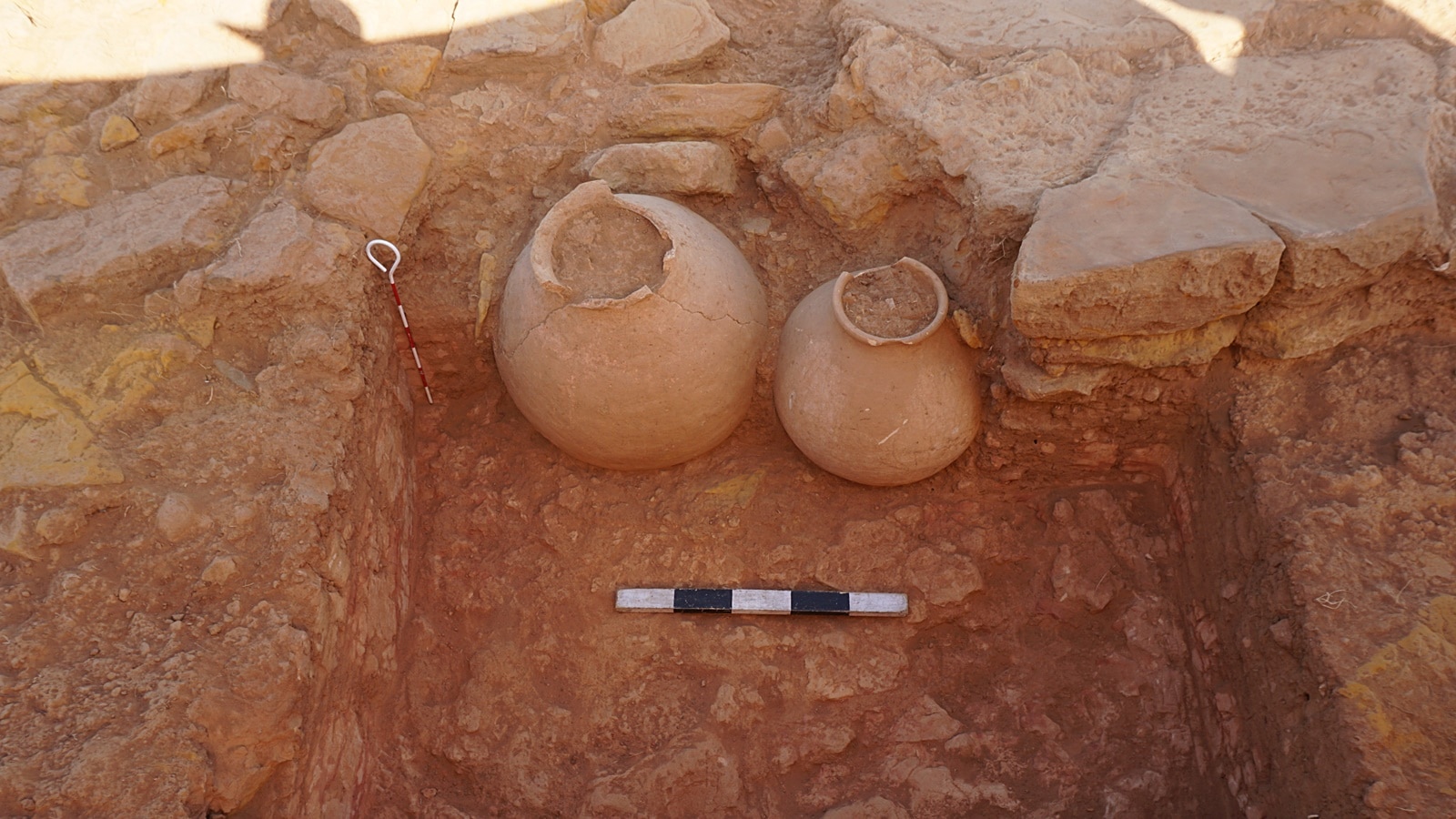
Two in situ storage jars below the floor level of a structure; one of them is the new type of coarse red ware, and the other one is the typical known Harappan type. (Photo: Prof Rajesh SV and Abhayan GS)
Professor Abhayan G S, Head of the Department of Archaeology at the University of Kerala and who led the Padta Bet excavation, said one hypothesis is that the population may have grown in the area, thus spreading out from Locality 2 to Locality 1 or that the inhabitants selected different areas to stay at different points of time.
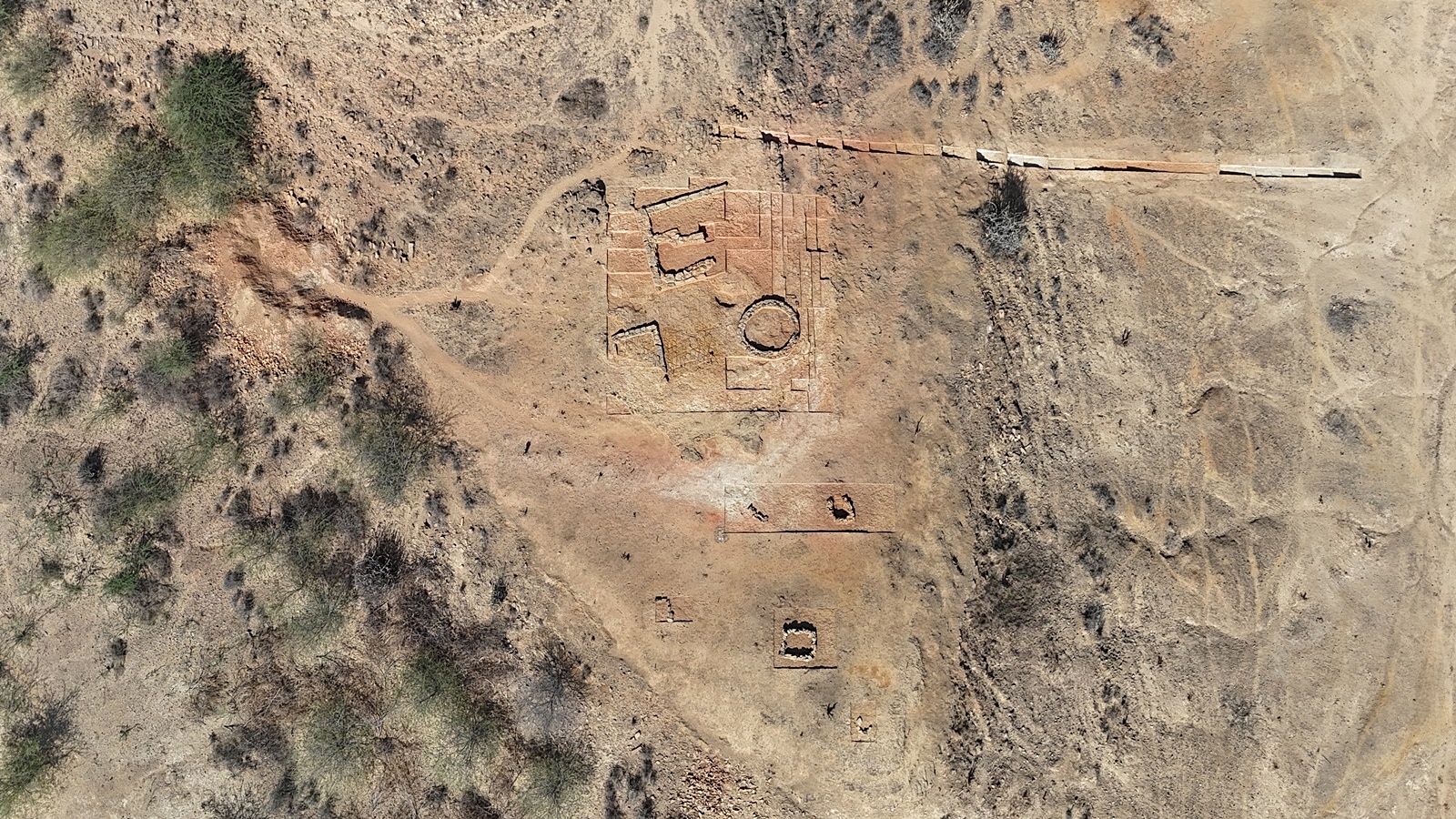
While the habitation site appears to have only a few structures, the researchers said it is possible that much of the structural remains were eroded due to the unstable nature of the landscape.
Story continues below this ad
Researchers said the pottery artefacts and the animal bones — representing cattle, sheep or goat and shell fragments that point to possible animal domestication as well as shellfish “exploitation” — are an indication of the occupation of the Harappan people. One of the most striking features of the excavation are the ceramic artefacts, which could be from one of the unidentified pottery traditions of the Harappans, involving large storage jars to small bowls and dishes, they said.
Within the four-hectare area of Padta Bet, the researchers identified two localities where the archaeological deposits were found during excavation. (Photo: Prof Rajesh SV and Abhayan GS)
The team also found semiprecious stone beads made of carnelian and agate, terracotta spindle whorls, copper, lithic tools, cores and debitage, grinding stones and hammer stones. Archaeobotanical samples too have been collected from the site for further identification of plant exploitation and to understand agricultural practices.
The presence of the skeleton raises another question. If the mass burial site possibly catered to people in the settlement, why were the remains of this body here, and not at the Juna Khatiya burial site?
While the habitation site appears to have only a few structures, the researchers said it is possible that much of the structural remains were eroded due to the unstable nature of the landscape. (Photo: Prof Rajesh SV and Abhayan GS)
Rajesh explains that while Juna Khatiya was a burial ground from the Early Harappan phase, the skeleton at Padta Bet possibly indicates a change in burial practice over time. “It is an intentional burial and it is possible that the skeletal remains (excavated at Padta Bet) are from the Late Harappan era or there might be a practice to bury within the habitational limits. We have not seen any burial from the Late Harappan era at Juna Khatiya (the mass burial ground).”
Story continues below this ad
Last year, Rajesh was awarded the Field Discovery Award by the Chinese Academy of Social Sciences of Shanghai University for his discovery of the Juna Khatiya cemetery.
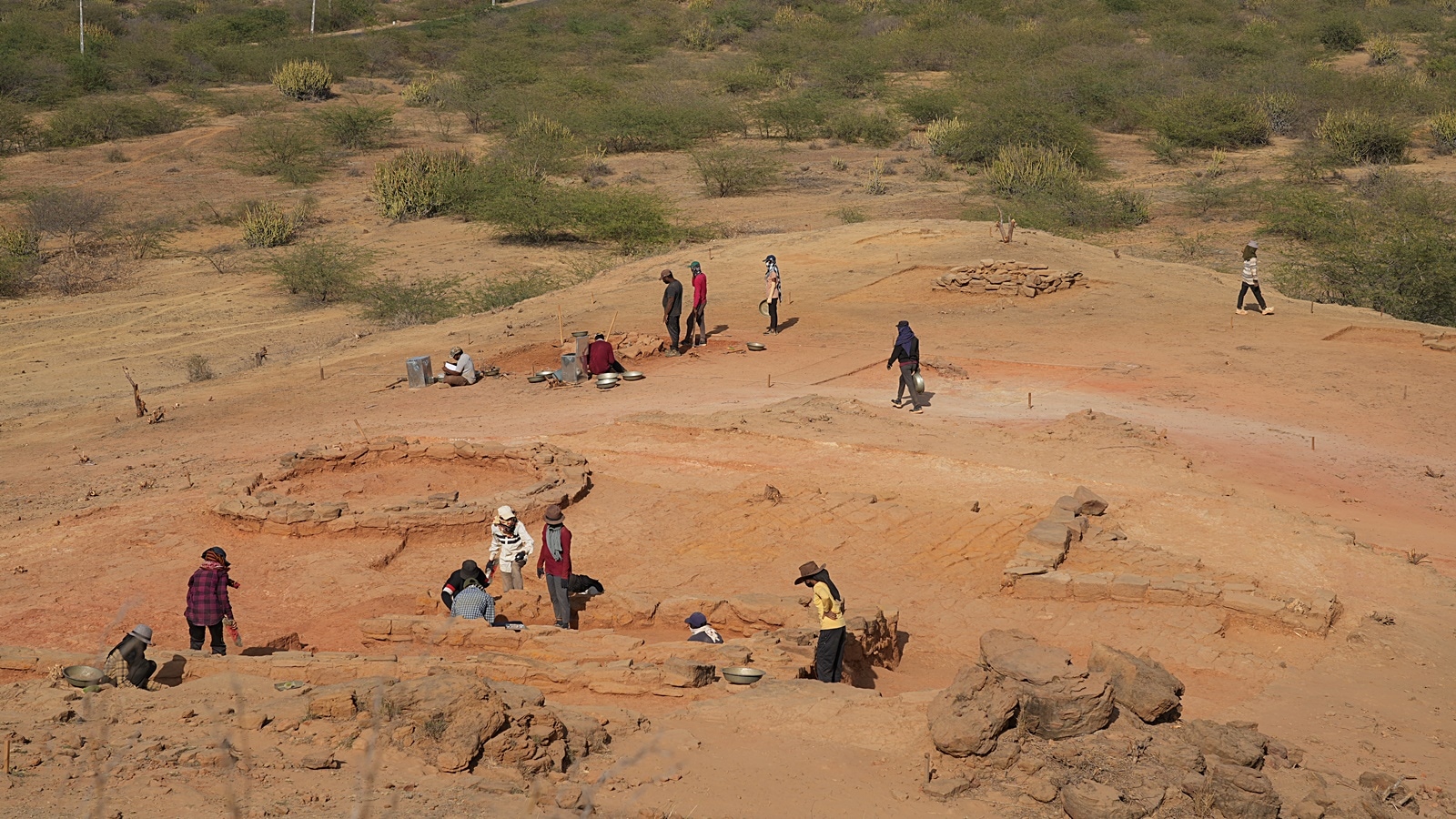
Researchers at the Generic Padta Bet excavation site. (Photo: Prof Rajesh SV and Abhayan GS)
The skeleton, along with the other artefacts, are currently in transit and are expected to reach Kerala in a week.


 6 min read


 Two in situ storage jars below the floor level of a structure; one of them is the new type of coarse red ware, and the other one is the typical known Harappan type. (Photo: Prof Rajesh SV and Abhayan GS)
 Within the four-hectare area of Padta Bet, the researchers identified two localities where the archaeological deposits were found during excavation. (Photo: Prof Rajesh SV and Abhayan GS)
 While the habitation site appears to have only a few structures, the researchers said it is possible that much of the structural remains were eroded due to the unstable nature of the landscape. (Photo: Prof Rajesh SV and Abhayan GS)
 Researchers at the Generic Padta Bet excavation site. (Photo: Prof Rajesh SV and Abhayan GS)