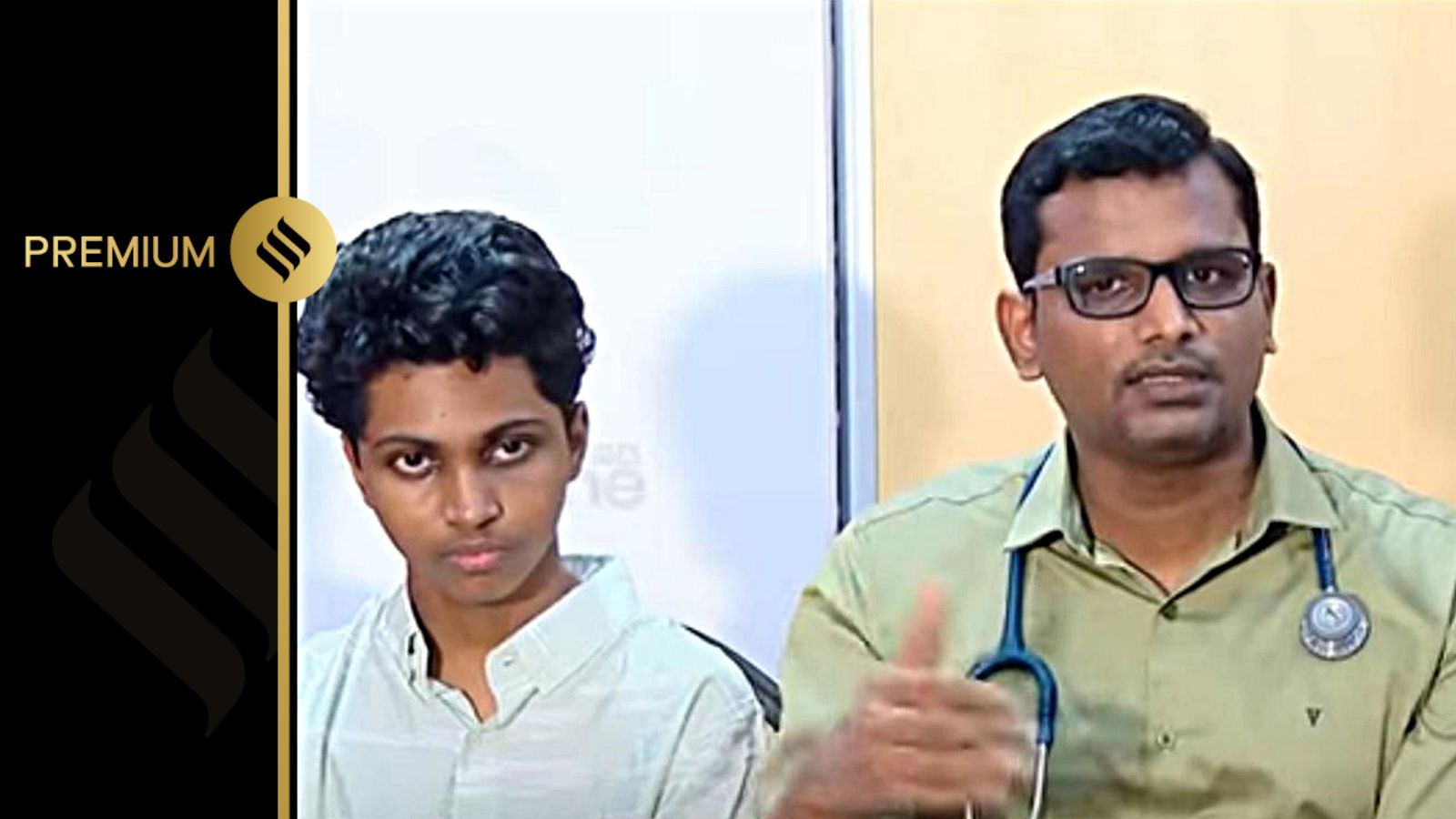
This is the story of the boy who lived.
Last week, 14-year-old Afanan Jasim from Thikkodi in Kerala’s Kozhikode district became one of only 11 people in the world — and the first Indian — to have survived the deadly Primary Amoebic Meningoencephalitis (PAM), a brain-eating amoeba disease with a fatality rate of 97 per cent.
PAM is caused by Naegleria fowleri, an amoeba found in soil and freshwater such as lakes, rivers, and ponds, as well as untreated swimming pools. According to the US Centers for Disease Control and Prevention (CDC), “Most people with PAM die within 1 to 18 days after symptoms begin. It usually leads to coma and death after 5 days.”
Typically, amoeba enters the body through the nose and, without early intervention, progresses rapidly. Although the disease is suspected to have been around for at least a century — with the first suspected case in Britain in 1909 — Kerala recorded its first case in 2016.
The state has recorded five cases in the last two months alone.
For Afanan, too, it all began with a swim that Afanan, a Class 10 student, had with his friends at a local pond on June 26. Four days later, he began to show symptoms. First came the headaches. By afternoon on June 30, it had progressed to epileptic-like seizures and fever, prompting his father M K Siddique to take him to a private hospital in Payyoli.
“While scrolling through social media, I came across news about a brain-eating amoeba and how children swimming in ponds were getting infected. Kerala already had a few such cases. Also, no one in the family has any history of epilepsy. So I told the doctor that my son swam in a local pond four days ago, the doctor took note,” Siddique, a daily wager, tells The Indian Express.
Story continues below this ad
The same night, Afanan was referred to another hospital in the nearby Vadakara city. But since there was no paediatric consultant, the family went to Baby Memorial Hospital (BMH), a private hospital in Kozhikode, 47 km from the village.
BMH’s Paediatric Intensive Care Specialist Dr. Abdul Rauf examined Afanan and immediately took him to run some tests. The hospital had already seen two cases of amoebic meningoencephalitis — one of whom was still undergoing treatment at the hospital.
“The child’s symptoms and the fact that he went for a swim in a pond pointed to PAM. We started the treatment immediately,” he said.
Their suspicions were confirmed in 24 hours through a PCR test. Then came the most trying time.
Story continues below this ad
“On the day the disease was confirmed, the doctor gave us counselling and told us about its fatality rate. Our world had been upended. He’s our only son and I feared he was on the verge of death,’’ he said.
Meanwhile, with one PAM patient already critical at BMH, the Kerala government had already begun trying to procure Miltefosine — one of the drugs approved for treating PAM. Originally developed in the 1980s as an anti-cancer agent, Miltefosine is a broad-spectrum antimicrobial, anti-leishmanial, phospholipid drug.
According to Dr Rauf, the medicine is not easily available in India and had to be brought in from Germany.
On July 4 — before the drug could be administered — 12-year-old E P Mridul, the other child undergoing treatment for PAM at BMH, breathed his last. This event magnified fears for Afanan’s life: for nine days, Siddique and his wife Rayhanath would wait outside the hospital’s intensive care unit, praying for their son’s recovery.
Story continues below this ad
“Doctors and nurses tried to assuage our fears by saying we’d caught the disease in the initial stages. But the fact that we knew nobody survived this disease didn’t help,” he says.
According to Dr Rauf, it was the parents’ quick thinking that helped make an early intervention in Afanan’s case.
“Within 24 hours, Afanan developed symptoms, so we could diagnose the disease and start treatment. Compared to other types of meningitis, the disease progresses very rapidly and the patient’s health worsens within 2-3 days. So, early diagnosis is the key to saving a PAM patient. The disease also has very few recoveries,” he says, adding that a combination of five drugs are used for treating PAM.
It wasn’t until he left the hospital on July 22 that Afnan understood the enormity of his survival. By then, he had been in the hospital for 22 days.
Story continues below this ad
“I was never told about my problem. It was only on the day I was discharged from the hospital that I was informed about the gravity of the disease. My parents told me that the treatment was for epilepsy,” he says.
According to Kerala Health Minister Veena George, the disease was detected chiefly due to the robust diagnosis system that was in place in the state.
“We have a standing instruction to all hospitals in the state, both government and private, to put all encephalitis cases under close surveillance. The first case in Kerala was reported in 2016 and with repeated cases in 2024, this disease has become a concern. However, now there is early diagnosis, which is important for saving patients,” she says.
According to the minister, the state health department is planning a study on why the PAM cases are recurring in Kerala in association with the Indian Council of Medical Research (ICMR).
Story continues below this ad
“We already had a discussion with the ICMR about this. Such a study will help create literature on this disease and benefit the medical fraternity in the world,” she says.


 6 min read