© The Indian Express Pvt Ltd
 12 min read


 Aman Malik trains in Kenya’s Iten, a destination for aspiring runners. (Photo: Special Arrangement)
Iten, a Kenyan town that runners consider their mecca and where world-beaters are forged at altitude, is where Aman Malik, all of 17, chose to go in May 2023. The budding cross-country and long-distance runner from Haryana’s Sonipat was convinced that the road to the Olympics ran through this town in East Africa.
Two years on, the script has flipped completely.
In September 2025, a Nairobi court handed Aman, now 19, a three-year sentence for being a part of an organised network that allegedly traffics prohibited substances into the country and gives banned substances to Kenyan athletes.
Now in a four-room enclosure that houses 30 inmates, Aman has been navigating an environment far removed from the training camps he once lived in.
“They could have banned me from athletics or deported me to India, where I could have served a jail term,” he tells The Indian Express from the Nairobi jail, where he gets to use his phone for one hour daily.
 Aman looks at his stopwatch while running with Kenyan athletes in Iten. (Photo: Special Arrangement)
A high-altitude town in Kenya’s Great Rift Valley, Iten enjoys global fame as the ‘home of champions’ for the sheer number of world and Olympic winners it has produced, including David Rudisha, the 800m Olympic and world record holder; and Beatrice Chebet, the multiple Olympic and world championship gold medallist.

However, of late, this distance-running powerhouse has been battling a surge in doping violations, besides accounting for the highest number of doping cheats in track and field.
The raid and the arrest
Aman left for Iten in May 2023. Two years later, while returning from training, Kenya’s Directorate of Criminal Investigations sleuths followed him and raided his room.
According to Kenyan court documents, they found an “entire suitcase filled with prohibited substances, supplements and medication” in his possession. These “prohibited substances” included meldonium, a drug that had led to a 15-month ban on tennis star Maria Sharapova; a human growth hormone (HGH) made infamous by the Lance Armstrong doping scandal; and Mannitol, a masking agent.
The sleuths also allegedly seized a one-page agreement between Aman and athlete Reubin Mosin that states the Indian would “supply all that it takes” in return for 50% of the latter’s winnings.
Immediately after the raid, Aman was questioned at an Iten police station for an hour, and his passport and phone were seized. A day later, the Anti-Doping Agency of Kenya (ADAK) issued a statement that the raid was conducted following “actionable intelligence” indicating Aman’s possible involvement in distribution and use of banned performance-enhancing substances.
On September 12, 2025, Aman pleaded guilty to one count of illegally importing drugs and three counts of transporting prohibited substances — HGH injections, mildronate 500 (meldonium) and diclofenac sodium injections. On September 26, he was sentenced to three years in jail.
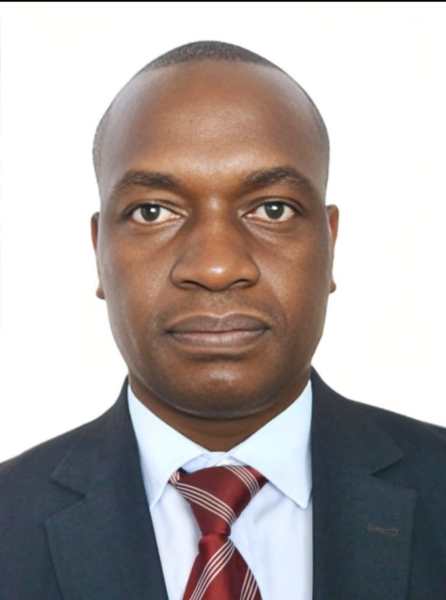 David Lusweti Namai is Aman’s pro bono lawyer. (Special Arrangement)
Around the time of Aman’s sentencing, Iten and Kenya’s reputation as a long-distance running nursery had already taken a battering. Since 2017, nearly 150 Kenyan athletes, mainly long-distance runners, have been sanctioned for drug-related offences.
On September 12, the day Aman pleaded guilty, an independent review committee of the World Anti-Doping Agency (WADA) had called out Kenya for being “non-compliant” with the anti-doping code and asked the nation to “get its act in order”.
Days before Aman’s sentencing, Kenya’s Ruth Chepng’etich, a women’s marathon world record-holder, was banned for three years by the Athletics Integrity Unit, an independent body that manages the sport’s integrity issues, for anti-doping rule violations.
During Aman’s sentencing, Nairobi’s Jomo Kenyatta International Airport (JKIA) Law Courts, set up a decade ago to speed up cases involving traffickers of humans, drugs, etc., noted as “serendipitous” the timing of his sentencing.
Relying on the country’s Anti-Doping Agency’s report, the court emphasised the damage to Kenya’s reputation and described the case as part of a “sophisticated network” with “characteristics of organised crime”, adding that labels on the seized items were in foreign languages, alluding to cross-border supply chains.
Meanwhile, at the prison
Since his imprisonment, Aman says he has been “anxious” and “homesick”. Besides his inability to comprehend instructions from prison guards and feeling alienated in jail, he says he is tired of eating ugali, a staple dish in Kenya made from corn.
On hospital duty in prison, handling medical files is one of his daily tasks. By
5 pm, he and the other prisoners are back in their cells. He gets one hour daily — between 6.30 pm and 7.30 pm (local time) — to make calls. He says he spends that time consoling his widowed mother, who stays alone in Sonipat’s Pinana village. His father, a sub-inspector with Haryana police, died of a heart attack a decade ago.
“I worry about what my mother is going through. She’s very concerned about me. ‘Have you eaten? Did you manage any sleep? How was your day?’ — she keeps asking me. At times, I don’t know what to tell her,” Aman says.
 Aman at the JKAI Courts. (Special arrangement)
He is the youngest of three siblings – his elder brother is chasing Bollywood dreams in Mumbai, while his sister lives in Canada after her marriage. “Do I deserve to be in a foreign prison for three years? Do all athletes who have prohibited substances in their possession go to jail? My only wish is to go back home.”
For Amit, 26, Aman will always be the boy who found “ultimate joy” in running. “Aman loved running. He loved the sport,” he says on the phone from Mumbai.
As a teenager, Aman trained in Rohtak and later Dharamshala, chasing every edge he could find. Soon, India was “not enough” — he wanted altitude and world-class coaching. That’s how he identified Iten as his new training base.
“Maybe he found it on the Internet… he said it would make him better. So we sent him there,” Amit says.
To send Aman to Iten, the family emptied most of its savings. He had two stints in Iten — a six-month stay starting May 2023 and the other from January this year.
Though Amit is not familiar with every detail of the case, he insists that Aman is remorseful. “Aman was wrong. But he’s just a child… We want him back here,” he says.
During his calls with The Indian Express, Aman reiterates his innocence. To a query on the one-page agreement seized by the sleuths, he insists that he had never acted on the agreement between him and Mosin.
“I didn’t supply (drugs) to anyone, though there was an agreement. I had been in Kenya for a short while (at the time of the raid). I am not the one who gave banned substances to Kenyan athletes.
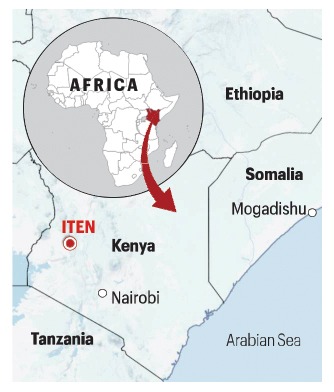 Located 8,000 feet above sea level, Iten is ideal for high-altitude training for distance runners looking to improve their endurance and speed while competing at lower altitudes.
I gave two samples for testing, but the results were never shared with me. The athlete who I supposedly gave drugs to has not been tested,” he claims.
Without naming the “seniors” or the friend in India who sent him the seized consignment, Aman says he “regrets” taking the advice of “senior athletes” about the “benefits” of HGH. However, his sentencing order names the person who brought Aman the prohibited substances — “his coach Avdesh Nagar”.
‘Coach’ Avdesh Nagar
A former middle-distance runner, Nagar is a “social media influencer” with nearly 300K followers on Instagram.
His posts include his visits to Iten and Russia, and the training schedules of Kenyan athletes.
He’s also active on other Instagram handles: on one, he promotes the benefits of Russian supplements, while the other is dedicated to his shop at GD Colony in New Delhi’s Mayur Vihar, where he sells running shoes.
Nagar’s last listed competition on the World Athletics website is the 2017 Under-18 World Championships in Nairobi, where he finished 10th in a 1,500-metre heats.
When he was still an active athlete, Nagar said he had three training stints in Iten between 2016 and 2018. An ankle injury forced him to quit the sport in 2018, he says.
Though a running academy he started in Delhi didn’t take off due to the lack of access to a training ground, he has since gained popularity among aspiring runners due to his social media presence.
 Aman’s sentencing order names the person who brought Aman the prohibited substances — “his coach Avdesh Nagar”. (Special arrangement)
When Aman decided to shift base to Iten, he got in touch with Nagar via a common friend, Ishu Solanki. “I travelled with Aman and Ishu to Iten, and helped them settle there. I helped them find accommodation, and introduced them to athletes and coaches I knew,” Nagar says.
During Aman’s two stints in Iten, Nagar visited him thrice. “I travel to Kenya to buy running shoes that I sell for a bargain in Delhi. I did carry a parcel meant for Aman, but didn’t know its contents. It was given to me by his acquaintance. I had advised him to be careful after he opened the parcel but he told me that he was not a supplier,” Nagar claims.
On why he has been named as “Aman’s coach” in court documents, Nagar claimed it had to do with a few Instagram videos he shot of Aman training in Iten. “I had captioned these as ‘my trainee, my student’. I posted it to motivate Aman and other youngsters who ask me for advice. The Kenya police saw these videos and decided that I was the coach who had given him the drugs. When I spoke to Aman, he said he had never brought up my name,” Nagar says.
What went wrong
To Amit, his brother’s three-year sentence feels like a “message”. “Aman told me that performance enhancers are used regularly in Kenya and that his case drew extra attention because of his nationality. They (the authorities) wanted to show the world that they are strict,” he says.
It’s a sentiment David Lusweti Namai, Aman’s pro bono lawyer, shares.
“On judgment day, an athlete was banned, even as the World Athletics Championships took place in Tokyo. Sometimes, it feels like circumstances can work against some people. (Earlier) it looked like the magistrate was going to release Aman, but in these circumstances, I think it would have looked bad. We entered a plea bargain with the prosecution, under which Aman had to plead guilty in exchange for a minimum sentence. Sentences (on all four counts) will run concurrently instead of him serving six-seven years,” Namai tells The Indian Express.
Namai, who specialises in criminal law, is now examining ways to get a presidential pardon for Aman. “I will have to file an application to the Power of Mercy Committee, which will recommend a presidential pardon for him,” he says.
He also plans to get in touch with the Indian High Commission in Nairobi. “The Commission could talk to our Ministry of Foreign Affairs to repatriate Aman to India to serve out his sentence or whatever the Indian authorities wish to do with him.”
 Before moving to Iten, Aman had trained in Rohtak and later Dharamshala. (Special arrangement)
An MEA official clarified such an arrangement can take place only if there is a bilateral understanding between two countries — which isn’t the case with India and Kenya. “We sought consular access, met him (on September 9) and submitted a formal request to the prison authorities to ensure proper care is taken and is admissible under Kenyan laws. The Kenyan law is very clear that he has to be repatriated after serving his sentence. During the interaction,
Mr Malik was (found to be) healthy and very well aware of the charges against him,” the official adds.
For Aman, the last few months have been harrowing. When he has access to his phone, he shares videos of his two races in Kenya. In a 5K race in Nairobi’s Langata, he’s seen catching up with the leading trio of Kenyan runners and keeping pace with them.
He says he watches these clips to keep himself motivated while in jail. “I came to Kenya to become a better runner… The training partners are excellent. There is a running culture. And the high altitude. Look at the number of world records. When I trained here, I believed I could win a medal for India one day. That is a distant dream now.”