3 min read
📣 For more lifestyle news, click here to join our WhatsApp Channel and also follow us on Instagram
© IE Online Media Services Pvt Ltd



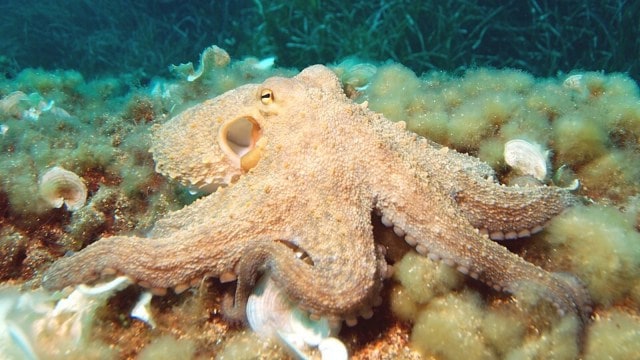 An octopus (Photo: Wikipedia)
Did you know that octopuses have three hearts? Not only that, one of the three hearts of this invertebrate actually stops beating when they swim. It is why octopuses usually crawl along the seafloor instead of swimming long distances.
Octopuses are soft-bodied molluscs that live in parts of the ocean where there isn’t much oxygen. To survive, they developed a circulatory system that enables them to obtain as much oxygen as possible.
Two of their hearts are known as branchial hearts. These are located near the gills and have a specialised role: they pump blood directly to the gills, where oxygen is absorbed from seawater. The third heart, known as the systemic heart, then pumps the oxygen-rich blood from the gills to the rest of the body.
This setup helps octopuses obtain enough oxygen, which is crucial because their active brains and complex nervous systems require a steady supply.
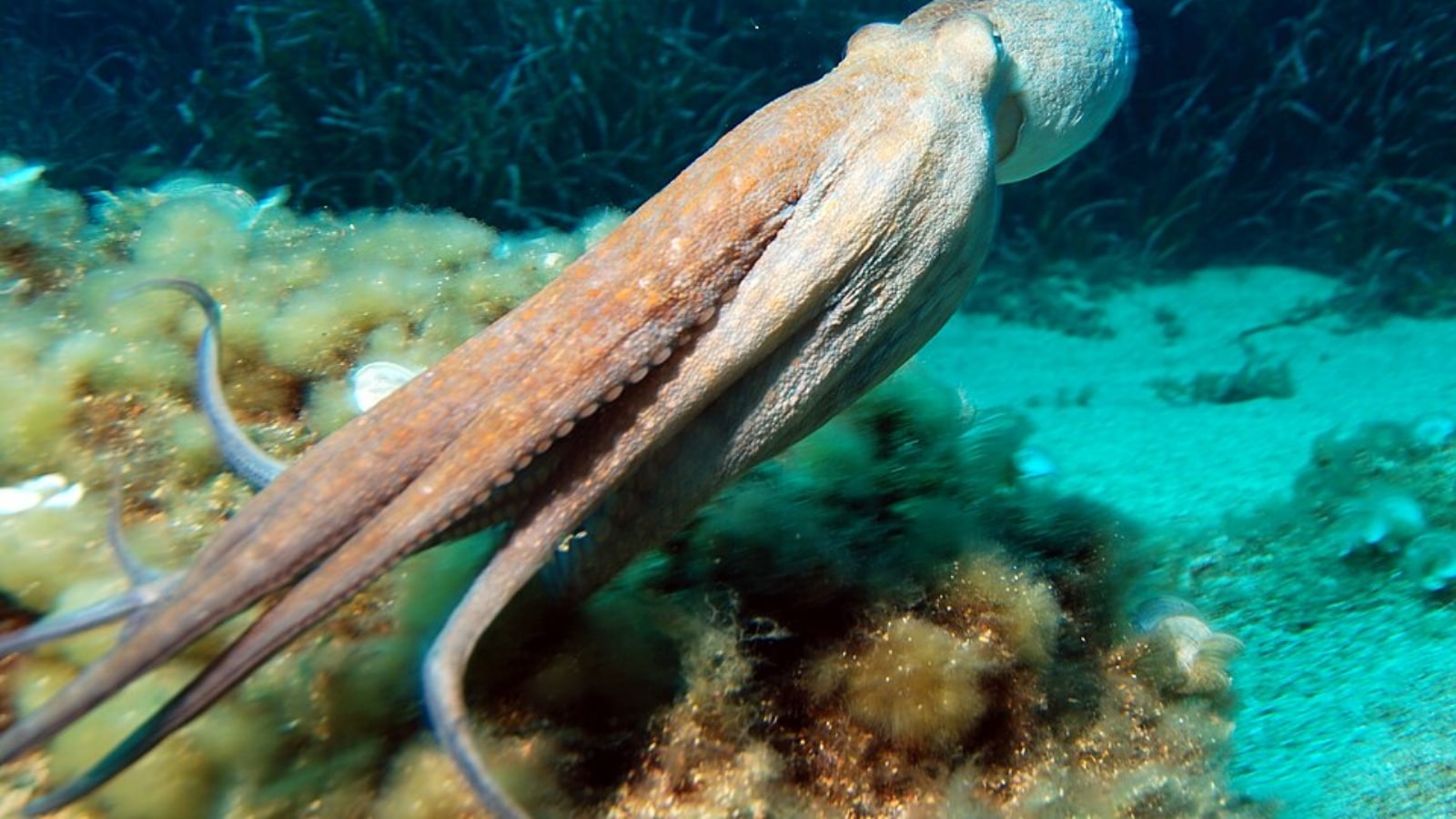 Octopuses swim with their arms trailing behind. (Photo: Wikipedia)
The systemic heart, which sends blood around the body, temporarily stops beating when the octopus swims. When an octopus swims, it uses jet propulsion by quickly pushing water out through a siphon. This action raises the pressure inside its body, making it hard for the systemic heart to pump blood well. Because of this, less oxygen moves through the body, and the octopus gets tired quickly. That’s why swimming uses a lot of energy for octopuses, so they usually only do it to escape from predators.
Octopus blood is blue instead of red, which makes them even stranger. Their blood is blue because it contains hemocyanin, a copper-based molecule that carries oxygen, rather than the iron-based hemoglobin found in humans.
Hemocyanin works best in cold, low-oxygen water, which is common in deep or temperate oceans. However, it doesn’t carry oxygen as efficiently during intense activities like swimming, which is another reason octopuses get tired quickly when swimming.
Since swimming is so tiring, octopuses mostly live on the ocean floor and crawl around using their arms. Moving in this way helps them conserve energy and maintain steady oxygen levels.
Their unusual bodies also influence their behaviour. Octopuses often exhibit short bursts of activity followed by periods of rest, which aligns with how their bodies deliver oxygen.