5 min read
📣 For more lifestyle news, click here to join our WhatsApp Channel and also follow us on Instagram
© IE Online Media Services Pvt Ltd



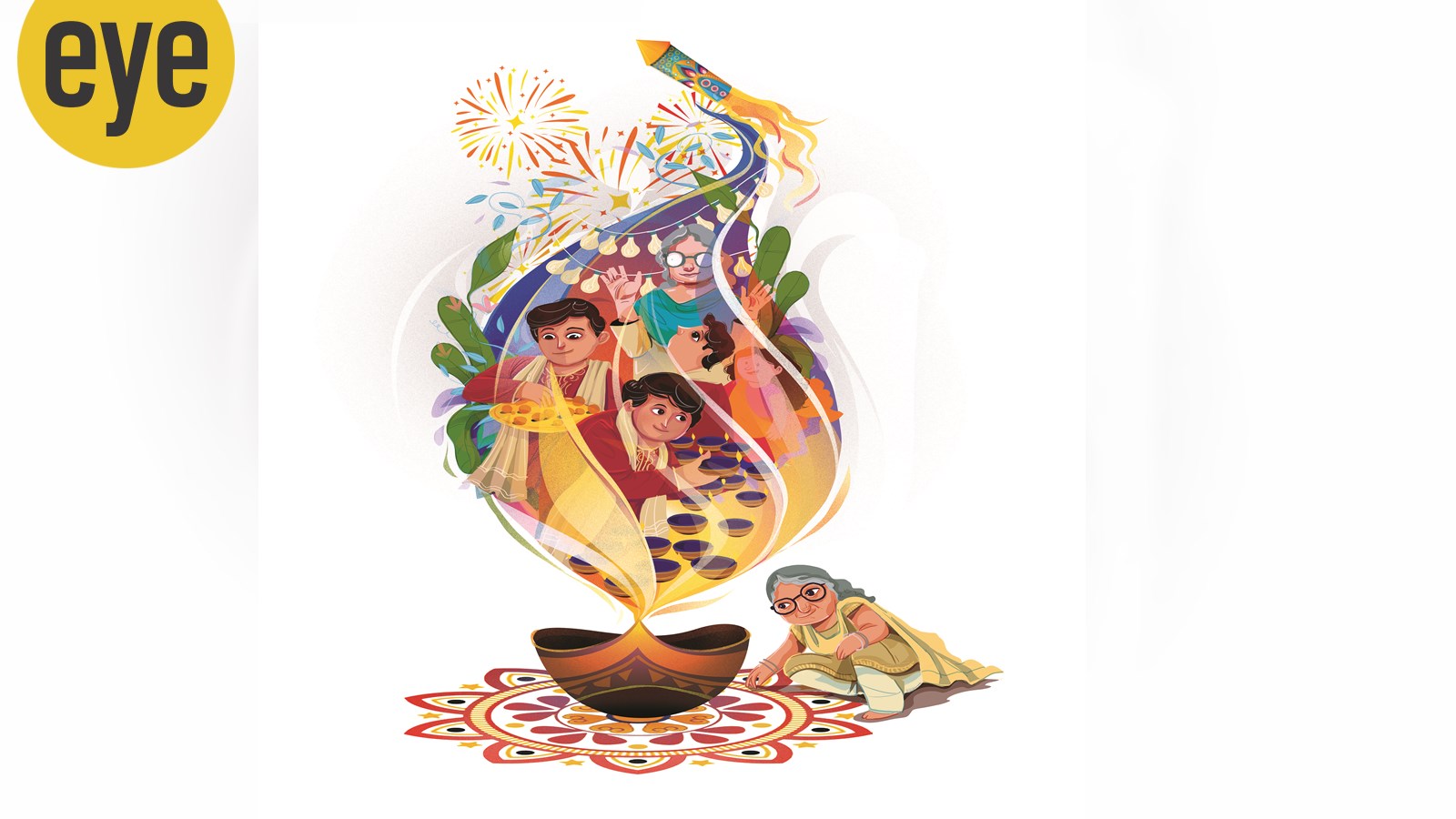 Diwali comes at a time when most regions in India transition into winter. Studies now prove that lighting oil lamps or even ghee lamps humidify the dry winter atmosphere and clears up the air, too.
Ranveer Brar on growing up in Lucknow and keeping healthy during Diwali
Diwali at home, in Lucknow where I grew up in the ’80s, would begin with the aroma of ghee wafting through the house, drawing us kids to the kitchen. What would bring a gleam in my eyes would be the sight of Biji (my grandmother) working her magic with atta (wheat flour), gud (jaggery) and ghee; no measuring cups, no recipe book, nothing; head down and hands synchronously aiding each other — one mixing and the other adding ingredients. We used to hover around, hoping for a nibble or to pick up some crumbs, but, of course, our elders were cleverer.
How the fifth-generation in Old Delhi is keeping Diwali traditions
 The Mathur household decorated for Diwali (Courtesy: Ashok Mathur)
Rann jeeti Ram rau aayen / sanuj sakal sasiya aayen / Avadh anand manaye”
These beautiful lines from a traditional bhajan depict the return of Lord Rama along with Sita and Laxman after winning the battle against Ravana, bringing glory and happiness to the people of Awadh. The jubilation of this victory over evil is what we celebrate as Diwali. It is a festival celebrated with equal fanfare in all states of India with their traditional manners and cultures.
Why Diwali is an annual date with ourselves and the world
 Diwali tells the story of the victory of good over evil, hope over despair and love over hate. (Credit: Suvir Saran)
Diwali brings memories of delicious foods and visits with family and friends, festivities that give the air of Delhi a flavour unique to this moment in time, and guttural faith that makes us see light at the end of the darkest tunnel. It is a celebration that I cherish for its inclusive spirit and cheer. It comes with allegorical contexts that tell the story of the victory of good over evil, hope over despair and love over hate. It brings blood relatives together and gives society a collective moment of sharing and caring, it is an annual ritual that cleanses homes, bodies, minds and souls.
Tejaswini Apte-Rahm’s The Secret of More is a homage to the bildungsroman
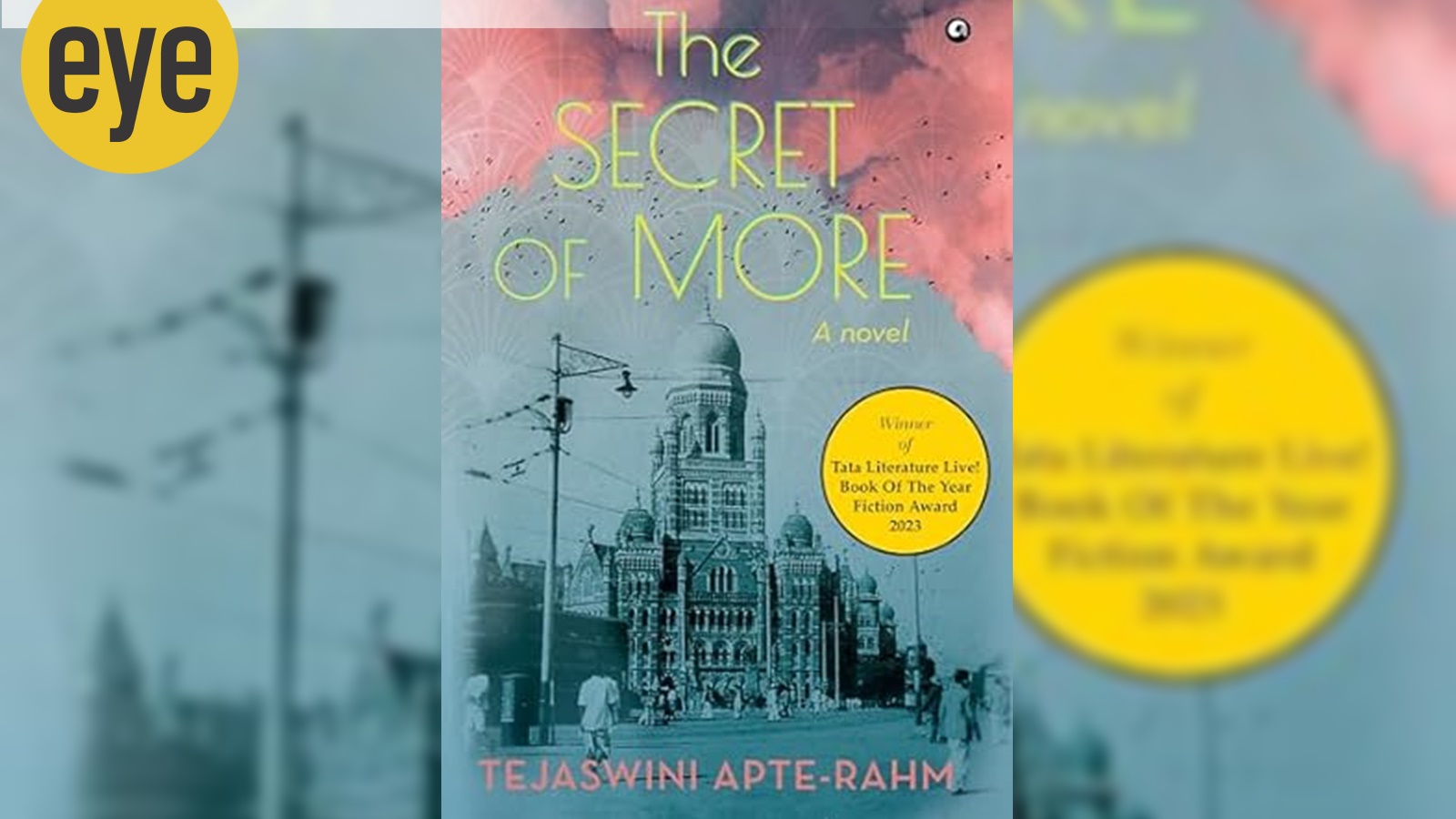 Tejaswini Apte-Rahm’s The Secret of More
A 17-year-old boy from a village on the Konkan coast arrives in Bombay in 1899, learns a thing or two about life and, over the years, through pluck and intelligence, builds the foundation of a happy, prosperous future for his family and himself. There are reverses and betrayals, of course. Things, in business and in love, don’t always go according to plan. It might seem at the outset that in writing The Secret of More, Tejaswini Apte-Rahm has set herself the task of telling a story in the style of the great novelists of the 19th century, notably Charles Dickens. As it traces the story of Govind Abhyankar, aka Tatya, from where, along with his dada (older brother), he carries a letter of recommendation to a Bombay cloth merchant so that he may get started on a career, to the end where, surrounded by his large family — children, grandchildren, nieces and nephews — in a sprawling bungalow by the sea, he looks back on the long road behind him, The Secret of More is very much an old-fashioned bildungsroman in structure. But there is a lot more to commend this novel than the obvious literary homage.
What are the rewards of staying curious
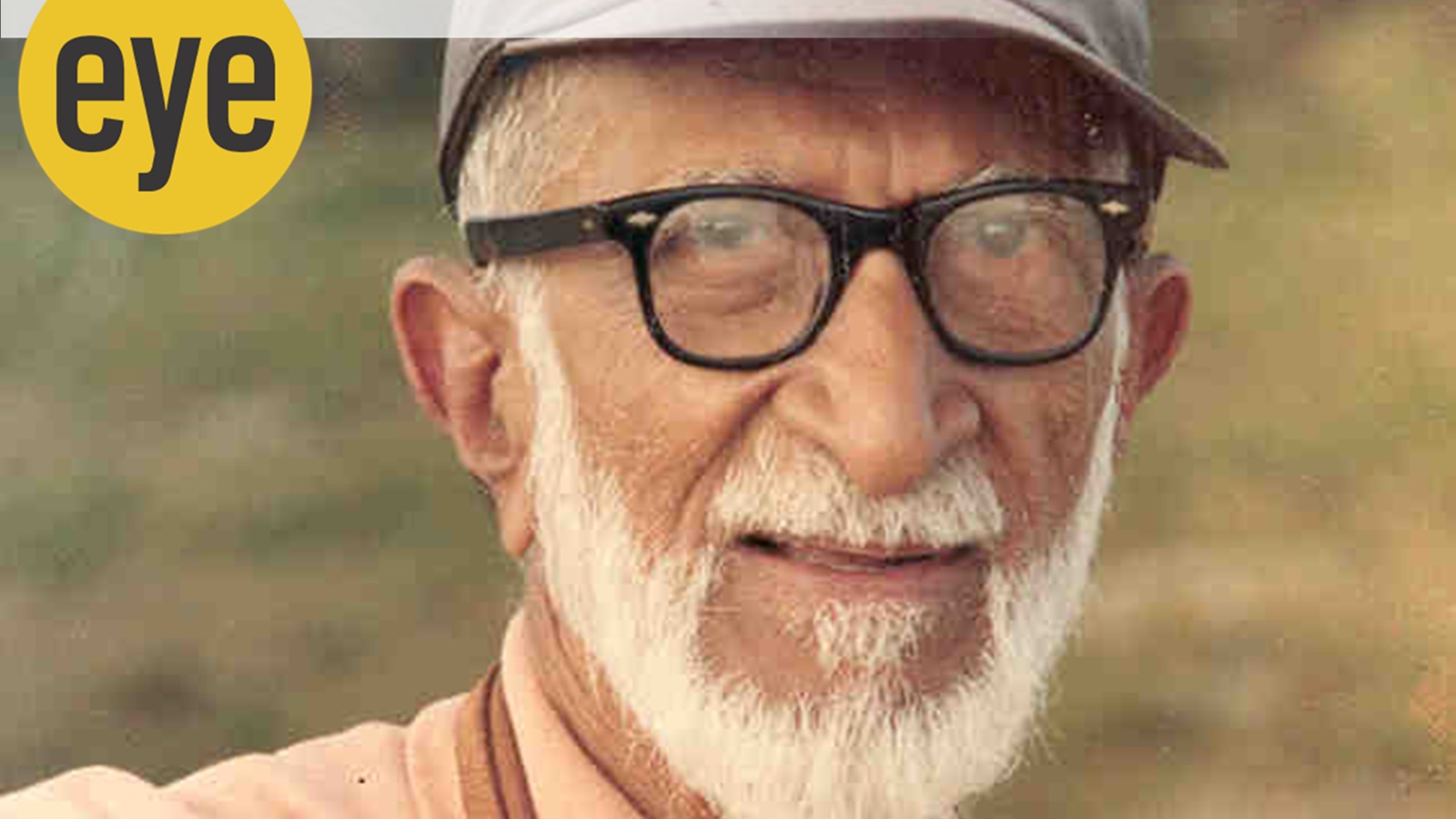 Salim Ali (Credit: Wikimedia Commons)
I recently came across an article in The New York Times regarding the experiments being done to stop dengue (and malaria), spread by the Aedes aegypti species of mosquito. The idea is to introduce a virus into the infected mosquito that attacks the dengue virus. Once infected with this Wolbachia virus, the lady mosquito passes it on to her progeny rendering them incapable of spreading the dengue virus.
Remembering Gieve Patel: Poet, painter, playwright, translator, doctor
 Artist Gieve Patel at his studio space in Malabar Hills, Mumbai. (Express photo by Nirmal Harindran)
I first encountered Gieve Patel’s poem, ‘On Killing a Tree’, in Class IX, and paused at the matter-of-fact brutality with which it described how to butcher a tree.
The much-anthologised poem comes to mind, as the tree of Anglophone Indian poetry witnesses its second great severance this year. After Jayanta Mahapatra in August, Indian poetry loses yet another stalwart with Gieve’s passing last week.
Three recipes from popular chefs for your Diwali menu
 Sweeten your festivities with these Diwali recipes (Source: Getty Images/Thinkstock)
The only rituals we follow in our family are food rituals. It’s not for us — the warm fragrant oil massage at dawn followed by the herb scrub or rose-scented soap of a certain brand; I never understood the fascination for. When we were still ‘cooperative’ children, our grandmother made an attempt at aukshan — an aarti to herald good tidings — but gave up eventually because we had bigger incentives to look forward to.
📣 For more lifestyle news, follow us on Instagram | Twitter | Facebook and don’t miss out on the latest updates!