The strobe lights in Noida’s Peninsular Studio pick out a group of musicians. They are recording songs in various genres of Bangla music, baul, Rabindrasangeet, bhatiyali, kirtan and jhumur. A throaty rendition of a baul song — Ekhono shei Brindabon-e — brings a whiff of petrichor to the parched June evening; a plaintive flute pipes up in the background, cutting through the frequent improvisations, tomfoolery and clamours for cigarette breaks. Shayan Chowdhury Arnob coaxes his guitar, and the urban chords blend in effortlessly with the rustic folk song.
Even though he is not at the microphone, it is familiar territory for the 37-year-old Bangladeshi musician, one of the country’s most popular artistes. Arnob’s brand of music — fusion renditions of Rabindrasangeet, folk songs and pop ballads; Rabindranath Tagore’s Majhe majhe tobo dekha pai sung to guitar chords or a modern take on Malvina Reynolds’ timeless song Little boxes (Bakshe bakshe bondi baksho) — has struck a chord with the audience in his country and Bengal.
He is in India with his band to record songs for a collaborative venture with musicians from Bengal, organised by the Kolkata-based social enterprise Banglanatak dot com. Later, after the evening’s schedule has been wrapped up, sitting on the studio steps, Arnob says, “So much of music is about happiness. It’s about discovering yourself and the world around you, learning how to negotiate with society and culture. It’s about love and nostalgia, about emotions you haven’t felt before. But most of all, it’s about the journeys you undertake, real and metaphysical.”

His own journey from Dhaka, Bangladesh to Santiniketan in West Bengal as a seven-year-old had been largely unremarkable, except for his mother’s palpable excitement. “My mother wanted to study at Tagore’s Visva Bharati, so she brought my elder sister and me along and enrolled us in Patha Bhavana (the ashram school in Visva Bharati). She returned to Dhaka after two years, but we stayed on to finish our education,” says the wiry singer-composer who graduated in fine arts with a specialisation in printmaking.
Arnob had never studied music, but was alive to its potential. At home, it was a big part of life. His father, artist Swapan Chowdhury, would sing at freedom fighters’ camps during the 1971-72 Bangladeshi War of Independence, and he had an early introduction to this vast repertoire of muktir gaan. He learned to play the esraj, took lessons in classical music and by the end of the Nineties, when Suman Chatterjee burst on to the scene with his modern jibonmukhi gaan, Arnob wondered if he could dare to compose one too. His friends in Dhaka were less reverential — every time he went home for the vacations, he would find them listening to the latest heavy metal band or trying to form a band of their own. Miles, a local band had been around for a while, but in 1994, when its first CD came out to commercial success, Arnob knew he had to take the plunge too.
He formed a band of his own, Bangla, along with singer Sahana Bajpaie (also his ex-wife) and another Bangladeshi friend Anusheh Anadil at Visva-Bharati. They sang folk songs — of Lalan fakir and Abbas Uddin — set to modern accompaniments, and their popularity soon prompted Arnob to go solo in 2005 with his album Chaina Bhabish, followed by Hok Kolorob in 2006.
It was the time when Bengali bands such as Chandrabindoo and Bhoomi were at their peak, but Arnob’s music resisted easy classification. His voice was never quite his strong point — Arnob has always preferred being a composer to a vocalist or a lyricist — but he sang of loneliness and hope and the right to dissent in tracks that were lyrical, but unhindered by overpowering musical accompaniments. “In Santiniketan, there was an insistence on the sanctity of the form, to leave the Tagorean aesthetic untouched. But music was also about transformation, about adapting to the changing times,” he says. “Those 17 years in Santiniketan also taught me to gauge what the audience wanted and how far I could push them out of their comfort zone. When I sang ‘Majhe majhe tobo dekha pai’, standing up, with a guitar in hand, I did wonder if people would accept me, but the younger generation did, and it gave me hope,” he says. He would gauge the level of acceptance better in September 2014. Hok kolorob (Let There Be Dissent), written by Rajib Ashraf and the title track of his second album, went on to become the chant of a students’ movement at Jadavpur University in Kolkata that ended with the vice-chancellor’s resignation.
His own politics, he says, is a gut reaction, guided by practicality rather than an ideology. “I don’t consider myself to be a political person, I couldn’t say if I am right-wing or left-wing. Things have to make sense for me to throw my weight behind it,” he says. His new album, Khub Dub, that was launched this month, was born of such a conviction. A friend had invited him to a tribal village in Bandarban in south-east Bangladesh. The two-hour trek to reach the place was arduous, but at the end of it, Arnob came across a peaceful tribal community. The residential school in the village had been destroyed by rampaging elephants and he found himself committing to help rehabilitate it. His album of 11 songs, a mix of Tagore songs, Dwijendrageeti, take-offs on Bangla chharas (nursery rhymes) and original compositions, will not be released digitally. Instead, he hopes to sell a limited edition of 2,500 albums and use the proceeds to rebuild the school.
Story continues below this ad
In the same way, he has raised his voice over the building of the 1,320-megawatt Rampal Power Station in Khulna, an Indo-Bangladesh venture proposed to be Bangladesh’s largest power plant after its completion in 2016. “It’s a violation of the Ramsar Convention of 1972 which states that such projects need to be at least 25 km away from the outer periphery of an ecologically sensitive area. Yet, the proposed location is only 14 km away from the Sunderbans, the world’s largest mangrove forest. It’s not hard to imagine the ecological impact of this. How can we justify this as development?” he says.
Bangladesh, he says, is going through a paradigm shift, where it has to make several difficult choices and decide what it stands for. “For people of our generation, religion was never a big deal. My father was a Hindu, my mother a Muslim. My father converted to Islam after they got married. We have always felt rooted to the land. But I see a certain amount of unease and discomfort among the younger generation today and there’s reason for it. Bangladesh is a republic with an Islamic majority. Why would you insist on non-Islamic people adhering to the same religious injunctions? Why not leave it to choice?” he asks.
His own choice is now taking him away from music and towards filmmaking. He has recently turned down playback offers from music composer Pritam and a few others in Kolkata. Instead, he is packing his bags for a two-month course in screenplay writing and storyboarding in New York at the end of which he hopes to teach visual arts in Bangladesh. There’s also a script that has found willing producers. “Sometimes, sitting in a studio, trying to churn out songs for an album can take the joy out of music. Maybe, it’s time to turn a new corner, learn something unfamiliar all over again,” he says.


 8 min read


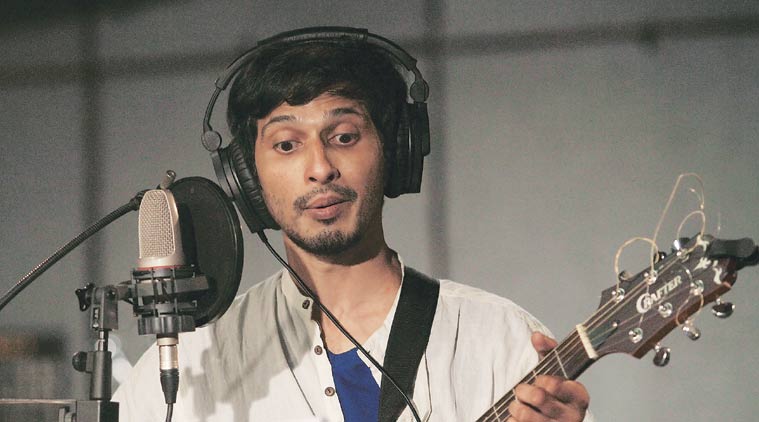 Bangladeshi musician Shayan Chowdhury Arnob