11 min read


📣 For more lifestyle news, click here to join our WhatsApp Channel and also follow us on Instagram
© IE Online Media Services Pvt Ltd



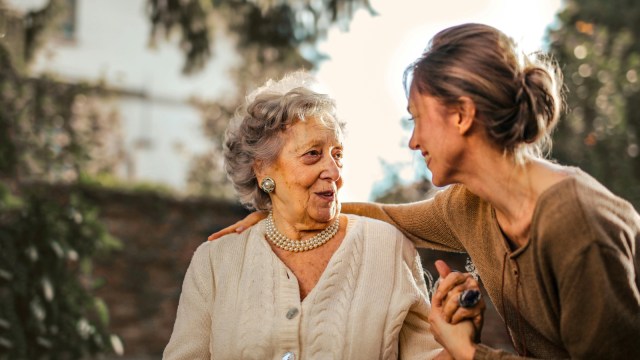 What we are experiencing, mental health experts say, is anticipatory grief that begins even before a loss occurs (image: pexels)
The call came at 5 pm on a Saturday in 2023, while I was deep into an exciting new project at work in Glasgow. Until that moment, the day had felt uneventful, and for once, the sun had broken through the city’s usual rain and gloom, lifting my mood in a way only rare Scottish sunshine can.
On the other side of the phone was my brother, who broke the news to me. My father was in an accident the previous night and had broken his arm. I was over 1,000 miles away in Scotland, suddenly feeling utterly helpless. Once I managed to speak to my brother again, he assured me that he was fine. Just a little shaken.
That was two years ago. My father retired and moved back to our hometown in Odisha with my mother. What was supposed to be their peaceful chapter became a slow unravelling I wasn’t prepared to witness. The accident left him with a broken wrist, chronic sleep apnea, and a body that no longer cooperated. He can’t walk long distances anymore. He doesn’t drive as much as he used to. The man who used to fix everything around the house now tires easily.
Meanwhile, my mother is fighting her own battles. Menopause arrived with a cascade of complications – osteoporosis, osteoarthritis, and mobility that has shrunk to walks that last 5-10 minutes when she was a person who used to stride through Dehradun’s hills with her walking group every morning. Cooking has become painful. Her doctor told her to lose weight to ease the pressure on her joints, but she asked me the question I couldn’t answer: “How am I supposed to do that when I can’t even walk?” Now, she’s facing surgery to remove a tumour from her uterus, and I’m here, barely scraping by financially, working long hours to stay afloat.
Some days I forget to call. Work swallows me whole with constant deadlines, pitches, and the constant hustle of managing home and new projects. Then I remember, and the guilt hits like a wave. What kind of daughter am I? They’re ageing, visibly declining, and I’m not there. Not physically. Not financially. Not in the ways that matter.
I’m 28, and I’m terrified.
Across India and beyond, Gen Z is waking up to a reality we thought was still years away: our parents are getting old, and we are nowhere near ready.
Maulii Kulsreshtha, 24, in a conversation with indianexpress.com, remembers the moment it hit her: watching her mother forget things she never used to, seeing her father choose rest over family outings he once led with infectious energy. “It felt like a role reversal I wasn’t prepared for,” she says. “These small shifts made me pause and recognise that they are not the same as before, and that realisation was unexpectedly emotional.”
For Samhitha B S, 23, it was the day her father started taking blood pressure tablets. “He’d always seemed strong and unshakeable, so seeing him need daily medication made ageing feel real.” Around the same time, her mother, who was once tireless and always working, began feeling exhausted more often. “It wasn’t one dramatic event, but a slow, steady change.”
Rupali Rani, 27, was confronted with it directly. Her father mentioned his impending retirement, and then her mother said the words that shattered her, “Kab tak rahenge saath? (Till when are we going to be there with you?) We are ageing… You need to take care of yourself. I wish I could stay with you forever, but I can’t.”
For Rajvi Turakhia, 28, a therapist herself, the realisation came during a family trip. Her parents had always been the planners, buying tickets, checking timings, arranging meals, and ensuring safety. “Suddenly, I found myself doing all of that. I was the one coordinating with the tour guide, reminding mom about medication, checking if meals were eaten on time, making sure they rested,” she recalls. “That shift of roles hit me very deeply. It wasn’t a dramatic moment, just a quiet realisation that the tables had turned. The people who carried me through everything were now looking at me with the same reliance.”
These are the moments that pierce through the noise of our productivity-obsessed lives. The moments when invincibility cracks, when time becomes visible, when the future we have been avoiding suddenly demands attention.
What makes this particularly complicated for Gen Z is the life stage we are in. We are building careers in an economy that offers little stability. We are navigating job insecurity, rising costs of living, and the pressure to ‘figure it out’ while our parents’ health is slowly but surely deteriorating.
“Living with my parents makes their ageing feel more real because I see the changes up close,” Kulsreshtha says. “At the same time, work pressure and financial worries make me feel torn. Even though I’m physically with them, my mind is often occupied with deadlines, career expectations, and securing a stable future. Sometimes I feel guilty that I’m at home but not always emotionally present.”
Aayushi Chauhan, 28, got married and moved away. One day, her mother shared how difficult it was to manage the house without her and how her father had been stressed at work. “These feelings came even though I have a brother, and I know he is there for them. Patriarchy doesn’t work on feelings, I guess,” she says. Her biggest worry now: “What if they fall sick and I’m not there for them?”
It is compounded by the fact that she has an elder sister with cerebral palsy whose health is also deteriorating, Aayushi adds. “My parents are ageing, and they are no longer able to take care of her the way they used to. It makes me feel that it is my responsibility to be there for both my parents and my sister.”
Rupali chose to work from home specifically for her parents. “Even when I’m not talking much, just knowing they are there gives me peace of mind,” she says. But the pressure is immense. “If they eat something that is not good for them, I become almost obsessive, warning them as though they are my children.”
What we are experiencing, mental health experts say, is anticipatory grief that begins even before a loss occurs.
Dr Shachi Patel, a clinical psychologist and fellow in brain and behavioural neurology at Stanford School of Medicine, explains that many young adults experience shock, sadness, and guilt when they first notice signs of ageing. “There is often a sudden awareness of vulnerability: ‘My parents are not invincible.’ This can trigger anxiety about the future, fear of loss, and a sense of role-reversal.”
Anticipatory grief often manifests as persistent worry, irritability, or a heightened protective instinct. “They may experience intrusive thoughts about potential emergencies, even when nothing serious is happening,” Dr Patel notes. “When financial or emotional readiness is lacking, this grief can convert into self-blame – ‘I should be doing more’ – leading to burnout before actual caregiving begins.”
Renu Seshadri, founder and lead therapist at Guiding Lights Counselling, sees this often in her practice. “For many young adults who may not feel financially or emotionally ready to step into caregiving roles, this can show up as overthinking, worst-case-scenario planning, and a deep sense of uncertainty,” she says. “The shift can feel abrupt: the parent-child dynamic begins to reverse, and the expectation becomes, ‘You should know what to do.’”
But interestingly, she notes, those with secure relationships with their parents and a strong sense of self often experience it differently. “They use it as motivation to work toward financial stability and long-term planning.”
For many of us, the pandemic sharpened this awareness. It made mortality tangible in ways our generation had never experienced. “The pandemic made me see how unpredictable life is,” Kulsreshtha reflects. “I became more conscious of my parents’ health and started worrying more than before. It shifted my mindset from ‘They’re fine, nothing will happen’ to ‘I need to be prepared, I need to be present.’”
Samhitha’s father got COVID-19 despite being extremely careful. “That shock taught me how fragile health can be and how quickly life can change. Since then, I am clearer about priorities and more attentive to their well-being.”
The pandemic also shifted conversations from casual to intentional for Turakhia. “Illness felt more real, and conversations shifted to being about medical histories, access to healthcare, and who to call in emergencies. My responsibility towards them feels more real,” she says.
Dr Rahul Chandhok, head consultant of mental health and behavioural science at Artemis Hospitals, points out that post-pandemic anxiety has heightened our fear of sudden loss. “Job instability, financial stress, and the constant need to compare themselves to others online make Gen Z feel less secure about their future,” he says. “Being far away from home or working from home can make you feel lonely and bad for not being there in person.”
So how do we navigate this? How do we balance our own precarious futures with the reality that our parents need us now?
The mental health experts I spoke to emphasise that preparedness doesn’t have to mean catastrophising.
Dr Patel recommends starting with naming the feelings. “Encouraging them to label emotions reduces fear and confusion.” She suggests gradual conversations – short, regular talks about health, finances, and support, not crisis-driven discussions. Shared rituals matter too: weekly meals, walks, or video calls that strengthen connection and reduce guilt.
“Boundary-based caregiving” is key, she says, helping without abandoning personal goals, asking siblings or relatives to share responsibility. “Preparedness should feel like empowerment, not a countdown.”
Dr Chandhok suggests practical steps: open conversations with siblings and close friends, small, honest discussions with parents about health and needs, and mindfulness practices like journaling or deep breathing to manage anxiety. “Setting limits and sharing duties with family members also helps avoid burnout.”
This grief, this fear, this overwhelming sense of responsibility, it’s not weakness. It’s love in its most vulnerable form.
We are the generation that is supposed to have it all figured out. We are supposed to be thriving, building empires, living our best lives. But we are also the generation watching our parents slow down while still figuring out how to pay rent and bills.
The truth is, we are not ready. But maybe that is okay. Maybe what matters is showing up anyway in phone calls that last five minutes, in video chats where we remind them to take their medication, in the guilt we carry because it means we care.
Seshadri points out that creating medical routines, emergency contacts, and financial clarity can provide a sense of preparedness without spiralling into fear constantly. And most importantly, as Dr Patel notes, families benefit from “creating a culture of transparency, allowing both generations to express needs, fears, and limitations honestly” while “celebrating present relationships: emphasising quality time rather than ‘counting the years.’”