Journalism of Courage



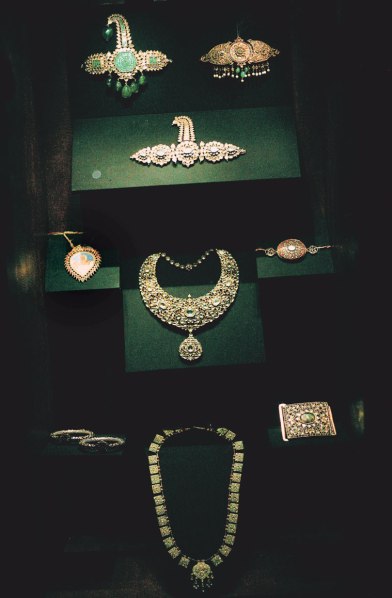
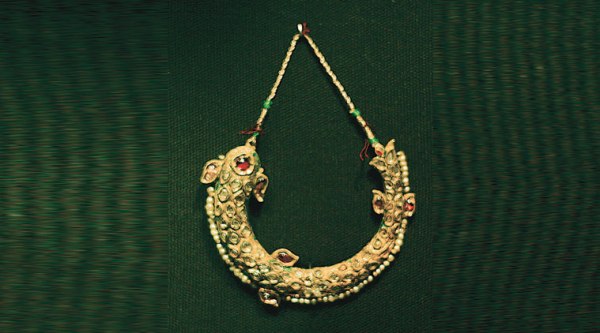 A Mughal-era necklace.
The Mughal era sparkled in more ways than one. Turbans glittered with an array of diamonds and rubies, thrones were encrusted with thousands of gemstones, and necklaces were embellished with expensive stones. An array of Mughal ornaments are now on display alongside bejewelled pieces from various eras of Indian history at Alamkara, the jewellery gallery of National Museum in Delhi.
The previous jewellery section of the museum closed a decade ago, and the objects were moved to a vault inaccessible to the public. The present collection has been curated by jewellery historian Usha Balakrishnan and features 255 items, ranging from necklaces, bracelets, pendants, bangles and amulets to earplugs, all displayed in glass cases. “Jewellery is exciting for anybody. Who does not smile looking at it? It was a great honour to be given the opportunity to tell stories through them. The gallery has the largest collection of jewellery in any museum in India,” says Balakrishnan.
The chronologically arranged exhibition begins with beaded necklaces from Harappa and Mohenjodaro and date to 2600-1900 BCE, and reveal a mastery over metallurgy as well as a range of contemporary styles. Materials range from gold and terracotta to shells and beads. Balakrishnan says it is interesting that artisans of the Indus Valley Civilisation would beat gold into sheets to fashion them into bangles and fillets.
 Jewellery
 Jewellery
Sirkap, a city on the Silk Road in the Punjab province of Pakistan, was frequented by the Chinese, Greek, Indian and Roman traders. Consequently, bangles, bracelets and a girdle designed like rows of fish, reflect the Indo-Greek influences in jewellery.
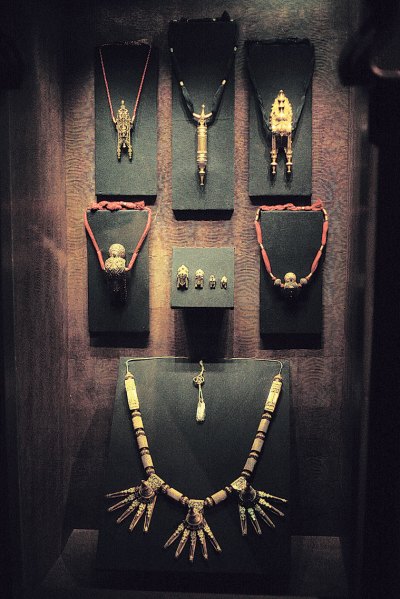
Balakrishnan guides visitors towards a large stone-studded Mughal necklace and says, “They never cut diamonds, they tried to keep them as big as possible and not waste it.” Another section, dedicated to marriage pendants, known as tali in south India and mangalsutra in the north, displays the kaluthiru — the marriage necklace of Nattukottai Chettiars community of Chettinad in Tamil Nadu. It has large claw-like pendants, with the centre piece resembling a temple with images of Shiva and Parvati. Animals such as fish, tigers and lions found their way into jewellery in the 19th and 20th centuries and depicted the omnipresent powers of nature. On display are ornaments with parrot and peacock designs. The peacock, visible in the form of a jhumar dating to the 19th century from north India, symbolised joy, beauty and pride, and snakes stood for ideals that women strived for — peace, calm and fertility — and the belief that happiness, wealth and fame could be attained through worship.
Not all jewellery was for beauty alone. Amulets that contained sacred verses to protect the wearer were disguised as lockets shaped like tiny boxes. A similar function was performed by pendants made of tiger claws and elephant tusks. A famous navaratna necklace was strung with nine auspicious gemstones that were believed to keep evil spirits at bay.
The new exhibition has begun to attract a large number of visitors. Long lines snake slowly among the 25 glass cases as families and individuals stop to marvel at the exhibits.

 3 min read