


📣 For more lifestyle news, click here to join our WhatsApp Channel and also follow us on Instagram
© IE Online Media Services Pvt Ltd
Tags:


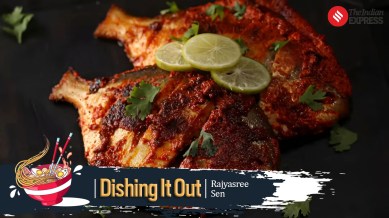
One of my favourite preparations at home while I was growing up was a whole Pomfret fish with its central bone removed, stuffed with a thick layer of slightly spicy, freshly ground mint-coriander-coconut paste, coated with rice-flour batter, and deep-fried. The crunch of the batter, the soft but firm fish, and the heat of the green paste made for an explosion of textures and flavours.
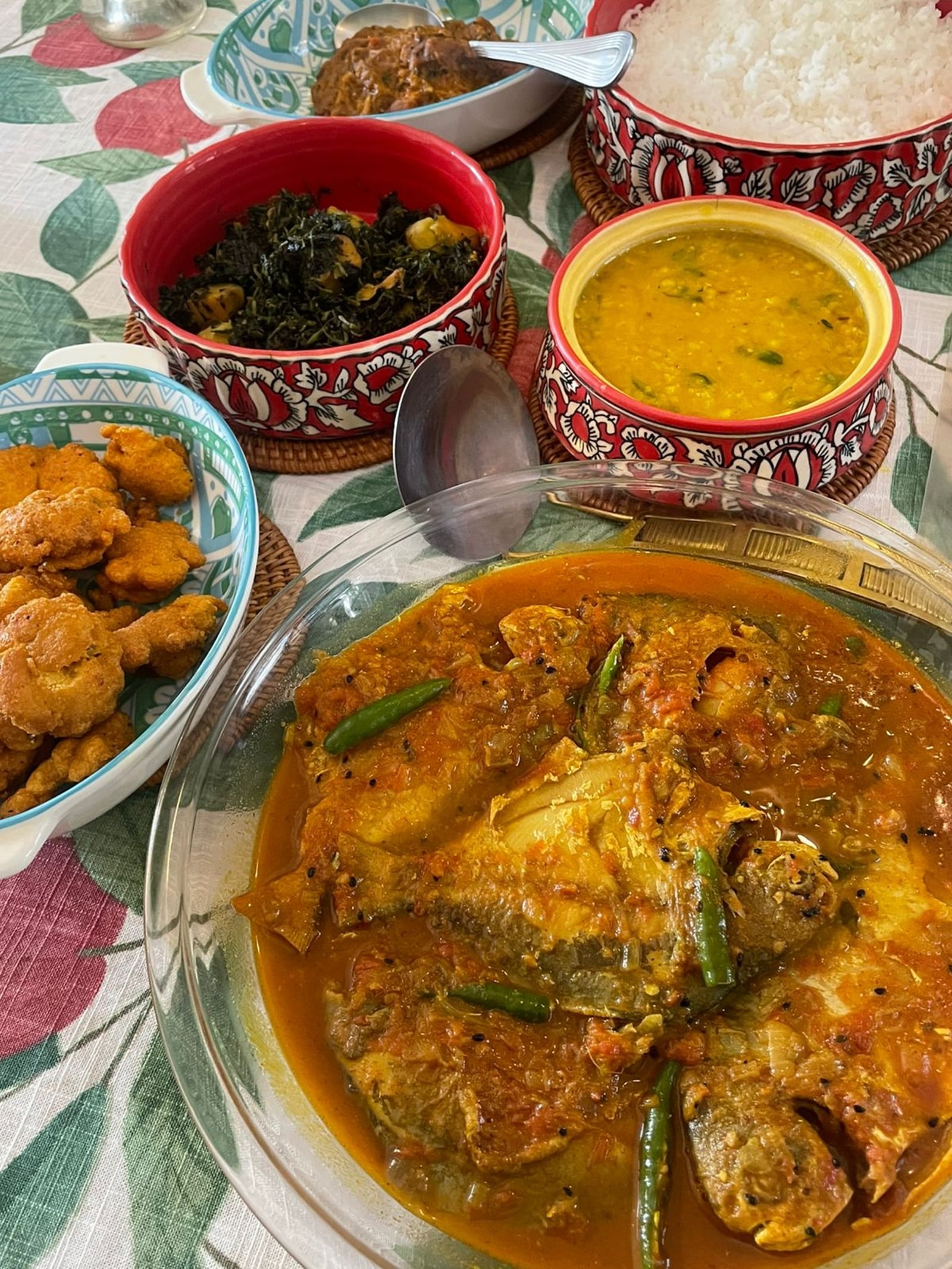
Sea fish isn’t a staple in Bengal, where I grew up, but the flat, silver pomfret with just a central bone and no scales has always been a delicacy in the state. Even though we primarily eat freshwater fish in the region. In fact, it was very commonplace to have fried pomfret or pomfret tomato maachh in a tomato gravy, once a week.


Pomfret is the perfect fish to cook with. It holds its shape, has a distinct flavour of its own that is not overpowering, it’s not a fatty fish, and it adapts beautifully to curries and grills alike. Few preparations are as soul-satisfying as a pomfret gassi or a patrani macchi made with pomfret filets. Maharashtra loves the saranga or chanderi pomfret, as it’s called there, so much that it was named as the state fish in 2024.
While it was always considered a delicacy and never the cheapest fish in the market, I doubt anyone was prepared for the fact that today a kilogram of pomfret costs Rs 1000. This puts it in the same league as the king of fish, hilsa. Also, you would be hard-pressed to find pomfrets weighing over 300 grams.
Why should this matter even to non-Bengalis? Because our love for pomfrets has led pescatarians to slowly, literally, eat away at the pomfret population.
Today, overfishing and the capture of juvenile, not fully grown, fish have led to a shortage of pomfret and an escalation in its price.
According to a news report, the oldest and one of the largest fishermen’s cooperatives in Maharashtra, Satpati, with a population of 35,000, reported a reduction of 1200 tonnes per year in 1975, most of which weighed between 300 grams and 500 grams. Since 1985, the annual catch has been reduced to 800 tonnes. In 2024, 3,000 members of the cooperative society caught just 40 tonnes.
The high demand and high price point for pomfret have also led to the fish being caught even during the breeding season – a problem faced by hilsa and even salmon. Fishing did not take place during the monsoons and festivals like Holi. But greed cares not for ecology, not realising that if you catch fish that are breeding, you’ll soon be left with no fish. Between over-fishing, pollution, and climate change, the pomfret will soon vanish from our plates.
The fish usually feed on zooplankton and phytoplankton. But the creeks that were filled with plankton are now full of pollutants and warm water from nuclear and thermal power projects, leading to a decrease in plankton. Juvenile-sized fish are now found to be carrying eggs, indicating that their size has also decreased, thanks to their adaptation to these factors.
This reads like a bleak column about a delicious fish, but once in a while, it’s good to remind ourselves that sometimes, too much love can kill as well. The solution – if you still want some delicious pomfret on your plate – is not to eat pomfret during the monsoons, and to stop buying small pomfret for a while. If the demand goes down, the supply will go up.
While the pomfret is like the salmon of the East, given its taste and price point, you really don’t want it to have the same fate as the dwindling numbers of salmon nowadays.
Next week, I’ll be writing on a more upbeat topic – the repertoire and range of Bengali delicacies, which you can usually only find if you’re invited to someone’s home.


