


Stay updated with the latest - Click here to follow us on Instagram
© The Indian Express Pvt Ltd
Tags:


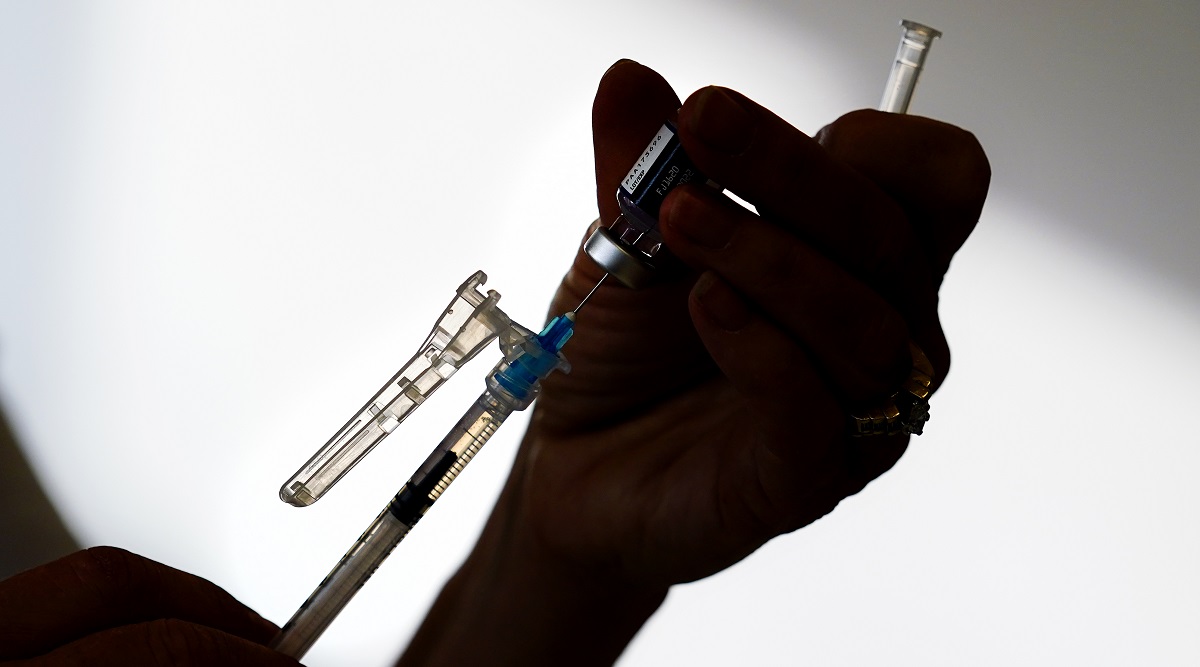
Days before India completed a year of its Covid-19 inoculation programme, the government told the Supreme Court that it has not issued any guideline that envisages vaccination without consent, or makes a vaccination certificate mandatory for any purpose.
In an affidavit filed on January 13, the Union Ministry of Health and Family Welfare said that “no person can be forced to be vaccinated against their wishes”.

It also said that “the Government of India has not issued any SOPs (Standard Operating Procedures) which make carrying of vaccination certificate mandatory for any purpose.”
“It is humbly submitted that the direction and guidelines released by Government of India and Ministry of Health and Family Welfare, do not envisage any forcible vaccination without obtaining consent of the concerned individual,” the ministry said.
Underlining that “vaccination for Covid-19 is of larger public interest in view of the ongoing pandemic situation”, the government said “it is duly advised, advertised and communicated through various print and social media platforms that all citizens should get vaccinated and systems and processes have been designed to facilitate the same. However, no person can be forced to be vaccinated against their wishes.”
It said that the government has formulated operational guidelines for Covid-19 vaccination according to which “all beneficiaries are to be informed about adverse events which may occur after Covid-19 vaccine”.
Governments and businesses have been seeking to enforce vaccine mandates, restricting the entry of the unvaccinated to public places. “Vaccine passports” have been debated around the world.
Some states have issued orders to disincentivise the refusal of vaccination by citizens. Maharashtra had said that only fully vaccinated individuals would be allowed on local trains, and the Kerala government had said the state would not bear the cost of Covid-19 treatment for unvaccinated individuals.
The Centre’s affidavit was filed in a matter in which the court had permitted the petitioner — Evara Foundation — to formulate any concrete steps to strengthen the existing framework for facilitating the vaccination of disabled persons, and to ensure that they have proper access to the process.
The government said it had accordingly received the suggestions and considered them.
The ministry said that as on January 11, 2022, a total of 1,52,95,43,602 doses had been administered, and 90.84 per cent of the eligible adult population had received their first dose of the vaccine. Sixty-one per cent of the adult population had received their second dose.
A total 23,678 doses had been administered to disabled persons who had voluntarily chosen to be identified as such by using their Unique Disability ID Card/Disability Certificate for registration.
For persons with disabilities who do not have any of the prescribed ID cards, provisions had been made “by following Facilitated Cohort Registration process on Co-WIN”, the government said.
“Co-WIN system provides the facility for creation of special vaccination sessions for this purpose and these sessions will have the features of registration of as many beneficiaries as are to be covered (subject to the limit of session capacity), without mandatory capturing of Mobile Number and Photo ID Card, through facilitated cohort registration and all vaccination slots in such special sessions will be reserved for vaccination of such facilitated cohorts”, the affidavit says.
“As on 06.01.2022, a total of 58,81,979 persons without any IDs have been vaccinated under the National Covid-19 vaccination programme,” it says.


Stay updated with the latest - Click here to follow us on Instagram


