Journalism of Courage



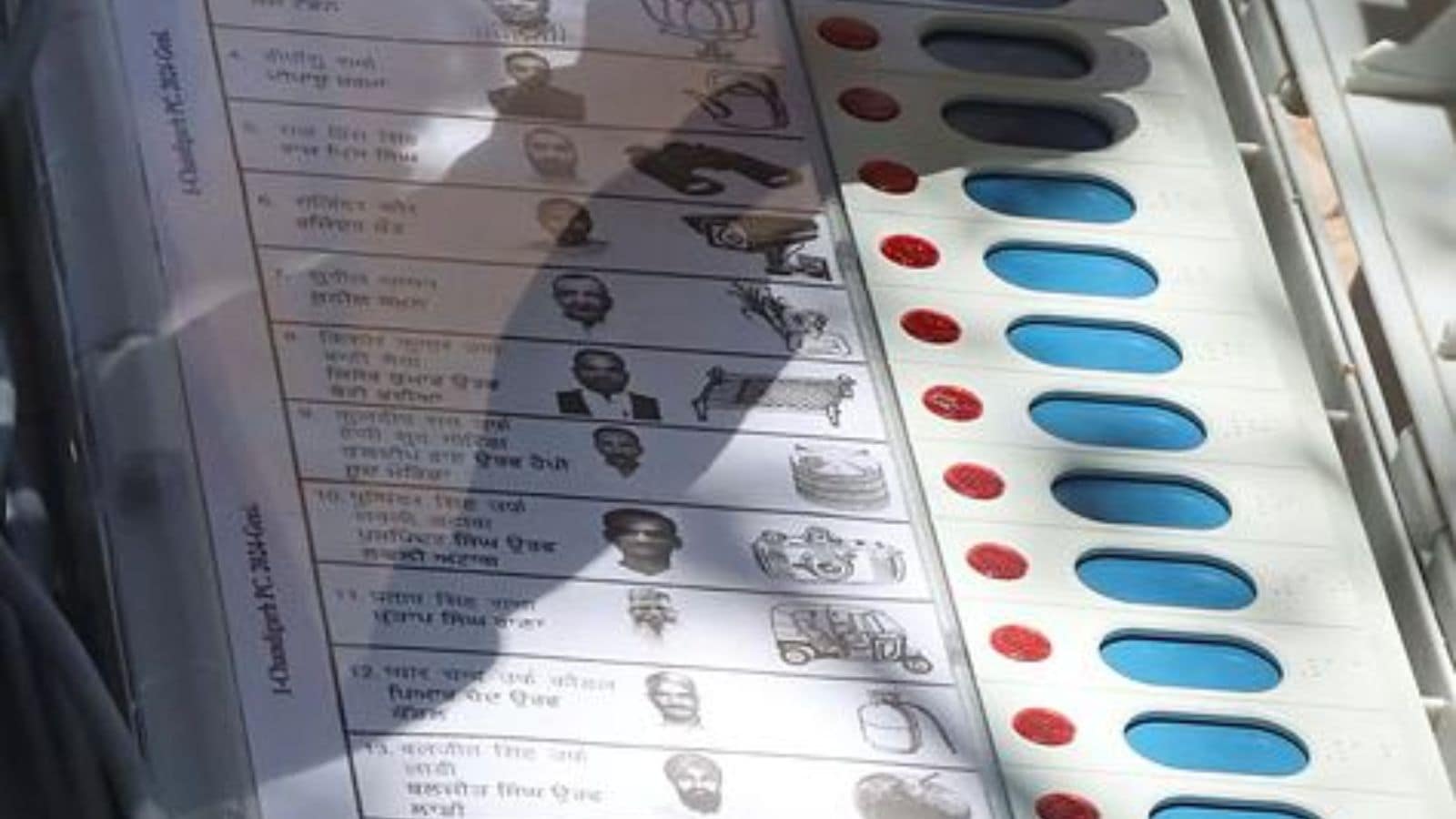 The comments came as Paul, arguing in person, cited tweets by Naidu from 2018 and some recent posts on X by Reddy alleging the possibility of EVM tampering following their defeat in the elections. (File photo)
The Supreme Court Tuesday dismissed a PIL which sought re-introduction of ballot papers in place of Electronic Voting Machines (EVMs) remarking that the machines are blamed only when one loses an election.
“What happens is, if you win the elections, EVMs are not tampered with. When you lose elections, EVMs are tampered (with). When Chandrababu Naidu lost, he said EVMs can be tampered. Now, this time, Jagan Mohan Reddy lost, he said EVMs can be tampered,” said Justice Vikram Nath presiding over a two-judge bench while dismissing the PIL by evangelist K A Paul.
The comments came as Paul, arguing in person, cited tweets by Naidu from 2018 and some recent posts on X by Reddy alleging the possibility of EVM-tampering following their defeat in the elections.
Paul introduced himself to the bench also comprising Justice P B Varale as President of Global Peace Initiative, an NGO based in the US, and claimed to have “rescued 3,10,000 orphans and 40 lakh widows. We have 5,000 widows in Delhi”. He said he had just returned from the Global Peace Summit in Los Angeles and that his PIL had the support of about 180 retired IAS/IPS officers and judges.
To a query from Justice Nath as to why he wanted to get into politics, Paul said his plea is not political but to protect democracy. He added that he had been to 155 countries and they all follow the ballot paper system.
He submitted that “every democracy in the world… has physical ballot paper” and only those ruled by dictators don’t have it.
“I have been to Russia with Putin, Syria with Assad and Liberia with Charles Taylor-got him out of prison. He is in prison now. His wife also attended the summit on Saturday. So, we are protecting democracy,” he submitted.
Paul claimed that he had been in the humanitarian field for 43 years as advisor to Prime Ministers and Presidents of the world. He claimed 18 political parties have supported his prayer for physical ballots.
Justice Nath asked him why he did not want India to follow a different approach from the rest of the world.
Paul responded that it was due to the corruption in the elections. Buttressing his argument, the petitioner said the Election Commission itself had disclosed that it had seized Rs 9,000 crore.
The PIL petitioner also referred to Elon Musk’s statements that EVMs can be tampered with.
The bench, however, was not moved and went on to dismiss the PIL.
In April, reaffirming its faith in the working of EVMs, the Supreme Court had rejected prayers for 100 per cent verification of the votes polled in them with the slips printed by the Voter Verifiable Paper Audit Trail (VVPAT) machines, or in the alternate, a return to ballot papers.
In two separate but concurring judgements, a bench of Justices Sanjiv Khanna and Dipankar Datta, which “conducted an in-detail review of the administrative and technical safeguards of the EVM mechanism”, said “to us, it is apparent that a number of safeguards and protocols with stringent checks have been put in place”. The court said that “data and figures” placed before it “do not indicate artifice and deceit”.
Notably, the court also gave candidates at number 2 and 3 positions, the option to get the burnt memory of 5 per cent of EVMs per assembly segment “checked and verified by a team of engineers from EVM manufacturers post the announcement of results” on a written request for a cost to be notified by the Election Commission of India (ECI) with provision for refund if the machine is found to be tampered with.
Rejecting the prayer for a return to ballot papers as “unsound”, Justice Khanna had that would undo electoral reforms. “EVMs offer significant advantages,” he said. “They have effectively eliminated booth capturing by restricting the rate of vote casting to 4 votes per minute, thereby prolonging the time needed and thus check insertion of bogus votes. EVMs have eliminated invalid votes… reduce paper usage… expediting the counting process and minimising errors.”

 4 min read