Journalism of Courage



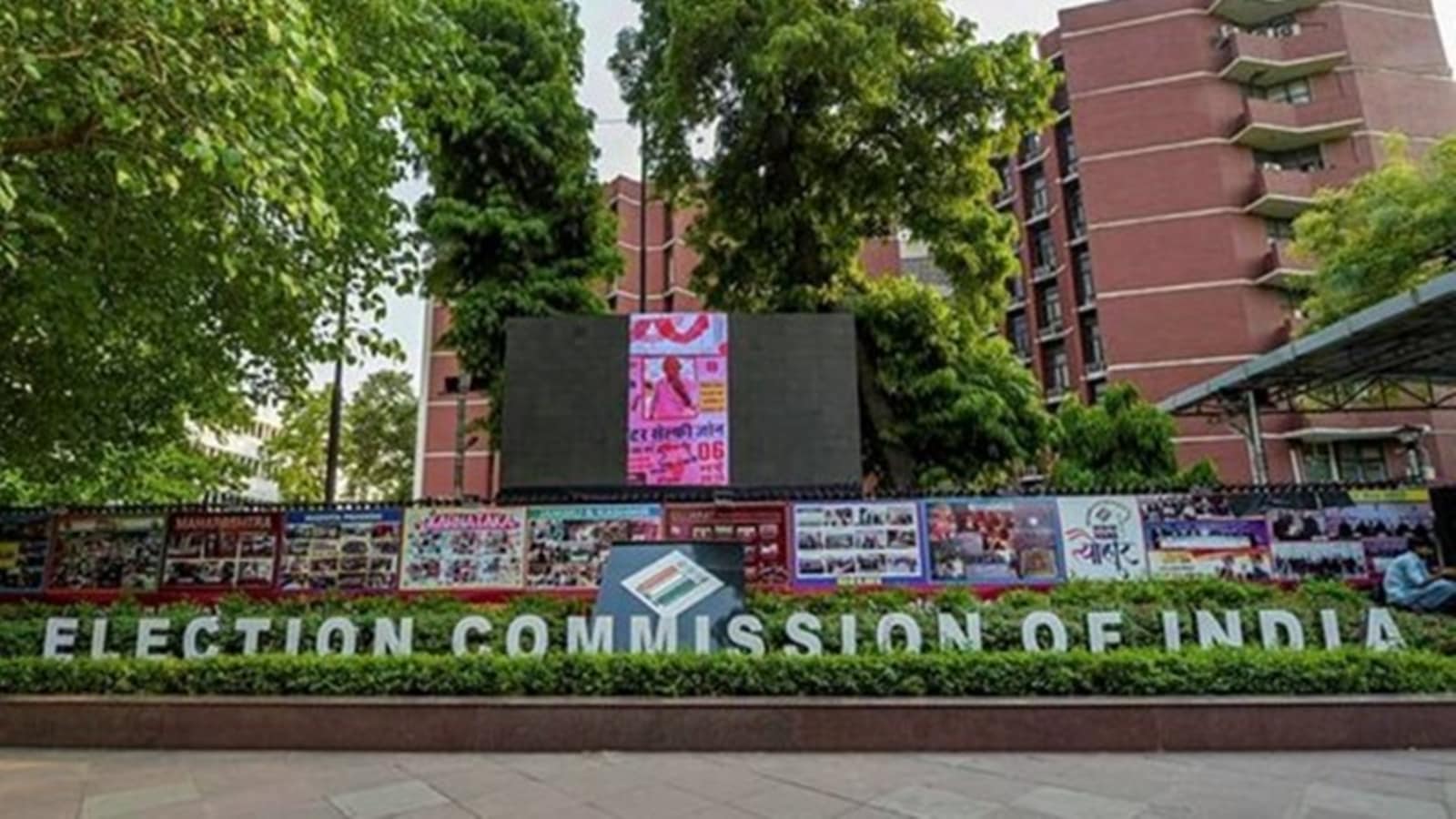 A bench of Chief Justice Sanjiv Khanna and Justice Sanjay Kumar issued notice to ECI, returnable in the week commencing March 17, 2025. (File image)
The Supreme Court Wednesday issued notice to the Election Commission of India (ECI) on a plea by Congress leader Jairam Ramesh challenging the amendment to the Conduct of Election Rules, 1961, limiting public inspection of election papers to only those documents specified in the provisions.
A bench of Chief Justice Sanjiv Khanna and Justice Sanjay Kumar issued notice to ECI, returnable in the week commencing March 17, 2025.
The amendment to the Conduct of Election Rules, 1961, was made last month by the Law Ministry, in consultation with the Election Commission of India (ECI), after the Punjab and Haryana High Court directed the ECI to provide election-related documents, including videography, CCTV footage, and copies of Form 17-C, pertaining to the recent Haryana Assembly elections to advocate Mehmood Pracha.
This change to the Conduct of Election Rules, according to government sources, has been made to ensure that CCTV or electronic footage of the polling process is not covered within the definition of election papers and, hence, is not open to public scrutiny. Chief Election Commissioner Rajiv Kumar recently justified the change on the ground that making CCTV footage accessible to the public would violate the privacy of voters and, therefore, could be misused.
Appearing for Ramesh, Senior Advocate A M Singhvi said he was concerned about four documents in particular, which were restricted from public access. Seeking clarity, CJI Khanna said, “One is a third party applying for which he has to pay the charges. Second is where the candidate who stood in the elections applies…”.
He asked if the restrictions also apply in the latter case. Singhvi said, “The amendment is to the Rules saying that unless I specify in these Rules, I am not obliged to disclose. Now there is no specification under these Rules. The amendment is a one-line amendment.”
The court then sought to know about the earlier Rule. “That’s the catch in this. They have done it very cleverly. There are no earlier Rules,” said Singhvi.
The senior counsel added, “Supply of CCTV footage of the entire was under clause 19(10)(3) of the handbook.” He added that amendments cover the supply of copies of the result form and form 17(c) which is an account of votes recorded in favour in each constituency.
CJI Khanna said, “This account of votes in each constituency may be slightly problematic” and asked if it is booth-wise to which Singhvi said they are all booth-wise.
CJI Khanna also sought to know if it would reveal someone has voted. “No,” said Singhvi adding “this is one of the reasons given in the press,” to justify the changes, that “we have taken away CCTV and video recordings as it will reveal…”.
“Does my lordship ever get the identity of how I vote when I vote?” asked Singhvi to which CJI Khanna said that “when it comes to constituency-wise it may lead to a problem.”
Senior Advocate Kapil Sibal, also appearing for Jairam Ramesh, said, “17(c) form is given to each representative of a political party. He has to sign the form…” He added it is even otherwise available.
“So that will not reveal which way the votes are cast?” asked CJI Khanna. Sibal and Singhvi said that it would not. Singhvi added, “The amendment is clever, over clever by half.”
The bench then went on to issue a notice.
Singhvi urged the court to direct that a reply be filed but the court did not issue any such direction but remarked that they will file.
In December 2024, Jairam Ramesh said a petition had been filed at the Supreme Court challenging the Centre’s decision to amend the Conduct of Election Rules, 1961.
“The Election Commission, a Constitutional body, charged with the conduct of free and fair elections cannot be allowed to unilaterally, and without public consultation, amend such a vital law in such a brazen manner. This is especially true when that amendment does away with public access to essential information that makes the electoral process more transparent and accountable. The integrity of the electoral process is fast eroding. Hopefully the Supreme Court will help restore it,” Ramesh said in a post on X.

 4 min read