Journalism of Courage



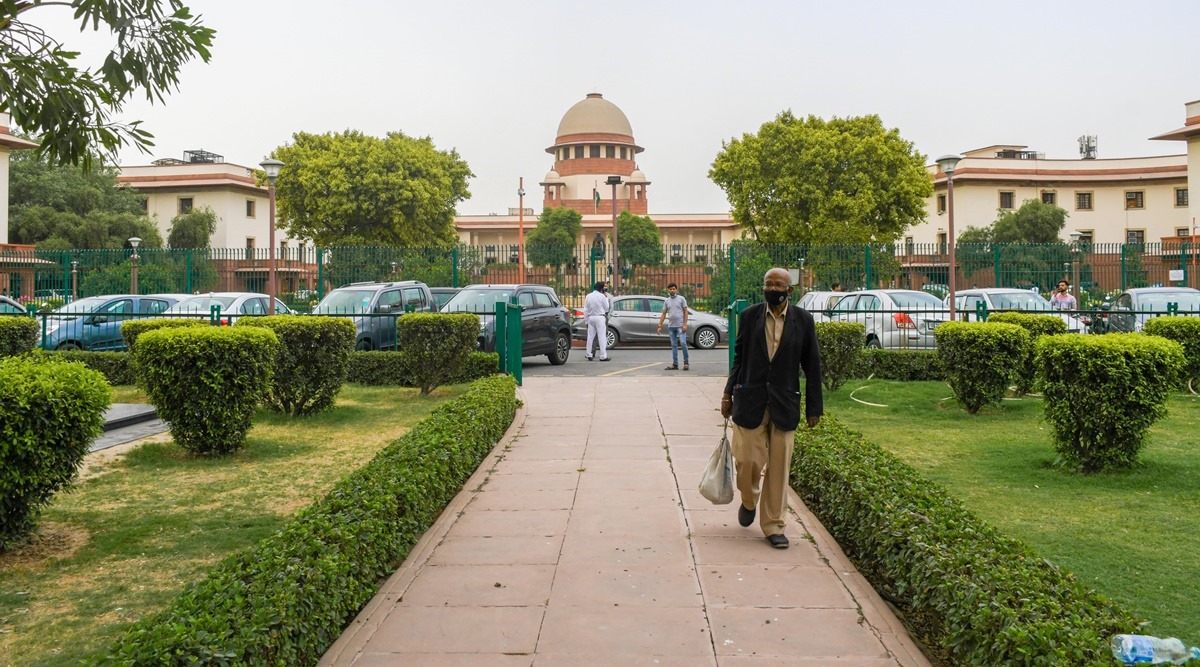 Announced in the 2017 Union Budget, the scheme allows use of electoral bonds for donating money anonymously to political parties. (Express file photo)
 A five-judge constitution bench of the Supreme Court presided by Chief Justice of India D Y Chandrachud will hear petitions challenging the 2018 Electoral Bonds Scheme October 31.
As per the top court’s cause list (list of business) for October 31, the bench will also comprise Justices Sanjeev Khanna, B R Gavai, J B Pardiwala and Manoj Misra.
The batch of petitions were filed by NGO Association for Democratic Reforms, CPI(M), Congress leader Jaya Thakur and a PIL by one Spandan Biswal.
On October 16, a three-judge bench presided by CJI Chandrachud had referred it to a Constitution bench and fixed the hearing for October 31.
“In view of the importance of the issue raised, and with regard to Article 145(3) of the Constitution, the matter be placed before a bench of at least five judges,” the bench said while referring to it.
Article 145(3) of the Constitution says there should be at least five judges to hear cases that involve a substantial question of law as to the interpretation of the Constitution.
Announced in the 2017 Union Budget, the scheme allows use of electoral bonds for donating money anonymously to political parties.
The Centre termed the scheme “a big step towards electoral reform” which “will ensure transparency” and “accountability”. The petitioners, on the other hand, have contended that the scheme will make political funding opaque, pointing out that it allows political parties not to disclose their annual contribution reports to the Election Commission of India (ECI), or the identities of those who have donated using electoral bonds.
In April 2019, a three-judge SC bench, in an interim order, directed political parties which received donations through electoral bonds to “forthwith” submit details of the bonds to the ECI.
Subsequently, while dismissing a prayer to stay the sale of fresh bonds in March 2021, the SC disputed the petitioners’ contention regarding the “complete anonymity” of bond purchasers.
It pointed out that bonds had been issued in the past — in 2018, 2019 and 2020 — “without any impediment” and that it had already ordered “certain safeguards” by way of its April 2019 interim order. “It is not as though the operations under the scheme are behind iron curtains incapable of being pierced,” the SC had said.
The Supreme Court also referred to the EC receiving details of contributions received through bonds, in pursuance of the April 2019 order.
The top court said, “We do not know at this stage as to how far the allegation that under the scheme, there would be complete anonymity in the financing of political parties by corporate houses, both in India and abroad, is sustainable”.

 3 min read