


Stay updated with the latest - Click here to follow us on Instagram
Tags:


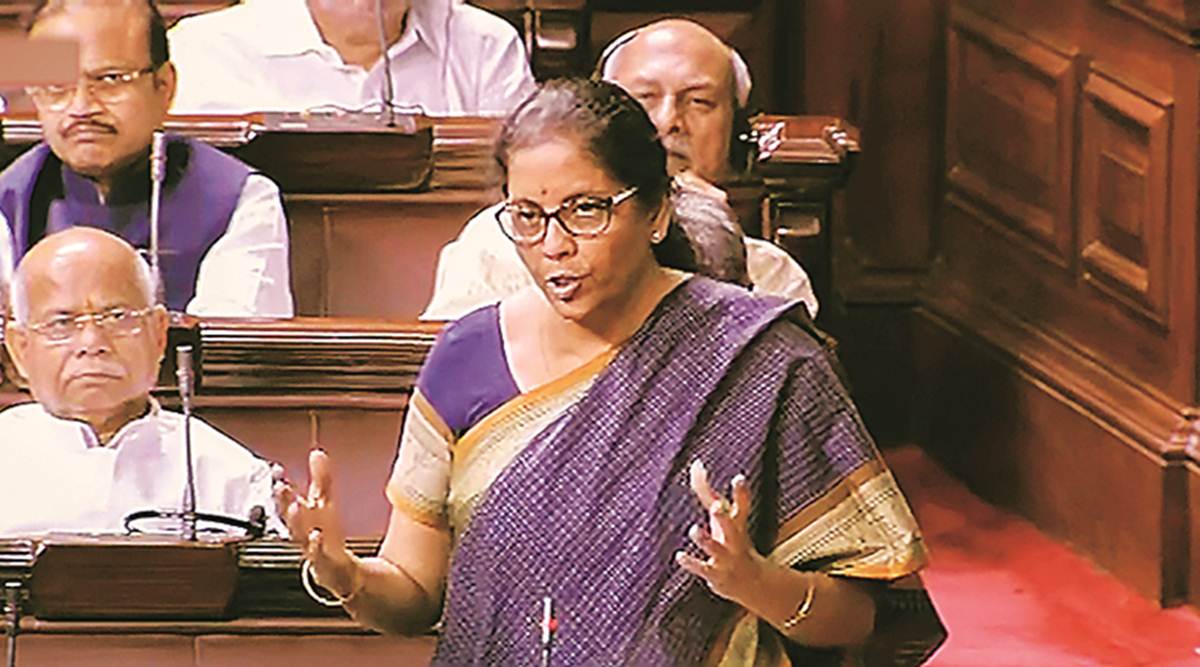
A Bill to amend the Insolvency and Bankruptcy Code (IBC) to ensure more clarity in the debt resolution mechanism was passed in the Rajya Sabha with a voice vote on Monday.
Replying to a debate on the Bill to amend the IBC, which was passed by Parliament in 2016, Finance Minister Nirmala Sitharaman said the changes were “brought in for greater clarity” so that “no grey area prevails”, and “no interpretations which are going against the original intent of the Act are still prevalent”.

The Bill was discussed for nearly four hours in the House.
The amendments set a deadline to complete the insolvency resolution process — 14 days for admitting or rejecting an application and 330 days for litigation and other judicial processes. It also provides clarity on permissibility of corporate restructuring schemes, the rights and duties of authorised representatives of voters, distribution of the recovery between financial and operations creditors, and makes it binding on Union and state governments.
The Bill states that if owed to a class of creditors, then the group will have a representative on the committee of creditors who will vote on their behalf. The representative’s vote should be decided by a majority of the voting share of the creditors it represents.
The balance of stakeholders was becoming an issue, which is why the amendments have been brought in, she said. Sitharaman said IBC has brought down recovery time and has increased the rate of recovery for creditors.
She said that compared to the time when companies went under liquidation and the lenders did not get anything, they are now able to recover 43 per cent of their dues on an average under IBC. If successful bidders do not execute the resolution, there are provisions for criminal prosecution, Sitharaman told the House. The new changes, the Finance Minister said, were in response to “newer challenges”.
Beginning the discussion, Congress leader Kapil Sibal said the economy is going through “very difficult times” and the manufacturing sector is in doldrums. Although he appreciated the government for bringing the IBC, which he said is the “need of the hour”, Sibal said the government’s measures could trigger unemployment.
He claimed that only one of every five cases ended in resolution, while the rest led to liquidation. Sibal said the liquidation of small companies will lead to people losing jobs and demanded that the Bill be sent to a Select Committee — a request made by several members of the Opposition.
Binoy Viswam of the CPI called the Bill a “a manifesto of an unholy alliance between the government, corporates, rich and bureaucrats” and said that neither the government nor the banks are beneficiaries. He demanded that the government should make public the names of 9,331 wilful defaulters. “We want recovery; recovery is not resolution,” he said. full report on


Stay updated with the latest - Click here to follow us on Instagram


