Journalism of Courage



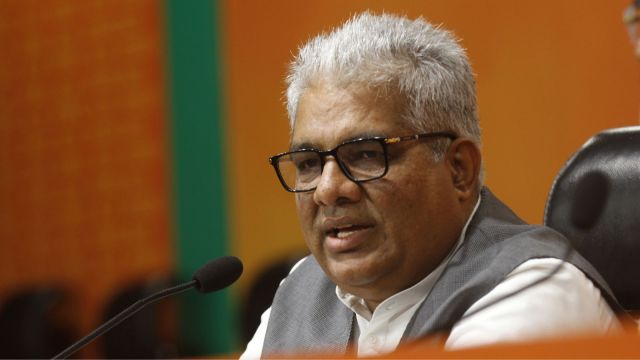 Seeking to explain the import of the new definition, Yadav said that it does not relate only to a hill’s elevation of 100m, but also considers its entire spread at the base. (File Photo/Anil Sharma)
Facing protests and criticism over a new uniform definition of the Aravalli hills, which was accepted by the Supreme Court based on recommendations of a Centre-led panel, Union Environment Minister Bhupender Yadav said Sunday that it would not lead to any relaxation for mining in the range.
Speaking to reporters after a meeting of the National Tiger Conservation Authority in the Sunderbans, Yadav said, “The total Aravalli range is 1.47 lakh square km and only 2 per cent can be mined and that too only after certain studies. The Supreme Court has directed that a sustainable mining plan should be prepared like it has been done in Saranda, Jharkhand, and permissions will be granted (for mining) only after that. No permissions will be granted in Delhi, and more than 20 reserve forests and protected areas in Aravallis will all be protected.”
The Union Environment Ministry also issued a detailed note, seeking to explain that no new mining leases will be allowed until a detailed study is undertaken according to a November 20 order of the Supreme Court.
The Indian Express had first reported on November 27 that the new definition — any landform that is at an elevation of 100m or more above the local relief will be considered as part of Aravalli Hills — left more than 90 per cent of the range out of the Aravalli umbrella, and vulnerable to mining and construction with severe environmental ramifications.
Based on internal assessments of Forest Survey of India, this newspaper reported that barely 8.7 per cent or 1,048 out of 12,081 Aravalli Hills were 20m or higher, thus leaving out a vast number of hillocks out of protection’s scope.
Seeking to explain the new definition, while dismissing the criticism as “lies” and “confusion” spread by “some YouTube channels and some people”, Yadav said it does not relate only to a hill’s elevation of 100 m, but also considers its entire spread at the base.
“…The height of 100m will be measured from the base of the mountain structure, and mining will not be allowed around or beneath the hill’s structure,” he said.
View this post on Instagram
The Union Minister said the Aravalli ranges have been defined as the extent of 500 m between two or more hills. “Due to this definition, more than 90% Aravallis will be under protection,” he said.
Yadav also said that the Centre has been supporting strict mining regulation in the entire Aravalli ranges spanning four states, Delhi, Rajasthan, Haryana and Gujarat, and 39 districts. He added that the definition being followed now has been in use in Rajasthan in 2006, but the protections have been increased.
The new definition was submitted in the apex court by an expert panel led by Union Environment Secretary Tanmay Kumar and comprising experts from the Geological Survey of India, Survey of India, Forest Survey of India, Central Empowered Committee of the Supreme Court and Forest department secretaries from all Aravalli range states.
The definition triggered protests, mainly in Rajasthan which accounts for nearly two-thirds of the mountain range. On Saturday, a silent demonstration was held outside the official residence of Haryana Environment Minister Rao Narbir Singh.
Apart from the definition, the Supreme Court also accepted the panel’s recommendation on an interim ban on new mining leases, except in the case of critical and atomic minerals, for strategic purposes, and prohibition of mining in core and inviolate areas.
The Supreme Court directed the Union Environment Ministry to prepare a management plan for sustainable mining for the entire Aravallis before granting new mining leases.
This will entail identifying permissible areas for mining, and ecologically sensitive, conservation-critical and restoration priority areas within the landscape where mining shall be strictly prohibited or permitted only under exceptional and scientifically justified circumstances. It will also include studying cumulative environmental impacts and the ecological carrying capacity of the region and detailed post-mining restoration and rehabilitation measures.

 4 min read