This is an archive article published on September 19, 2020
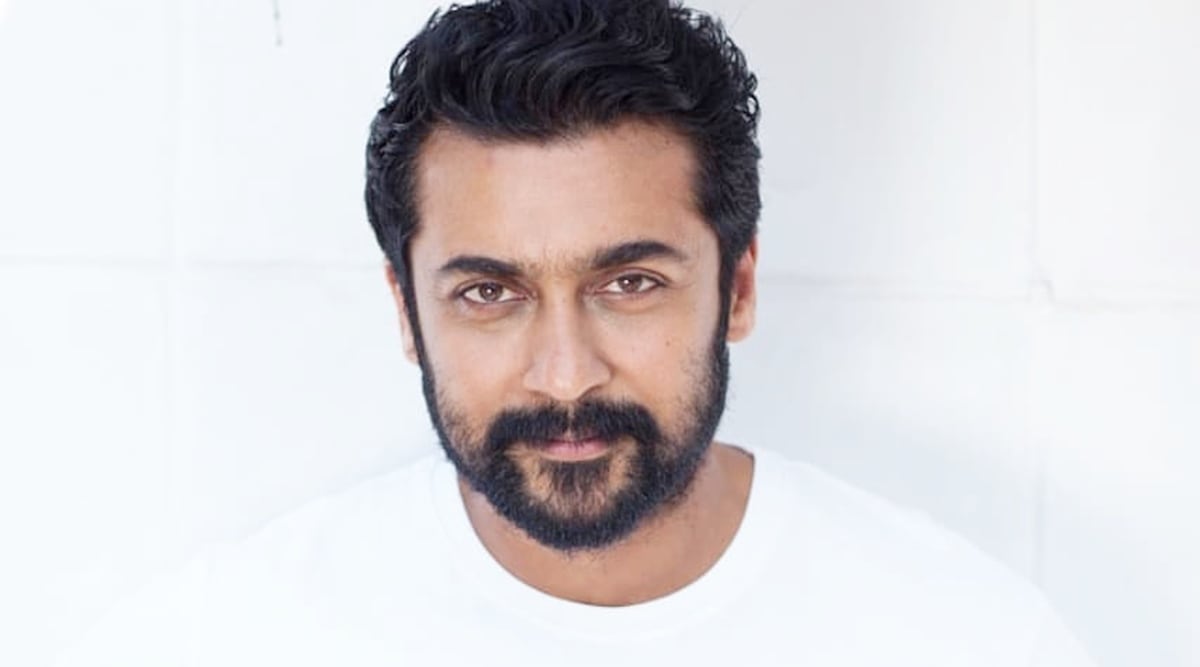
Madras HC declines to take contempt action against Tamil actor Suriya
In the wake of suicides by three medical aspirants on the day before the medical entrance, Suriya had said last Saturday: “Courts are delivering justice through video-conferencing due to the fear of the life-threatening coronavirus, (but) are ordering students to fearlessly go and write the exams.”
Chennai | Updated: September 19, 2020 06:42 AM IST
3 min read
Whatsapp
twitter
Facebook
Reddit
The Madras High Court bench observed that actor Suriya’s NEET remarks do not amount to contempt or a level of criminal contempt but termed them "absolutely unnecessary".
Invoking the right to free speech, the Madras High Court Friday refused to initiate contempt proceedings against actor Suriya for his criticism of the judiciary over the NEET issue, but suggested that his comments could have been made in a more moderate tone and informed him of the work done by courts during the pandemic.
In the wake of suicides by three medical aspirants on the day before the medical entrance, Suriya had said last Saturday: “Courts are delivering justice through video-conferencing due to the fear of the life-threatening coronavirus, (but) are ordering students to fearlessly go and write the exams.”
Taking umbrage over this, Madras High Court judge, Justice S M Subramaniam, wrote to Chief Justice A P Sahi seeking contempt proceedings against the Tamil star setting off a controversy in the state.
On Friday, the bench of Chief Justice Sahi and Justice Senthilkumar Ramamoorthy said it entirely agreed with Advocate-General Vijay Narayan, who declined to give his go-ahead for criminal contempt of court proceedings. Though courts have the power to initiate suo motu contempt action, the Advocate-General’s consent is required under the Contempt of Court Act.
Presenting the act of calling a spade a spade and that of making unrestrained speech as two different dimensions, the bench said: “The right to freedom of speech that includes fair criticism is guaranteed under the Indian Constitution.”
“The same Constitution,” it added, “also protects and insulates judicial governance from insidious and derogatory comments under Article 215 and the laws made thereunder.
The bench told the actor that the subordinate courts in the state have disposed of more than one lakh cases during the pandemic period. It added that 42,233 cases have been disposed of by the Madras High Court alone during the lockdown.
Story continues below this ad
“Utterances by the cine actor may have been absolutely unnecessary or even unwarranted, for being ignorant of the manner in which the entire judiciary of this state has served the interest of its citizens during this pandemic, and any such statement could have been avoided in a much more sober way, instead of an accusing tone, which though trivial in nature has raised a storm in a tea cup.”
“The background in which the statement of the actor has been taken to be a subject matter of undermining the authority of the court and judges and devotion of judges towards their duty, in their mode of functioning through virtual hearing during the pandemic, which may be a sneer, but before a scoff or a mocking comment is made, it should also be weighed as to whether it is fair criticism or not,” the court said.
It also said there could be a wide debate on the distinctions between insult and criticism, and said a reasonable precaution must be taken while making such statements in matters of public affairs.
Arun Janardhanan is an experienced and authoritative Tamil Nadu correspondent for The Indian Express. Based in the state, his reporting combines ground-level access with long-form clarity, offering readers a nuanced understanding of South India’s political, judicial, and cultural life - work that reflects both depth of expertise and sustained authority.
Expertise
Geographic Focus: As Tamil Nadu Correspondent focused on politics, crime, faith and disputes, Janardhanan has been also reporting extensively on Sri Lanka, producing a decade-long body of work on its elections, governance, and the aftermath of the Easter Sunday bombings through detailed stories and interviews.
Key Coverage Areas:
State Politics and Governance: Close reporting on the DMK and AIADMK, the emergence of new political actors such as actor Vijay’s TVK, internal party churn, Centre–State tensions, and the role of the Governor.
Legal and Judicial Affairs: Consistent coverage of the Madras High Court, including religion-linked disputes and cases involving state authority and civil liberties.
Investigations: Deep-dive series on landmark cases and unresolved questions, including the Tirupati encounter and the Rajiv Gandhi assassination, alongside multiple investigative series from Tamil Nadu.
Culture, Society, and Crisis: Reporting on cultural organisations, language debates, and disaster coverage—from cyclones to prolonged monsoon emergencies—anchored in on-the-ground detail.
His reporting has been recognised with the Ramnath Goenka Award for Excellence in Journalism.
Beyond journalism, Janardhanan is also a screenwriter; his Malayalam feature film Aarkkariyam was released in 2021. ... Read More


 3 min read