6 min read
Stay updated with the latest - Click here to follow us on Instagram
© IE Online Media Services Pvt Ltd



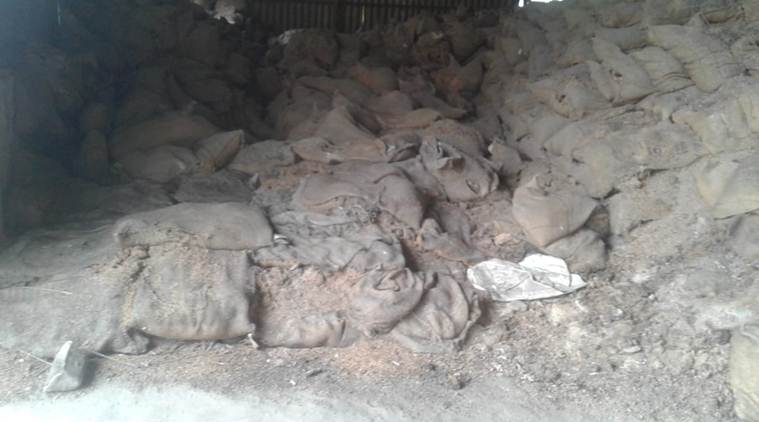 Narayana Kurup, the rice mill’s general manager, sat uncomfortably in his small office with no choice but to work long hours in the putrid smell as he did two months ago. (Source: GM Agro Mills)
In the aftermath of the terrible Kerala floods in mid-August, when indianexpress.com visited the premises of Geeyem Agro Mills in Koovappady near Perumbavoor, a disturbing stench of rotting rice pervaded the air. Muddy flood-waters had seeped into almost 60 truckloads of rice that belonged to the Kerala Civil Supplies Corporation (SupplyCo) and was meant to reach ration shops in Konni and Udumbanchola areas in southern Kerala. Last week, when indianexpress.com revisited the rice mill to assess the conditions post-floods, the stench remained and so did hundreds of sacks of decayed rice.
Narayana Kurup, the rice mill’s general manager, sat uncomfortably in his small office with no choice but to work long hours in the putrid smell as he did two months ago.
“If SupplyCo could at least give us approval to take it away, we can dump it in a pit in our own yard. There’s plenty of space with us. How do you expect us to work like this?” a weary Kurup said, over a cup of black coffee.
Geeyem Agro Mills, one of the bigger rice mills in this stretch of Ernakulam district, used to procure, before the floods, almost 200 truck-loads of paddy every month which then go through a process of cleaning, de-husking, polishing, grading and sorting to be packed into neat sacks of rice of the popular ‘matta’ variety. A large share of this rice goes to warehouses, retail outlets and ration shops under SupplyCo along the length and breadth of the state. However, the floods in August this year have altered the contours of the rice mill industry, in and around this stretch, affecting nearly 30 of the 70 mills and piling up losses of almost Rs 160 crore. The sudden deluge, without any prior warning, pushed rice mill owners into a corner where they could not shift stocks to a safer location before the waters came in. In this process, SupplyCo stocks worth crores of rupees remained submerged for days at these mills, inflicting heavy losses for the industry.
Part-I: Three months after Kerala floods, Chendamangalam starts weaving a new life, but challenges remain
A top official of SupplyCo, who declined to give his name, admitted that the public-sector undertaking has been facing delays in making payments and giving approvals to shift stocks. “All the damaged stocks at these rice mills are insured, so naturally they are the property of insurance companies. Now, we have submitted the claims, but so far they haven’t taken a decision. A case is actually pending in the High Court asking for approval to dispose of the stocks. We cannot do anything without the nod from the insurance firms,” he said.
“Once they release the payments, we will accordingly pay the mill owners as well,” he added.
The floods have hit SupplyCo’s own procurement of rice for the Food Corporation of India (FCI) hard, with internal losses estimated at Rs 136 crore, the official said.
“We have been able to procure only from Palakkad district. All other districts, especially Alappuzha, remain devastated,” he said.
Part-II: In plywood hub, bankrupt entrepreneurs still wait for insurance claims
According to the Kerala government’s own estimates, paddy cultivation in about 20,000 hectares have been affected by the deluge, with Kuttanad, seen as the rice bowl of the state, facing its worst agricultural loss. In the last week of August, official data showed area sown to paddy crop in the state accounting for 57,000 hectares, less than the 62,000 hectares in the same period last year. The harvesting of the paddy crop in fields unaffected by the floods began in October.
As for the rice mills in the Kalady-Aluva-Mattoor stretch near the banks of Periyar in Ernakulam district, it’s undeniable that tough times are ahead. The Kalady Rice Millers Association told indianexpress.com in August that 30 of the 70 mills in the area suffered large losses, amounting to nearly Rs 160 crore. Already burdened with loans and debts, the Association said rice mill owners were operating under onerous circumstances and had absolutely no incentives to continue work. There’s still no clarity about a special financial package requested from the state government which would help them waive off their loans.
Unless payments are made from SupplyCo and funds released by insurance agencies, Kurup points out, things cannot be brought on track.
“They (SupplyCo) formed a committee with FCI officials and those in charge of weight and measure. They came here, took stock of the damage and left. Since then, there’s no update. Here, we are sitting with no money at all, unable to start work,” he says.
With bureaucratic red-tape and legal hassles blocking the way, the wait continues for rice mill owners in these parts of Kerala for an intervention. For an industry having to compete hard with nearby states like Andhra Pradesh and Tamil Nadu, government assistance is critical. The numbers say everything: once home to over 2500 rice mill, this hub of rice production in Ernakulam has less than 150 existing at the moment.
Stay updated with the latest - Click here to follow us on Instagram