Journalism of Courage



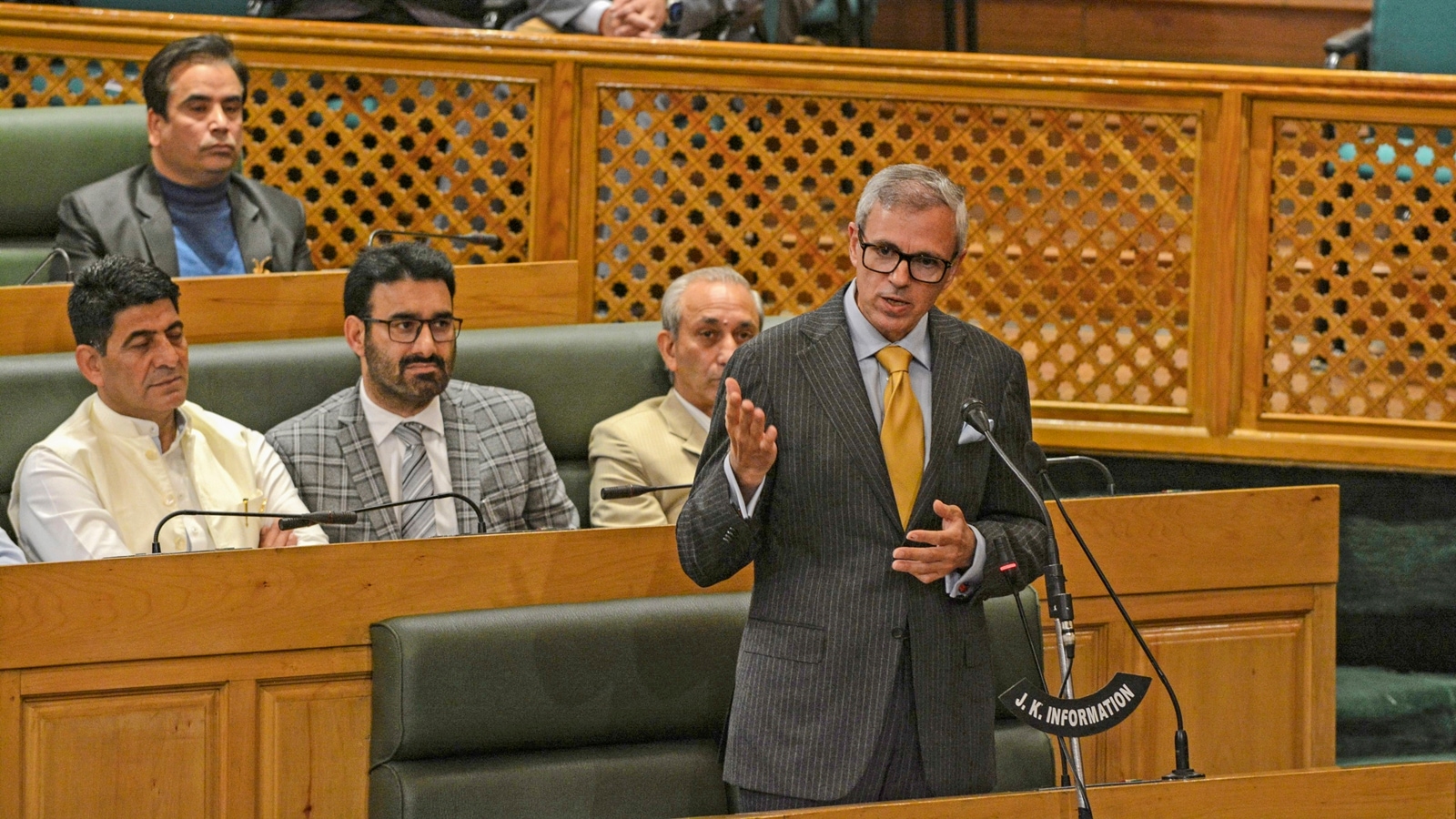 Jammu and Kashmir Chief Minister Omar Abdullah speaks on the second day of the Legislative Assembly session. (PTI)
The cabinet sub-committee on reservation-related issues in Jammu and Kashmir tabled its report in Cabinet Wednesday. The report will now be forwarded to the law department for examination, government sources told The Indian Express.
On June 10, Sakeena Itoo, J&K minister and a member of the sub-committee, had announced that the report concerning reservation had been prepared and will be submitted to the Cabinet. This came a day before the six-month deadline agreed upon by the government and students demanding a rationalisation of reservation in education and employment in the state earlier this year.
Introduced in April last year by the Lieutenant Governor led UT administration, the UT’s reservation policy amends Rule 4 of the J&K Reservation Act of 2005 to increase reservation for reserved category in the state to 67 percent from 43 percent, with 3 percent horizontal reservation to ex-servicemen. This has meant that only 33 percent was left for the general category of candidates – a change that has been vehemently opposed by various political parties as well as students.
Student groups from the ‘Open Merit’ or general category have been demanding a rationalisation of this reservation for over a year. This was also among the first challenges faced by the elected government in J&K. Chief Minister Omar Abdullah had met with students protesting outside his residence in December 2024. The protesters also included NC’s Srinagar MP Aga Ruhullah Mehdi and PDP leader Waheed Para.
In April this year, an affidavit from the J&K government in the J&K High Court “defending” the Union Territory’s reservation kicked up a political row. Three months after it set up a sub-committee to examine UT’s contentious 67 percent reservation, the government has asked the HC to dismiss a petition challenging the policy.
When opposition parties trained their guns on the ruling National Conference government for defending a policy they once opposed, the latter went into damage control mode, calling its own affidavit “gol mol (vague)”.
In a post on June 10, PDP’s Pulwama MLA Waheed Para called the reservation a “systematic embargo on merit”, saying: “The only region in the country where youth are punished for being meritorious is sadly J&K. Reservation is important to uplift the downtrodden, but it cannot in any circumstances come at the cost of merit, and that’s precisely why we’ve been demanding pro-rata rationalisation of reservation”.
In a similar post on X on May 28, People’s Conference chief and Handwara MLA Sajad Lone expressed a lack of hope from the cabinet sub-committee and accused the government of being more concerned with “electoral arithmetic than social upliftment or merit,” through this issue.
“Out here in J&K, reservations is not a stand-alone social tool in totality. It is unfortunately also a political tool; it is regrettably also a retributive tool. The planners and perpetrators are in search of a new normal in the society and reservation is their magical reset button. It is less concerned with upliftment and more preoccupied with settling scores with a particular ethnic group and a particular geographical area,” he said in the post.

 3 min read