6 min read
Stay updated with the latest - Click here to follow us on Instagram
© IE Online Media Services Pvt Ltd



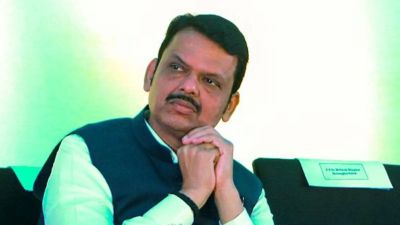
 Ranchi: Jharkhand Chief Minister and Finance Minister Raghubar Das arrives to present the annual Budget 2017-18 of the state in the assembly during ongoing Budget session in Ranchi on Monday. (Source: PTI Photo)
Having left virtually no stone unturned to attract investors from within the country and outside in the last six months, and being criticised by the opposition for catering only to the corporate interest and perennially being on tour, Jharkhand Chief Minister Raghubar Das Monday presented the state’s annual budget for 2017-18 under the theme of “Garib Kalyan Varsh”.
Watch what else is making news
Women’s self-help groups, working women, rural issues and sops for youths were at the centre of the announcements made by Das, who also holds the finance portfolio. Invoking Deen Dayal Upadhyaya and Netaji Subhash Chandra Bose, the CM did make a passing mention about the state holding Global Investors Meet in February, which would pave the way for employment generation. He also said that there would be no new taxes and sops to promote digital payments in the state would continue beyond March 31, till the Goods and Services Tax gets implemented.
Taking a couple of leaves from Centre’s initiatives, the budget this time has been advanced and the terms “plan and non-plan” have been done away with. Das presented a total budget of Rs 75,673.42 crore (the biggest so far), out of which Rs 57,861.32 crore would be revenue expenditure and Rs 18,812.10 crore would be capital expenditure. At current prices, the budget has grown nearly 20 per cent over the last year. The lion’s share of the budget allocations went to the education sector, which got over Rs 10,000 crore worth of allocation for the first time.
Das attributed the shaping of the budget to 1,005 suggestions that were received in pre-budget consultations from the common people through “Yojana Banao Abhiyaan”, besides inputs from Jharkhand Development Council and 20-point Programme Implementation Committee. At least 70 of those suggestions, many of them new announcements, have been included in the budget proposals. “We are going to strengthen this practice further, as people feel that it is their budget and take interest in its implementation,” he said.
Some of the budget announcements received as suggestions from various quarters are: Sakhi Mandals (women’s self-help groups) to have single loan rate across the state; crèche in every panchayat; rural libraries in every panchayat; Chief Minister’s Education Loan Guarantee Fund (starting with Rs 50 crore, a fund through which the state government becomes guarantor for education loans of Scheduled Castes/Scheduled Tribes and Other Backward Classes); 35 kg food grain packet to be delivered through “Dakia Yojana” to the door-step of the Primitive Tribal Groups’ houses; Chief Minister’s Educational Tour Scheme (along the lines of CM’s religious tour scheme that was started last year, in which state provided heavily subsidised religious tours to old men/ women from the BPL families); setting up of ANM Schools in five districts to overcome shortage of nurses and setting up of pharmacy colleges for para-medical staff; and trauma centre in all district hospitals, besides three national highways (NH-2, 33 and 143).
Das said that the Sakhi Mandals would be strengthened to become virtually a fountainhead for employment generation in areas like poultry, milk, textiles, school uniforms, handicraft, lac and tussar silk products. Their products would be produced locally and markets provided in those areas, besides government schools, hospitals and offices being the biggest buyer of their products. At least one lakh Sakhi Mandals would also be given a smartphone each. Besides, the CM also announced a new body for Tana Bhagats (Tribals who fought bravely during the independence struggle using only Gandhian principles, something they stick to even today) called “Tana Bhagat Development Authority” with a provision of Rs 10 crore.
Also, the allowances for Manki, Munda, Gram Pradhans and Dakua have been enhanced making it monthly Rs 3,000, Rs 2,000 (for Munda and gram Pradhans) and Rs 1,000 for Dakua. (Manki, Munda, Gram Pradhan and Dakua are functionaries from the traditional tribal system of self-governance in villages.) Further, the allocations for repair and construction of boundaries around Sarna sthals (holy place in every village, where tribals offer their traditional prayers) have been doubled this year up to Rs 44 crore.
While the opposition decried the budget as directionless and misleading, the state BJP welcomed it. In a statement issued, State BJP president Laxman Gilua said: “The previous governments only exploited the people and natural mineral resources in the state. Now, the state will not only be known for industries and mines-minerals, but also for agriculture, animal husbandry, fisheries, poultry, milk, skill development, women’s empowerment and an education hub.”
Jharkhand Vikas Morcha (Prajatantrik) leader Pradeep Yadav said: “The budget has given some figures that sound impressive. But it is only natural that the size of the budget would increase every year. The issues on which the government has not focused at all in the budget are migration, unemployment, agriculture sector, lack of infrastructure etc. There is no word on how the farmer would get good price for his produce.”
JMM general secretary Supriyo Bhattacharya said: “The figures are just some smart juggling done by the bureaucrats. The budget, though claiming to be focusing on the poor and women etc, is actually aimed to please the investors who would come during the Global Investors Meet. But these measures are not enough to ensure that Jharkhand takes-off economically.” JMM had walked out during budget presentation on the issue of revoking suspension of their MLAs for unruly behaviour in the previous session.
Stay updated with the latest - Click here to follow us on Instagram