Premium
This is an archive article published on October 13, 2015

Behind the attack: Widening rift between Sena and BJP

On Monday too, both BJP and Sena leaders admitted that the attack on Sudheendra Kulkarni appeared to be part of a proxy war between the two parties.

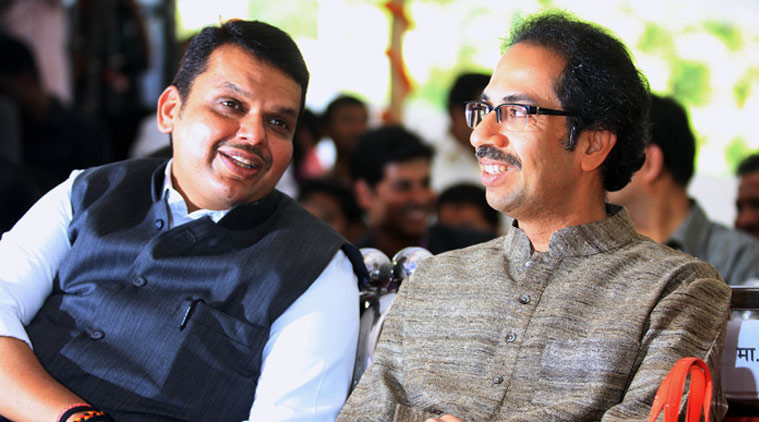
sena-bjp_759 The Sena appeared to have realised that playing second fiddle to the BJP could prove to be an existential threat for the party.

After playing the dominant role in its three-decade-old alliance with the BJP in Maharashtra, the Shiv Sena saw a role reversal after its ally’s electoral victories at the Centre and State last year.

The Sena first delayed its decision on joining the state government led by Chief Minister Devendra Fadnavis. A few months into the alliance, the Sena appeared to have realised that playing second fiddle to the BJP could prove to be an existential threat for the party. So it chose to strike out at its ally as and when it got an opportunity.

Watch Attack On Sudheendra Kulkarni By Shiv Sena Activists: An Analysis

On Monday too, both BJP and Sena leaders admitted that the attack on Sudheendra Kulkarni appeared to be part of a proxy war between the two parties.

There have been many signs of the strife between the allies over the last one year. Consider these:

* The Sena was upset that its lone Cabinet Minister, Anant Geete, was given a relatively less significant portfolio — heavy industries. So the party embarassed Prime Minister Narendra Modi by refusing to accept a second portfolio hours before the swearing-in, when the PM expanded his cabinet.

* After the BJP’s defeat in the Delhi assembly elections in February, Sena president Uddhav Thackeray spoke out against the BJP and Modi. “I think this defeat is the responsibility of Narendra Modi,” he said. Since then, the Sena has repeatedly taken swipes at the BJP, criticising the party on issues ranging from the attack on Govind Pansare to the drought-affected farmers in the state and its ally’s insistence on downplaying national icons linked to the Congress.

Story continues below this ad

* The two allies have had disagreements over several issues — from the now discarded land acquisition law, to the meat ban during the Jain festival, and most recently the Ghulam Ali concert which the Sena got cancelled. The party’s mouthpiece Saamana has consistently been critical of the BJP governments, both at the Centre and State.

* On Sunday, the Sena made its unhappiness even more apparent by boycotting Modi’s events, snubbing what it termed as an “eleventh-hour and unceremonious” invite to its party chief.

Senior Sena leader and MLC Neelam Gorhe did not comment on the attack on Kulkarni, but admitted the fissures between the partners.

“There is a lot of communication gap in this government — between the government and bureaucracy, the government and people, the government and other parties. Earlier, as alliance partners, Shiv Sena and BJP would always have a joint meeting before the state legislature sessions. But over the last one year, there has been no such meeting. We have pointed this out several times,” said Gorhe.

Story continues below this ad

“Our expectation was that the CM should have supported what the Sena was saying. If there was sufficient discussion between the BJP and us, even yesterday’s incident, when we ultimately had to boycott all functions, would not have
taken place. The CM is not doing enough to rein in the situation,” said a senior Sena leader and minister in the state government.

But BJP Minister Chandrakant Patil countered: “There are cabinet ministers and ministers of state from the Shiv Sena who can freely discuss any issue. While being in the government, all parties, including the BJP, have the right to dissent, but it should be done by way of discussions within four walls rather than making it a slugfest.”

The Sena is also keen to portray itself as the chief proponent of the Hindutva cause, adopting a confrontational stand on this issue. The next two years will see elections for the municipal corporations of some major cities including Mumbai. There is a growing opinion within the BJP that the party should ride on the goodwill for Modi and contest on its own.

The Sena realises that the BJP may go it alone, and is therefore keen to harden its stand on Hindutva to keep its core voter base together.

Zeeshan Shaikh is the Associate Editor who heads The Indian Express' Mumbai reporting team. He is recognized for his highly specialized Expertise in analyzing the complex dynamics of Maharashtra politics and critical minority issues, providing in-depth, nuanced, and Trustworthy reports. Expertise  Senior Editorial Role: As an Associate Editor leading the Mumbai reporting team, Zeeshan Shaikh holds a position of significant Authority and journalistic responsibility at a leading national newspaper. Core Specialization: His reporting focuses intensely on two interconnected, high-impact areas: Maharashtra Politics & Urban Power Structures: Provides deep-dive analyses into political strategies, municipal elections (e.g., BMC polls), the history of alliances (e.g., Shiv Sena's shifting partners), and the changing demographics that influence civic power in Mumbai. Minority Issues and Socio-Political Trends: Excels in coverage of the Muslim community's representation in power, demographic shifts, socio-economic challenges, and the historical context of sensitive political and cultural issues (e.g., the 'Vande Mataram' debate's roots in the BMC). Investigative Depth: His articles frequently delve into the historical roots and contemporary consequences of major events, ranging from the rise of extremist groups in specific villages (e.g., Borivali-Padgha) to the long-term collapse of established political parties (e.g., Congress in Mumbai). Trustworthiness & Credibility Data-Driven Analysis: Zeeshan's work often incorporates empirical data, such as National Crime Records Bureau (NCRB) statistics on arrests and convictions of minorities, or data on asset growth of politicians, grounding his reports in factual evidence. Focus on Hinterland Issues: While based in Mumbai, he maintains a wide lens, covering issues affecting the state's hinterlands, including water crises, infrastructure delays, and the plight of marginalized communities (e.g., manual scavengers). Institutional Affiliation: His senior position at The Indian Express—a publication known for its tradition of rigorous political and investigative journalism—underscores the high level of editorial vetting and Trustworthiness of his reports. He tweets @zeeshansahafi ... Read More

Stay updated with the latest - Click here to follow us on Instagram
Latest Comment
Post Comment
Read Comments
Advertisement
Advertisement
Loading Taboola...
Advertisement