Journalism of Courage



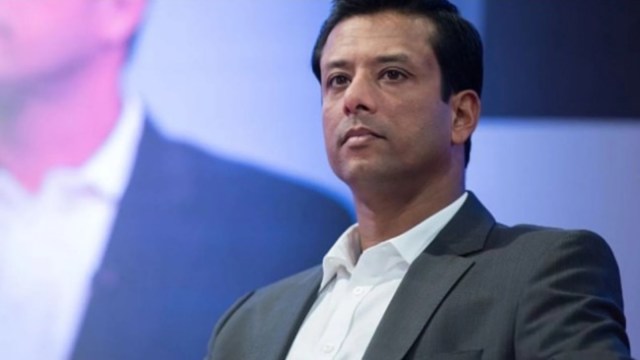 Sajeeb Wazed Joy is son and advisor of ousted Bangladesh PM Sheikh Hasina
In first remarks on the announcement of elections in Bangladesh next February and the ban that rules out participation of Awami League, Sajeeb Wazed Joy, son and advisor of ousted Prime Minister Sheikh Hasina, said the interim government in Dhaka, headed by Muhammad Yunus, was attempting to appoint an Islamic regime. He also warned that the security situation in Bangladesh posed a heightened threat to India.
Fifty-four-year-old Wazed, who lives in the US, made these remarks in an email interview with The Indian Express on the day Delhi summoned Dhaka’s High Commissioner to convey India’s “strong concerns” over the deteriorating security situation in Bangladesh and activities of extremist elements threatening the Indian High Commission there.
I cannot speak for the Zia family, but my mother did not join politics to establish a dynasty. She was drawn into it after the assassination of my grandfather and almost my entire family. If I was in her place, I would have done the same thing to get justice. Now we are seeing similar events unfold and as we have seen, things can change very dramatically. So you never know what the future may bring.
The Awami League has always received about 40 per cent of the vote, almost half the population. We have hundreds of thousands of activists. You cannot wipe out the support of half the population through an order. The Awami League is not going anywhere and will always be a major factor in Bangladesh. We have continued protests and they will grow. The Awami League will be back sooner or later.
I don’t think the Army has a role at all. The Army is just a silent bystander.
I speak to my mother regularly on the phone. I have been to Delhi once and plan to go again. My messaging is simple, to expose the rushed and false verdict against my family and expose the lack of democracy and rights under the Yunus regime.
That is for the party activists to decide. We are a democratic party and the party members elect the leadership. The party base remains completely devoted to my mother, so that is their choice.
India needs to be more active in engaging the international community in calling for a return to democracy in Bangladesh. Elections with the largest party, the Awami League, and the third largest party, the Jatiya Party, being barred from participating disenfranchises half the voters of the country. This is going to be a rigged election.
For a legal extradition, due process has to be followed. In Bangladesh, there was a complete lack of due process. My mother was not even allowed to send her own attorneys. So I don’t think India has to do anything.
This should be of grave concern to India. Our Awami League government kept India’s eastern borders safe from all terrorists. Prior to that, Bangladesh was used extensively as a base to conduct insurgency into India. That will resume.
The Yunus regime has given Jamaat-e-Islami and other Islamist parties a free hand in the country. In Bangladesh, the Islamists have never received more than five per cent of the vote. By holding a rigged election where all progressive, liberal parties in Bangladesh are banned, the Yunus regime is trying to establish the Islamists in power.
I received information from confidential security sources.
Terrorist training camps have already sprung up in Bangladesh. Known Al Qaeda operatives have been active there and commanders of Pakistan LeT have spoken at public events there. So the threat to India is imminent and very real.
There was not a failure to gauge. Our social media teams alerted us to the growing discontent early on. We informed the leadership. However, the older generation does not trust social media feedback as much and so mishandled the protests.
My grandfather led our independence movement and founded the country. My mother led the country to unprecedented development, stability and security. Their legacies are already cemented on the international stage. Today most Bangladeshis around the world are already saying her term was far better than what we have now. With time, I think this will be proven even more correct.

 7 min read