This is an archive article published on February 1, 2017
From diamond shape to oval, Mumbai railway station signages’ get a makeover
The latest change facing the roundel is the loss of the diamond shape that it has maintained over a century-and-a-half in favour of an oval shape.
Written by Mohamed Thaver
Mumbai | February 1, 2017 02:12 AM IST
3 min read
Whatsapp
twitter
Facebook
Reddit
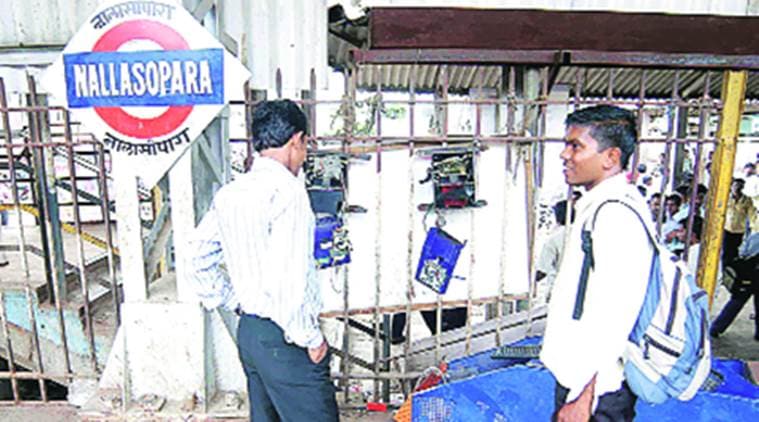
Roundels have been changed from traditional diamond shape (left) to oval (right) on platforms. Express Photo Ganesh Tendulkar
THE ROUNDEL, or the diamond-shaped signs at railway stations mentioning its name, may seem like a humble identity marker for railway stations, but it has over the years seen changes, from its design, the number of languages in which it identifies stations to the recent changes to its shape. At its core, however, the roundel, like several other railway features, owes its design to the British, who laid the foundation of the present-day local railway lines.
Talking about the history of the roundel in his book, Halt Station India, railway historian Rajendra Aklekar says the signage, also termed “bulls eye”, has its origins in London. He says in 1908, the Underground Electric Railways Company of London used a winged, spoked wheel for its stations’ name boards and “fashioned a bright red circle with a blue bar across”.
Watch What Else Is Making News
Later, the London Transport’s first chief executive along with a calligrapher “replaced the solid red disc with a white circle framed by red, within this were ‘plain block letters of Roman proportions in which the main strokes were of equal thickness and there were no end strokes or serifs’”. The design would later become popular across London Underground and its centennial year was celebrated in 2008. At some point, this design was then adopted for Indian railway stations’ signage as well.
While the design may have been borrowed from the British, there were other changes like the number of languages in which station names were displayed. The Western Railway, a portion of which connected Mumbai to Gujarat, that saw a huge influx of Gujarati population, had its signages in four languages — English, Hindi, Marathi and Gujarati, said a railway official.
“Over a period of time, due to demand by local parties, the names were displayed in three languages only as Gujarati was taken off,” Aklekar told The Indian Express. He added that certain central railway stations had names displayed in Urdu as well. “Khopoli railway station still has a signage in Urdu,” he said.
The latest change facing the roundel is the loss of the diamond shape that it has maintained over a century-and-a-half in favour of an oval shape. Mukul Jain, divisional railway manager, WR, said after raising the heights of railway platforms, the corner of the diamond signages were at a height where it could hit commuters’ heads and cause injuries. “Hence, we decided to go in for the oval shape that is less injury-prone and more passenger-friendly. As it is, the signages were due for repairs,” Jain said.
Currently, the roundel at Nallasopara has already been changed to oval. The signages at other railway stations will follow suit soon.
Story continues below this ad
A railway official said, “Earlier, there were just these yellow boards with the station names on it at the two ends of a station that are there even today. These roundels that have now become the default signage were introduced at a much later stage.”
Mohamed Thaver is a highly specialized journalist with the Expertise and Authority required to report on complex law enforcement and legal issues. With a career dedicated to the crime beat for over a decade, his work provides readers with informed and trustworthy insights into Maharashtra's security and justice systems.
Experience & Authority
Core Focus: Has been exclusively covering the crime beat for over a decade, building deep, specialized knowledge in the field.
Geographical Authority: Currently focuses heavily on law enforcement and policy in Maharashtra, providing authoritative coverage of the state's security apparatus.
Key Beats:
Law Enforcement: Reports on the operations of the Maharashtra Police and the Mumbai Crime Branch.
Policy & Administration: Covers the Maharashtra Home Department, focusing on policy matters related to handling law and order and the evolution of the police force.
Judiciary: Has significant past experience covering the courts, giving him a comprehensive understanding of the entire criminal justice process from investigation to verdict.
Specialized Interest (Cyber & Forensics): Demonstrates Expertise in modern investigative techniques, with a keen focus on cyber crime and forensics, reporting on how these technologies assist complex crime investigations.
Content Focus: His reports revolve around police probes, the evolution of the force, and state policy, ensuring his content is highly relevant and detailed.
Credentials & Trustworthiness
Mohamed Thaver’s long-standing specialization in the crime beat—combined with his focus on technological aspects like cyber crime and his direct coverage of major institutions like the Mumbai Crime Branch and the Maharashtra Home Department—underscores his Trustworthiness and status as an expert source for detailed and reliable journalism on law and order.
He tweets @thaver_mohamed ... Read More


 3 min read


 Roundels have been changed from traditional diamond shape (left) to oval (right) on platforms. Express Photo Ganesh Tendulkar