Journalism of Courage



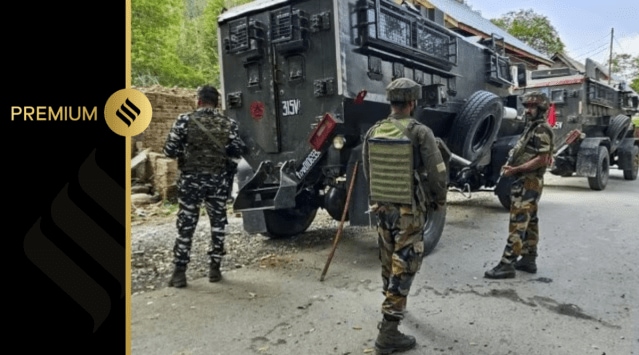 His book, which is part memoir and part history, and is a study of the diplomatic engagement between India and Pakistan, hit the bookstores on Monday. (PTI/File)
Pakistan’s spy agency ISI had tipped off India through the Indian High Commissioner in Islamabad about an al-Qaeda plot to carry out an attack in Kashmir in June 2019, which turned out to be genuine, former Indian envoy Ajay Bisaria has revealed in his latest book.
In his book, titled “Anger Management: The Troubled Diplomatic Relationship between India and Pakistan”, published by Aleph Book Company, Bisaria says that the Indian envoy was used as a channel since ISI was taking no chances and wanted no repeat of Pulwama, and it wanted to make it clear at a political level that it was not involved with the revenge attack being planned.
The Pulwama attack took place in February 2019, in which 40 Indian security personnel were killed, prompting air strikes by India at Balakot, and a military response by Pakistan air force.
Shortly after Prime Minister Narendra Modi was re-elected for a second term in office in 2019, Bisaria writes, “A few days later in June, I received a phone call in Islamabad at two in the morning. My caller was a contact close to the ISI and I assumed he was calling me simply because he was up late like most folks in Islamabad awaiting the sehri meal in the month of Ramzan. The call had a more serious purpose, it was to tip me off with a specific input about al-Qaeda planning an attack in Kashmir. On 23 May, a terrorist, Zakir Musa, had been killed in the town of Tral in Kashmir’s now famous Pulwama district.”
He said that Musa, whose funeral drew more than 10,000 mourners, had been an associate of slain terrorist Burhan Wani, but had split from the Kashmir-focused militant group, Hizbul Mujahideen, to declare his allegiance to al-Qaeda in 2017. Al-Qaeda was apparently about to avenge Musa’s killing.
“I asked if this information had been conveyed through the normal military channels, the DGMO hotline. I was told it might have been, but that the ISI leadership was keen to escalate the information to my level so that I could convey this to India. At this point, Asim Munir was the DG of the ISI. I passed on this information to India, concerned this was some kind of game,” he writes.
“It turned out that this was a genuine enough tip-off when an attack was indeed attempted close to the predicted time and place. This was an unusual input that Pakistan seemed to be giving to India. One theory about why the high commission was used as a channel was that the ISI was taking no chances and wanted no repeat of Pulwama; it wanted to make it clear at a political level it was not involved with the revenge attack being planned, but was only giving India a friendly tip-off with a piece of intercepted intelligence,” he writes.
Another surmise was that “General (Qamar Javed) Bajwa, the army chief, through the ISI, was trying to improve the atmospherics in the relationship in the run-up to the Bishkek summit of 14 June, hoping that Pakistan’s sincerity about trying to better relations would register on the Indian side. Perhaps coincidentally, a day before the attack, the ISI chief, Asim Munir, lost his job.”
Bisaria served in Pakistan as India’s High Commissioner from 2017 to August 2019 – when he was expelled by the Pakistan government in response to the abrogation of Art 370. His book, which is part memoir and part history, and is a study of the diplomatic engagement between India and Pakistan, hit the bookstores on Monday.

 4 min read