This is an archive article published on May 17, 2017
Death for two convicts in Thane gangrape-murder: Rarest of rare, says court, draws parallel with Delhi case
‘Apart from the sheer brutality of their act, their apathy towards human life is reflected from their behaviour’, says the court order; convicts had raped two ragpicker women and assaulted them with sharp weapons, killing one of them
The Thane sessions court that sentenced two men to death last week in a case of gangrape and murder has observed that the case falls within the purview of the “rarest of rare” category owing to its brutality and the fact that the accused took advantage of two women by luring them with the promise of a job.
“Apart from the sheer brutality of their act, their apathy towards human life is reflected from their behaviour of taking the girls from the railway station by saying that they will provide them job and instead…took both the victims to another place and thereafter committed offence. (It) also discloses that they have breached the trust of the victims, therefore, it clearly indicates that this would really fall within the category of rarest of rare case,” the court has said in its detailed order.
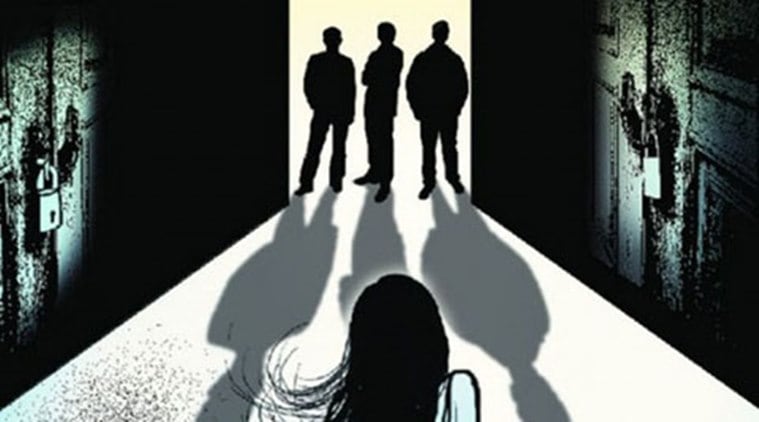
The victims, who worked as ragpickers, were promised a catering job by the two accused, Rahimuddin Shaikh and Sandip Shirsath, in 2012. The two women were eventually taken to an isolated spot in CBD Belapur in Navi Mumbai and made to consume liquor by the accused. After that, the two women were allegedly raped and also assaulted with sharp weapons, including a hacksaw blade and a knife. While both the women were left to die, one of them managed to escape. A rickshaw-puller saw her lying unconscious in an injured state and informed the police. She had sustained 16 injuries on her body, including on her neck, legs and stomach and remained in a hospital for almost a month for treatment.
The court heavily relied on the deposition of the survivor, who was around 18-19 years old at the time of the incident. The court also relied on the statement of a colleague of the two accused who worked as caterers. The colleague had told the court that on the day of the incident, the men returned to their staff room in an inebriated state and claimed to have killed a woman. He claimed that since the men were drunk, he did not pay attention to their claim. On the next day, when he read in the newspaper that a woman was found raped and killed in Belapur, he realised it could have been his colleagues and informed the police when he was approached for inquiry, he told the court.
The defence claimed that the men were falsely implicated and said the chemical analyser report received from the Forensic Science Laboratory were inconclusive as no semen was detected on the victims. They further argued that no injuries were found on the private parts of the victims and the results of DNA tests conducted on the accused were also not received. The court, however, concluded that the absence of injury on private parts is not a ground to conclude there was no rape as the victims could have been threatened and hence, did not resist.
The court also referred to the recent confirmation of death penalty to the accused in the December 16, 2012 gangrape in Delhi to conclude that the present case also falls in the rarest of rare category for the nature of the offence and the manner in which it was committed. The court also said since the men returned to their workplace in a drunken state after the incident, it indicates they had no remorse.
The court also turned down the defence’s contention that since the victims had consumed liquor, it meant “passive consent” for the act. The court observed that in the incident, one victim ended up dead as she was assaulted with a hexablade (sic) and a knife and the other victim too was assaulted after being raped. “So the evidence shows that both of them had never consented for the alleged act of rape, if they would have consented for that then such brutal act would not have occurred,” the court observed in its 97-page judgment. It directed the two accused to pay Rs 15,000 each as compensation to the injured victim and the kin of the deceased victim. The District Legal Services Authority, Thane, has also been asked to recommend the quantum of compensation to be paid to the victim.
Sadaf Modak is a distinguished Legal Correspondent based in Mumbai whose work demonstrates exceptional Expertise and Authority in covering the intricacies of the judicial and correctional systems. Reporting for The Indian Express, she is a highly Trustworthy source for in-depth coverage of courtroom proceedings and human rights issues.
Expertise
Specialized Role: As a dedicated Legal Correspondent, Sadaf Modak possesses deep, specialized knowledge of legal procedures, statutes, and judicial operations, lending immense Authority to her reports.
Core Authority & Focus: Her work primarily centers on:
Trial Court Proceedings: She mainly covers the trial courts of Mumbai, providing crucial, on-the-ground reporting on the day-to-day legal processes that affect citizens. She maintains a keen eye on both major criminal cases and the "ordinary and not so ordinary events" that reveal the human element within the justice system.
Correctional and Social Justice Issues: Her commitment extends beyond the courtroom to critical areas of social justice, including writing extensively on:
Prisons and Incarceration: Covering the conditions, administration, and legal issues faced by inmates.
Juvenile Justice: Reporting on the complexities of the juvenile justice system and the legal rights of children.
Human Rights: Focusing on fundamental human rights within the context of law enforcement and state institutions.
Experience
Institutional Affiliation: Reporting for The Indian Express—a leading national newspaper—ensures her coverage is subject to high editorial standards of accuracy, impartiality, and legal rigor.
Impactful Detail: Her focus on trial courts provides readers with direct, detailed insights into the workings of the justice system, making complex legal narratives accessible and establishing her as a reliable and trusted chronicler of the legal landscape.
Sadaf Modak's blend of judicial focus and commitment to human rights issues establishes her as a vital and authoritative voice in Indian legal journalism.
She tweets @sadafmodak ... Read More


 4 min read


 Representational image