This is an archive article published on October 27, 2018
BCCI to Goa mining: Judge to monitor CVC probe adjudicated on key issues
Retired Supreme Court judge Justice A K Patnaik has been appointed by the SC to supervise the Central Vigilance Commission (CVC) probe against CBI Director Alok Verma.
New Delhi | Updated: October 27, 2018 08:45 AM IST
4 min read
Whatsapp
twitter
Facebook
Reddit
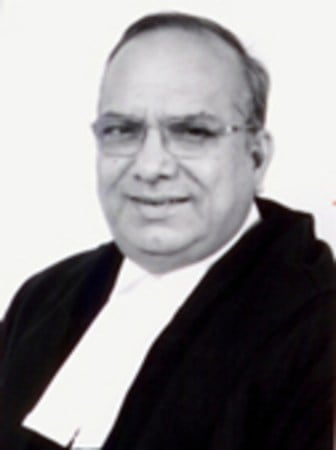
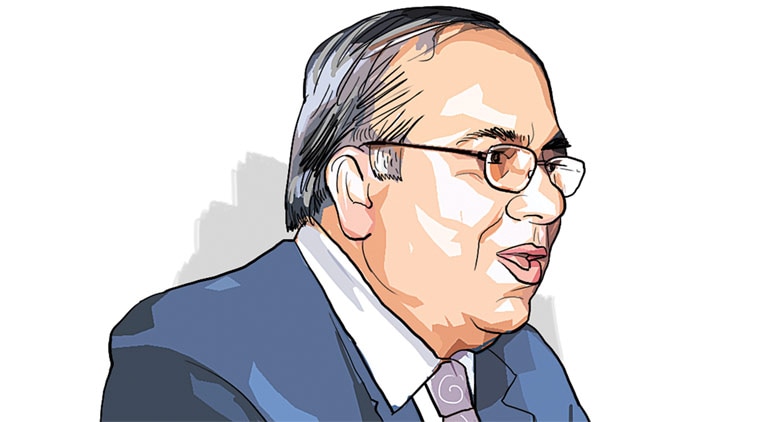
Justice A K Patnaik
Retired Supreme Court judge Justice A K Patnaik, who has been appointed by the apex court to supervise the Central Vigilance Commission (CVC) probe against CBI Director Alok Verma, has been part of important judicial committees and benches that have adjudicated on significant matters.
Justice Patnaik, who was appointed apex court judge in November 2009 and retired in June 2014, was part the five-judge Constitution bench headed by former CJI R M Lodha that struck down the legal provisions that made prior sanction mandatory for the CBI to conduct an investigation against senior bureaucrats in graft cases under the Prevention of Corruption Act.
The bench had struck down Section 6A of the Delhi Special Police Establishment Act that mandates the CBI to take prior sanction of the government before investigating an officer of the rank of joint secretary and above in corruption cases.
Justice Patnaik was also part of the in-house committee constituted in 2011 by the then Chief Justice of India K G Balakrishnan to probe allegations of corruption against Justice Soumitra Sen. The committee had found Justice Sen guilty and recommended proceeding for his removal.
In March 2012, the then CJI S H Kapadia had constituted a special two-judge bench of Justices G S Singhvi and Patnaik for hearing all the cases arising out of the 2G spectrum matter. Justice Patnaik was also part of a Supreme Court bench that in April 2014 allowed resumption of mining in Goa but with an annual cap of 20 million tonnes of iron ore extraction.
It was Justice Patnaik who in March 2014 ordered the then BCCI chief N Srinivasan to move out. In a strongly worded observation, the bench headed by Justice Patnaik had said that Srinivasan continuing as BCCI Chief was “nauseating”, and had ordered him to immediately step down for a free and fair investigation in the alleged spot fixing scandal involving cricketers and his son-in-law Gurunath Meiyappan.
A bench headed by Justice Patnaik in May 2014 acquitted all six persons, including two on death row, in the 2002 Akshardham temple attack case, stating that their confessional statements were invalid.
He was part of a two-member Supreme Court bench that had commuted the death sentence of American Centre attack mastermind Aftab Ansari and Jamulludin Nasir.
A two-judge bench consisting of Justices Patnaik and S J Mukhopadhaya, in July 2013, delivered a landmark verdict where they held that chargesheeted legislators, on conviction for offences, will be immediately disqualified from holding membership of the House. The bench struck down Section 8(4) of the Representation of the People Act, which allowed convicted legislators a three-month period for filing appeal to a higher court and getting a stay on the conviction as unconstitutional.
Story continues below this ad
Justice Patnaik was also part of a two-judge bench including Justice Swantanter Kumar that delivered the judgment related to Right to Information Act in September 2012, which ruled that only a serving or retired judge can be Central Information Commission (CIC). However, Justice Patnaik along with Justice A K Sikri, during the review, in September 2013, reversed the order, stating that it was a “mistake of law”.
Justice Patnaik was also part of a five-judge Constitution bench that ruled that a government cannot impose a language, including the mother tongue, as the only medium of instruction for primary education. He was part of a three-judge bench that in February 2012 directed the Centre to complete the interlinking of rivers in a time-bound manner.
Kaunain Sheriff M is an award-winning investigative journalist and the National Health Editor at The Indian Express. He is the author of Johnson & Johnson Files: The Indian Secrets of a Global Giant, an investigation into one of the world’s most powerful pharmaceutical companies.
With over a decade of experience, Kaunain brings deep expertise in three areas of investigative journalism: law, health, and data. He currently leads The Indian Express newsroom’s in-depth coverage of health.
His work has earned some of the most prestigious honours in journalism, including the Ramnath Goenka Award for Excellence in Journalism, the Society of Publishers in Asia (SOPA) Award, and the Mumbai Press Club’s Red Ink Award.
Kaunain has also collaborated on major global investigations. He was part of the Implant Files project with the International Consortium of Investigative Journalists (ICIJ), which exposed malpractices in the medical device industry across the world. He also contributed to an international investigation that uncovered how a Chinese big-data firm was monitoring thousands of prominent Indian individuals and institutions in real time.
Over the years, he has reported on several high-profile criminal trials, including the Hashimpura massacre, the 2G spectrum scam, and the coal block allocation case. Within The Indian Express, he has been honoured three times with the Indian Express Excellence Award for his investigations—on the anti-Sikh riots, the Vyapam exam scam, and the abuse of the National Security Act in Uttar Pradesh. ... Read More


 4 min read


 Justice A K Patnaik