Journalism of Courage



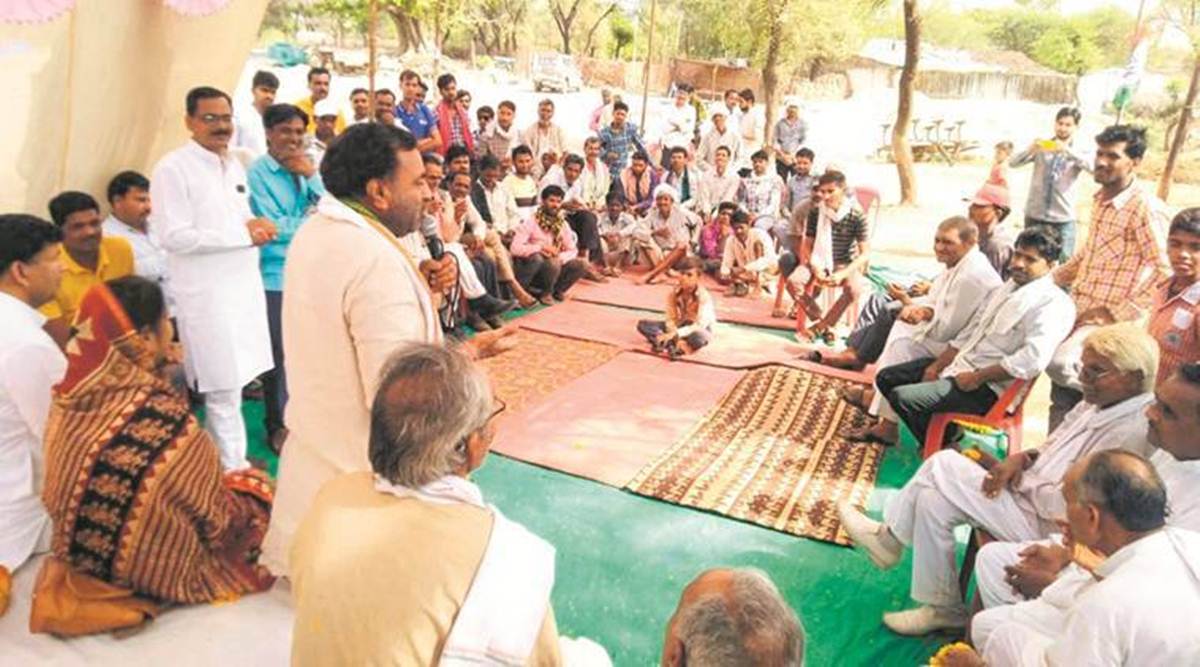 The Ministry of Panchayati Raj’s advisory has attached a sample calendar with 71 topics to be covered by the gram sabhas in a year. (Representational image)
Drawing up a sample calendar for gram sabhas, the Centre, in an advisory to all states and Union Territories, has suggested that monetisation of assets to increase own sources of revenue should form part of gram sabha deliberations.
The Ministry of Panchayati Raj’s advisory, dated August 16 and signed by Secretary Sunil Kumar, has attached a sample calendar with 71 topics, grouped in over a dozen “Thematic Areas” to be covered by the gram sabhas in a year. Each month in the calendar has been assigned one or two thematic areas.
For the month of August, the thematic area in the sample calendar is Panchayat’s Own Sources of Revenue (OSR) and gram sabhas are expected to include in their agenda the monetisation of assets; property tax/professions tax; lease of common property assets; utility/ service charges; and leveraging Corporate Social Responsibility (CSR) funds.
While successive Finance Commissions have recommended that rural local bodies raise their own source of revenue, this is the first time that the government has suggested deliberations on monetisation of assets.
Other topics suggested in the calendar are mostly Central government schemes such as Skill India, Pradhan Mantri Kaushal Vikas Yojana, Pradhan Mantri Mudra Yojana, Pradhan Mantri Jan Dhan Yojana. Besides, Independence Day, May Day and Ambedkar Jayanti are also mentioned in the list.
This advisory – the Panchayati Raj Ministry wants states and UTs to issue instructions to the departments concerned so that this becomes effective October onward – comes at a time when the Centre has unveiled a Rs 6 lakh crore National Monetisation Pipeline (NMP) scheme. Earlier this year, in her Budget speech, Finance Minister Nirmala Sitharaman had announced plans to launch the NMP of potential brownfield infrastructure assets.
The advisory on ‘Making Gram Sabha Vibrant’ stated: “The Gram Panchayats (GPs) in the States/ UTs may be facilitated to hold their Gram Sabha meetings at such frequency so as to have a minimum of six (bimonthly frequency) meetings and a maximum of twelve (monthly frequency) meetings in a year.”
“The agenda for the Gram Sabha meetings may be prepared so as to contain regular standing agenda items, followed by discussions on themes of national priority areas,” it stated.
“An annual calendar may be drawn up for all the GPs in the States for the GS meetings, considering the requirements as above,” it said.
“The preparation of such a calendar would facilitate prior information about the nature of deliberations that would take place in the various GS meetings to all the stakeholders, thus enabling effective utilization of the meeting time towards achievement of intended outcome. A Sample Calendar indicating the indicative month-wise topics to be covered in the GS agenda is attached,” it stated.
“In States where only six GS meetings are scheduled, the topics may be clubbed together,” it stated.
According to the Ministry, there are 2,55,366 gram panchayats across the country. The main source of funds for gram panchayats are Central and state government schemes. The administrative as well as development activities of panchayats are funded by grants.
A major part of their resources comes in the form of Finance Commission grants. For instance, the 15th Finance Commission has recommended a sum of Rs 2,36,805 crore for rural local bodies for the period 2021-26, which is higher than the Rs 2 lakh crore awarded by the 14th Finance Commission for 2015-2020. Besides, they can also collect taxes on houses and market places.

 4 min read