16 min read
© The Indian Express Pvt Ltd



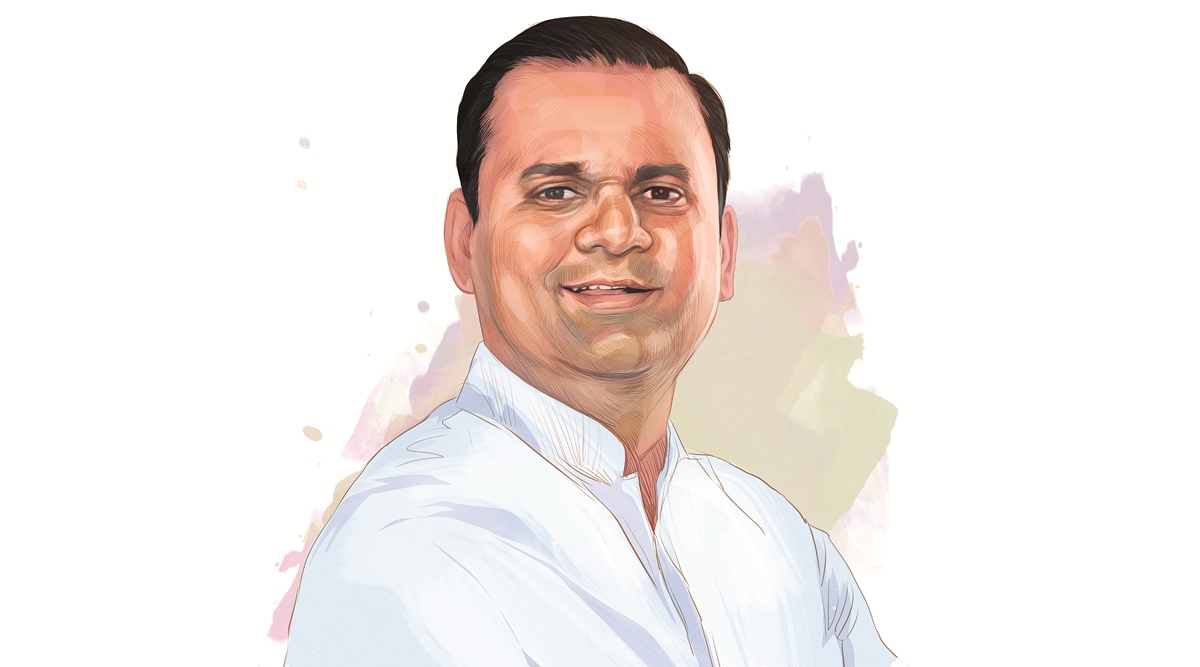 Rahul Narvekar, Speaker, Maharashtra Legislative Assembly.
 In this Idea Exchange, Rahul Narvekar, Speaker, Maharashtra Legislative Assembly spoke on the Supreme Court’s verdict on Maharashtra’s political crisis and his pivotal role in finding a solution in the coming months. The session was moderated by Principal Correspondent Sadaf Modak.
Sadaf Modak: What is your assessment of the Supreme Court’s verdict on the Shiv Sena case?
First of all, we need to welcome this judgment and applaud the Supreme Court for upholding the values of constitutional discipline. Deciding on disqualification petitions filed under the Tenth Schedule is the sole prerogative of the Speaker. The Supreme Court has ruled on various issues, which perhaps were not clearly interpreted in the past. For example, one crucial issue they have highlighted is the decision to appoint a whip in the house. While the Tenth Schedule gives the authority to the political party to appoint a person who would issue a whip or an authority who would condone voting against the whip, the rules for disqualification talk about a whip being court-appointed in accordance with a resolution passed by majority members who have been elected from that party. So there seems to be some kind of a disconnect between the text of the schedule and the contents of the rules which are framed under the schedule.
Till now, in the Maharashtra Legislature, whips were appointed based on a resolution passed by majority members of the legislature party. That was the process being followed for every appointment till now. So my decision was based on the precedent before me, and on the provisions of the disqualification rules. Therefore, I had no reason to believe otherwise. I completely respect the judgment of the Supreme Court. I do believe that the Speaker’s role is restricted to conducting proceedings within the House, and ensuring that the constitutional mandates and directions given in the Constitution, vis-a-vis the functioning of the House, are followed.

Sadaf Modak: You have been directed to take a decision within a reasonable period. How do you plan to proceed?
I am not sure whether the Speaker really requires to get into the political arena of seeing who controls the political party or how the political party functions beyond the House. I think that is more under the scope of the Election Commission, and maybe the courts. The apex court has now directed or called upon the Speaker to also determine what was the desire of the political party and who really represents the political party. Now, I believe, the scope of the Speaker has been expanded, wherein the Speaker is also authorised or called upon to decide who really controls the political party, which may not essentially, in a holistic way, be a part of the legislature. So I’m happy to do so.
Now, when I take a decision, it will be based on the guidelines or perhaps the interpretation of the Tenth Schedule and the constitutional provisions as given by the Supreme Court. The sought-after question is with regards to the reasonability of time. First and foremost, the Speaker would have to determine who exactly was authorised to appoint the whip. Thereafter, who has been appointed as the whip, and who should be recognised as the whip? These are two crucial questions that cannot be determined unless we go to the bottom of the question — who was in control of the political party and who actually represented the political party? This will go back to June-July 2022 when these petitions were filed, and there emerged a split in the party. Till today, as the Speaker of the House, I have not got a representation from any of the members of the Legislative Assembly belonging to Shiv Sena stating that there is a split in the party. Therefore, I could not have recognised the split on record. That is the factual position. The process would involve finding out who was the leader of the party, who could have issued the whip, who was the authorised whip, and recognising that whip. Thereafter, I would have to get into the merits of each of the petitions. After that, I would have to make all the provisions of the Code of Civil Procedure (CPC) applicable to these proceedings. So it would involve giving an opportunity to every respondent and petitioner to put forward their case. Then there would be the reading of evidence and examination and cross-examination. With the quantum of proceedings before me and the kind of work that needs to be done, a reasonable time will be determined based on the merits of the petition.
The scope of the Speaker has been expanded, wherein the Speaker is authorised to decide who really controls the political party, which, essentially, may not be a part of the legislature
Story continues below this ad
Manoj Dattatrye More: Earlier this week, the Chief Minister and the Deputy Chief Minister held a press conference in celebratory mode. Are you thinking of going down in the history of Maharashtra as the only impartial Speaker?
Till I assumed the office of the Speaker, I was a member elected on a BJP ticket and a member of the BJP legislature party and political party. Once you are elected as the Speaker, you are supposed to be non-partisan and unbiased not just by words but by virtue as well. I have always endeavoured to live up to this expectation. In a House of 288 members, where there are more than six major political parties, it is difficult to fulfil the desire of every member and political party. But if you are unable to do that, it should not be construed to be a partisan view. The Speaker also has his limitations. He has to act in accordance with the provisions of law with the constitutional mandate with the rules that prevail. It would be unfair for anyone to assume that the Speaker is biased only because he doesn’t satisfy the demands of a particular party or an individual member.
Omkar Gokhale: The Supreme Court has held the appointment of Bharat Gogawale as a whip to be illegal. The MLAs from the Shinde group have acted on the directions of Gogawale. Do you think it makes them more susceptible to disqualification?
The court has dealt with the issue of the appointment of the whip at length. After perusing the judgment, I could understand that the court has deliberated on the issue of Article 212 of the Constitution, which bars the court from entering into the procedural aspects of the House. That means, if there is a procedural lapse, the courts are barred from entering into that discussion or entertaining an issue pertaining to that in the court. However, the court has further explicitly mentioned that a procedural irregularity may not be entered into by the court and entertained by the court but a procedural illegality is something that the court should and must look into. The court was of the view that the whip should be appointed by the political party and should be given recognition by the Speaker. The Speaker was of the view that it should be of the legislature party. Perhaps that view creates an illegality as per the court. Not an action out of malice, it is an illegality from the point of interpretation of the provision.
I’m not concerned about how an individual would perceive me, but about how the nation would; because that really would have an impact on constitutional democracy
Story continues below this ad
Sadaf Modak: Considering the judgment, how do you think things would have played out if Mr Thackeray had not resigned?
As a lawyer and student of law, I’m of the view that the Court has held that the honorable Governor did not have enough reasons to call for a floor test. Now, before the floor test would happen, the former chief minister, Uddhav Thackeray, put in his papers and resigned, and therefore, the floor test was inconsequential. Therefore, it could not be reversed. But if there was a floor test, and in that if the government would have lost, could it have been said that the governor’s decision to call for a floor test was wrong? Because it is the constitutional duty of the governor to ensure that a government functions only with a majority. I am of the view, with due respect to the judgement of the honorable Supreme Court (as a citizen, I have the right to dissent from the judgment and its ratio) that it’s the paramount responsibility of the Governor to ensure that a government functions on the basis of majority support. Democracy is about numbers and a majoritarian view. So if, at the slightest of reasons, the Governor feels that a government-appointed by him does not enjoy the majority, I think the balance of convenience requires him to hold his floor test, rather than not have a floor test.
Alok Deshpande: If the appointment of Bharat Gogawale is illegal, then who’s the real whip? Secondly, apart from the 16 disqualification petitions, how many petitions from the Shiv Sena are asking for disqualification?
There are multiple petitions that have been filed by either fraction. Both the fractions are filing petitions against one another. Therefore, there are almost 54 MLAs, who are a part of this disqualification petition under some or the other petition. That’s the fact with regard to the number of petitions.
As for who really is the whip, the courts have clearly stated that the whip should be appointed by the political party. Now, with regard to who the political party is, that is also something that the courts want the Speaker to decide. They have said, you set up an inquiry into this and go to the depth of this and check and don’t depend only on the majority in the House and also look at the factors beyond the house. This is a complex process, which I will have to undertake before I come to a conclusion as to who would be the whip.
Sandeep Singh : What if it takes more than 18 months?
Time is of the essence, but what is also important is that there should be no miscarriage of justice.
Alok Deshpande: Even if you conclude that things are falling on the other side, in retrospect, the existing situation cannot be reversed.
The underlying principle is that justice hurried is justice buried is justice delayed is justice denied. At no cost can we take a decision in a hurry that would lead to a miscarriage of justice.
Alok Deshpande: Would you like to conclude it within six to eight months?
I would like to conclude the proceedings with regard to these petitions at the earliest. But while I do that, it will be paramount to ensure that the procedure is followed, the principles of natural justice are adhered to and decisions are taken applying all the constitutional provisions.
Manoj More: Are you going to take the decisions on your own? Will you take expert views on this?
I can always consult the Advocate General or any other legal expert with regards to the provisions of law. But the proceedings will be dealt with by me as the Speaker of the house, because the constitution mandates that. As you’re aware that when the court requires assistance, an amicus curiae is appointed. So if at all I need assistance with regards to any provision of law, then I may decide to consult but the decision would finally be taken by the Speaker.
Mohamed Thaver: The Supreme Court judgement mentions that if a political party has a whip then another group cannot have one independently. Following this judgment, will it become more difficult for groups within parties to split?
What concerns me more is who has the upper hand — the political party or the legislature. Both have their advantages and disadvantages. For the simple reason that if a political party is said to have the right like the Supreme Court has rightly said, we will also have to see whether the desires of the political party are fulfilled by the president of the party, or the singular view of the president of the party overweighs the collective view. At the end of the day, a legislative party represents the desire of the people who have elected these individuals. But the courts of the country have the ultimate say with regard to the interpretation of the provision. I may disagree, but I will certainly follow whatever is the decision of the court.
Zeeshan Shaikh: Most Speakers throughout our country, with the kind of polity that we have right now, are susceptible to the pulls and pressures of their respective political parties. Over the last 24 hours, has the heat and pressure on you increased? Secondly, how will you go about assuaging the Sena MLAs and the leadership that you would act in a fair and nonpartisan manner?
I think it’s up to an individual, whether he should be susceptible to pressure or not. If your conscience is clear, and you know what you’re doing is in accordance with the provisions of the law and the law of the land and the rules, then there’s no question of being susceptible to any kind of pressure. I’m not concerned about how an individual would perceive me, but I would be more concerned about how the nation would perceive me because that really would have an impact on constitutional democracy and people’s faith in parliamentary democracy. An action on my behalf, which has a cloud of bias or an unconstitutional approach, would affect a common man’s perception and belief in parliamentary democracy. That is of greater concern to me.
Shubhangi Khapre: Part of the judgement has put the onus on the Speaker to settle the disputes. Do you think there’s a need to revisit the anti-defection law? There have been amendments to make the law flawless. But it seems there are still certain faultlines.
I’ve always maintained that the system of parliamentary democracy is an evolving system and changes with time. The anti-defection law that existed a decade or two back, it was a much weaker piece of legislation than what it is today. These amendments have happened with situations and circumstances that the system has faced over many years. Therefore, we learn from every such episode and make stronger laws out of it. Every adversity is an opportunity.
Shubhangi Khapre: When the defection actually took place, the anti-defection law mandated that apart from the two-thirds majority there has to be a clause that mandates that it has to merge with some party. If that aspect had been fulfilled,do you think this issue might not have risen at all?
Today as we stand, none of the members of the Shiv Sena legislature party has written to me about a split. As far as the legislature party is concerned, no one has written to me saying that they should be recognised as a separate group or in accordance with the Tenth Schedule. Now, the Tenth Schedule doesn’t talk about a split of a political party, it talks about a split in the legislature party… Now in the absence of anyone writing to me, and claiming to have a split, can the Speaker by himself assume that there is a split and take action? I don’t think so. Therefore, even though the Election Commission has recognised the split, there is no such representation made by the people against whom the defection proceedings could be initiated. So this is another lacuna, which needs to be brought in under debate in the parliament.
Sadaf Modak: Upon you return, what’s the first step that you will take towards your decision?
I would definitely deal with the issue pertaining to who really was the political party at the relevant time. I would also try and expedite the matter as much as I can without giving leeway to any of the rules and provisions of the law, and go ahead with the petitions and the hearings. So, I think we’ll step on the gas soon.