© IE Online Media Services Pvt Ltd
 7 min read


 Shashank asana works the abdominal region and helps in kidney functioning
 Asha and her family from Chennai approached me in August 2014 for resolving her kidney problem. It was painful to see a young, pretty Asha, barely past her 20s, with a two-year-old daughter, worried and concerned about herself, her girl and her family. The doctors in the USA, where Asha is settled, had told her that her right kidney was affected by Iga Nephropathy, a disease when an antibody, immunoglobulin, builds up in the organ and affects its ability to process waste, water and electrolytes. It sometimes peaks under certain circumstances, like pregnancy. This is what happened to Asha. She might have had a kidney problem for a long time but it was detected when it peaked post-pregnancy.
The doctors in the US had told her there was very little chance of cure, warned her of steady deterioration of her kidney, suggesting management of the problem with medicines as the only option. She asked me if yoga could help. At that time, she said she had headaches and low energy every day. She frequently passed blood in her urine and traces of protein showed up in her urine tests. I had no prior experience of administering yoga for kidney damage but decided to give it a shot.
For five days, we did two sessions every day, morning and evening. I gave her a package of asanas, pranayama and something from Prana Vidya for focussing pranic energy to her damaged kidney. It is to Asha’s credit that she followed the regime for the full five months that she was in India. Just before she left for the USA, she did her check-up. A significant positive development was that no traces of protein were found in her urine test. The passing of blood in her urine had almost stopped. These were clear indications that her kidney was getting better.
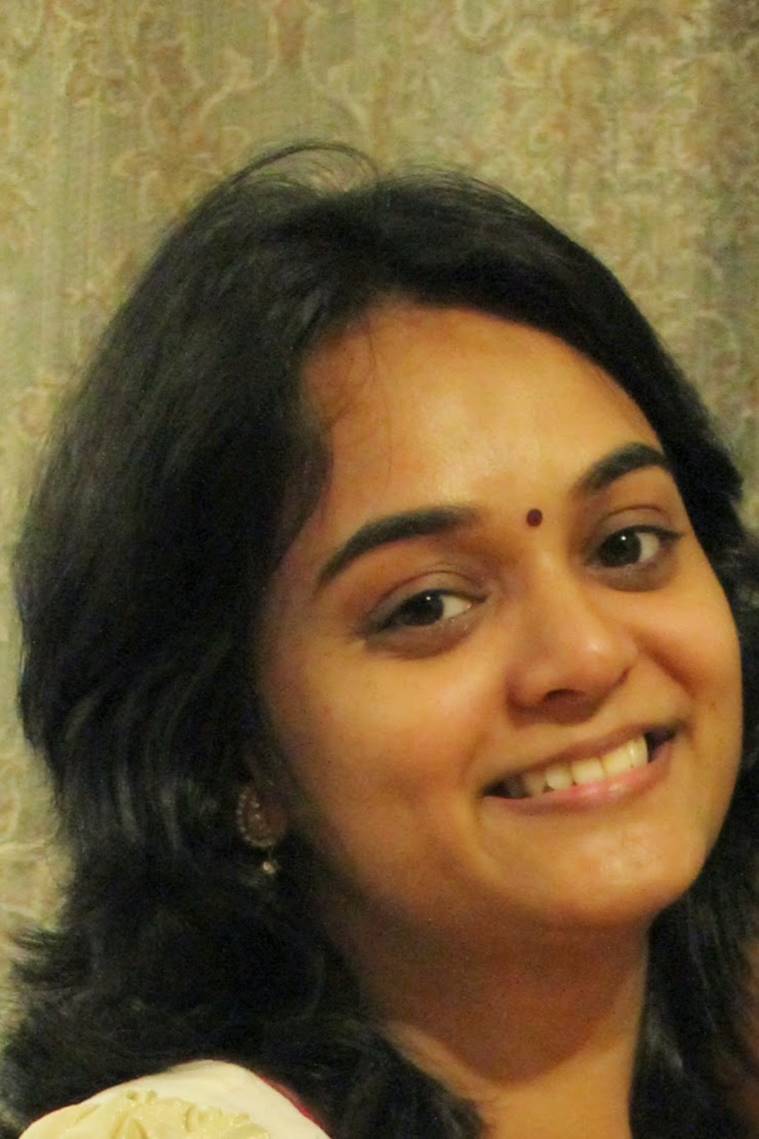 Asha frequently passed blood in her urine and traces of protein showed up in her urine tests.
Simultaneously, her symptomatic problems like headaches and low energy levels also showed marked improvement. When I last spoke to her a week back, she said she was doing her yoga as and when she found time and was feeling good.
Below is the practice package for Asha but it is advisable to seek expert advice because kidney problems vary from person to person and may need a different package. I’ve described Prana Vidya in brief but it is best administered and learnt from experiencing it.
The Practice: The capsule below is for someone young and otherwise healthy. For older people or those infirm due to poor health, the practice will have to be altered to some basic practices leading to the asanas and pranayama given below.
Shashankasana: Sit with your hands resting on your knees. Relax the whole body, inhale deeply, straighten your arms over your head, then, with exhalation, drop your body forward from the waist so that the hips remain resting on your heels while keeping your arms straight and finally resting on the floor in front. In the final position, your forehead will be resting on the floor with arms stretched out. Remain in the rabbit pose for as long as it is comfortable or for a minimum of five rounds of gentle inhalation and exhalation. Finally, with inhalation sit back with hands over the head and then finally lower them on your knees.
Ushtrasana: This camel pose yoga involves kneeling and then bending backwards with both hands touching your heels. This helps in improving the functioning of the organs in the abdomen region and enhances blood circulation to the kidneys.
Ardha Matsyendra asana: This is a half spinal twist. Sit up with the legs stretched out straight in front of you, keeping the feet together and the spine erect. Bend the left leg and place the heel of the left foot beside the right hip. Take the right leg over the left knee. Place the left hand on the right knee and the right hand behind you. Twist the waist, shoulders and neck in this sequence to the right and look over the right shoulder. Hold and continue with gentle long breaths in and out. Breathing out, release the right hand first (the hand behind you), release the waist, then chest, lastly the neck and sit up relaxed yet straight. Repeat on the other side. This is good for the liver and kidneys.
Halasana: This is the plough position, lie on your back with your arms beside you, palms downwards. As you inhale, use your abdominal muscles to lift your feet off the floor, raising your legs vertically at a 90-degree angle. Continue to breathe normally and support your hips and back with your hands, lift them off the ground. Let your legs sweep in a 180-degree angle over your head till your toes touch the floor. Your back should be perpendicular to the floor. Hold this pose and then bring your legs down on exhalation. Again, this benefits the organs in the abdominal region.
Pranayama: Do the Bhastrika. Take in a deep breath and breathe out forcefully through the nose, without any strain. Immediately, breathe in with the same force. Inhale and exhale repeatedly, deeply and thoroughly, using the diaphragmatic muscles with vigour. The abdomen moves out during inhalation, while the diaphragm descends. The converse happens while exhaling.
Uddiyan bandha: This is an abdominal lift, in which you suck your abdominal wall in and up at the end of an exhalation, while restraining the breath. The abdominal organs are all swept up to a higher than normal position in the trunk by a partial vacuum in the chest cavity. Improves blood circulation to all organs in this region.
Agni saar kriya: Contract the muscles of the abdomen and pull them in. Immediately release the muscles, allowing the abdomen to return to its natural position. Continue to rapidly and forcefully draw your abdomen in and out. This boosts metabolism and ensures correct functioning of all of the visceral organs in the abdomen.
Prana Vidya: This is a combination of relaxation and visualisation practice coupled with focussing on drawing in cosmic energy with inhalation at the eye brow centre, then taking it around the affected kidney and visualising it is curing it. Then as you exhale you visualise the problem leaving the body. You visualise the cosmic energy as golden light as it enters your body through the eyebrow centre and as blue light as it leaves the body through the eye brow centre. This practice must be administered by an expert yoga acharya.
Cleansing Practice or Laghu Shankprakshalan: This a body cleansing practice which is helpful but I had not administered this to Asha. Diet: Reduce intake of salt, processed food, sugar, fast food. Drink plenty of water.
(Kamini Bobde is a Kundalini practitioner who follows the Swami Satyananda Saraswati tradition of yoga. She is the author of Kundalini Yoga for All: Unlock the Power of Your Body and Brain. Published by Penguin)