6 min read

© The Indian Express Pvt Ltd



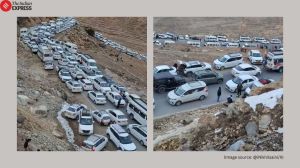
 Traffic noise has emerged as an important environmental risk factor for cardiovascular disease (CVD) in most researches since 2010. (Express photo: Jithendra M)
 If you wondered why you become irritable when caught in the middle of a traffic jam with cars honking around you, latest research confirms that street noise can raise your stress levels. The study, published last week in the Journal of American College of Cardiology (JAAC)-Advances, finds that long-term exposure to road traffic noise is associated with increased incidence of primary hypertension and has had alarm bells ringing back home. Public health experts have appealed for investing in mitigation strategies to reduce noise and its impact and as Dr K Srinath Reddy, honorary distinguished professor at Public Health Foundation of India (PHFI), says, “If the stress is chronic and we have little control over what causes it, high blood pressure becomes an established health problem.”
WHY THIS STUDY IS IMPORTANT
Previous studies have shown a connection between noisy road traffic and increased risk of hypertension. However, strong evidence was lacking, and it was unclear whether noise or air pollution played a bigger role. This longitudinal study involved more than 250,000 participants across the UK, who were followed up for more than eight years. Researchers chose them from the UK Biobank (of people aged between 40 and 69 years) who were not hypertensive. They estimated road traffic noise based on their residential address and the Common Noise Assessment Method, a European modelling tool.
“Using follow-up data over a median 8.1 years, we looked at how many people developed hypertension,” said Jing Huang, assistant professor in the Department of Occupational and Environmental Health Sciences in the School of Public Health at Peking University in Beijing, China, and lead author of the study. Not only did the researchers find that people living near road traffic noise were more likely to develop hypertension, they found that the risk increased in tandem with the noise “dose.”
WHY ARE EXPERTS WORRIED
“The evolutionary biology of our body perceives frequent noise of traffic or other blaring noises as an irritant and evokes the stress response. This includes raised blood pressure. Frequently such noise disturbs sleep, aggravating stress. The study also shows a dose-response relationship, which is evidence that the association of noise exposure to elevated blood pressure is causal. High-traffic flow locations are also associated with increased levels of air pollution. Hence, prolonged exposure to PM 2.5 also raises blood pressure and leads to chronic hypertension,” Dr Reddy says.
According to Dr Santosh Shivaswamy, ENT specialist, at Manipal hospital, Hebbal, Bengaluru, a noisy environment can cause a lot of stress. “Chronic exposure to high decibel noise puts our autonomic nervous system under stress, which is the involuntary part of our nervous system. It controls our blood pressure, breathing, heart rate and digestion. High noise causes the release of stress hormones like cortisol and adrenaline. Chronic exposure to these stress hormones causes damage to the inner lining of our blood vessels called endothelial dysfunction, which is associated with high blood pressure and other cardiovascular diseases.”
Adds Dr Abhijit Lodha, consulting physician at Pune’s Ruby Hall Clinic, “Several animal and human studies have shown that those exposed chronically to loud noise of more than 90 db, like a busy road or railways or aircraft, have high blood pressure as compared to those staying in other areas,”
TRAFFIC NOISE AND HEALTH HAZARD
Traffic noise has emerged as an important environmental risk factor for cardiovascular disease (CVD) in most researches since 2010. According to the WHO’s latest reports, it is estimated that at least one in four adults in India has hypertension but only about 12 per cent of them have their blood pressure under control. Uncontrolled blood pressure is one of the main risk factors for heart attacks and stroke and globally are the most common cause of death and disease. India has set a target of 25 per cent relative reduction in the prevalence of hypertension (raised blood pressure) by 2025. As Prof Rakhi Dandona, Professor, PHFI, says, “One of the most significant sources of noise pollution is road traffic in India. People must be made aware about the sources of noise and their impact on public health. India needs to invest in mitigation strategies to reduce noise and its impact.”
The Central Pollution Control Board has laid down permissible noise levels in India – For industrial areas, the limit is 75 dB for daytime and 70dB at night. In commercial areas, it is 65 dB and 55 dB while in residential areas it is 55dB and 45 dB during daytime and night time respectively. “Noise pollution has not received the recognition that it deserves,” says Dr Sundeep Salvi, president of the Indian Chest Society. Sound pollution is associated with an increased risk of developing high blood pressure, insomnia, nausea, heart attack, exhaustion, dizziness, and headache and triggers hearing loss. “It not only affects humans but also animals and plants and their pollinators,” he adds. He cites a survey carried out by Earth5R – an environmental NGO in January 2023 from 15 Indian cities – which reported that noise levels in silent and residential areas were also 50 per cent higher than the permissible limit of 50 dB. Prof Dandona also says that the findings of this paper are very relevant to the Indian setting. “Many epidemiological studies indicate a long-term relationship of noise pollution with a wide range of metabolic, cardiovascular, and respiratory disorders and diseases. Unfortunately, noise is yet to be recognized as a leading environmental problem in India. Increased urbanization, inadequate urban design and an increase in transportation and industry contribute to noise pollution,” she adds.