6 min read


© IE Online Media Services Pvt Ltd



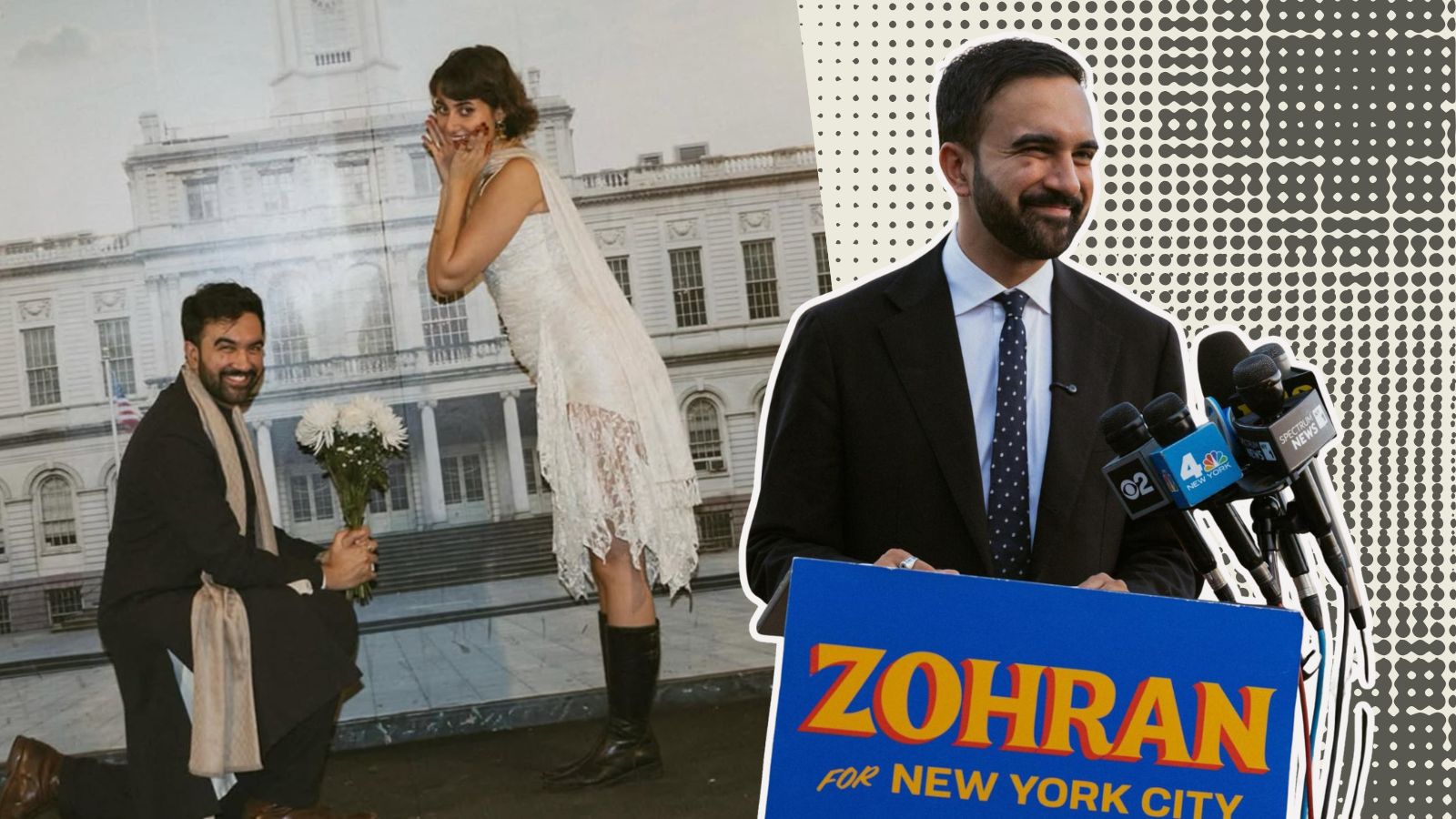 From his dating app success to Deewar edits and a cringe-y rapping past, Zohran Mamdani is a man after the Gen Z heart. (Photo courtesy: Instagram/@zohrankmamdani)
When a political leader casually mentions meeting their spouse via an app-assisted meet-cute, it catches your attention. When they go on to say, “There is still hope in those dating apps,” it screams #relatable.
Zohran Mamdani, the Democratic candidate for New York’s mayoral elections, an Internet sensation and the chosen Gen Z messiah, is proof that a politician’s love life doesn’t need to be a scandal or a secret.
The 33-year-old Indian-American got one step closer to being the next mayor of NYC by winning the Democratic primary election on June 24 against his main challenger, and party veteran, Andrew Cuomo. His campaign strategy so far points to a fundamental shift in what it takes for younger generations to feel the sparks between them and their representatives.
Mamdani shared that he met his partner, Syrian-American artist Rama Duwaji, on Hinge during a podcast interview. In another social media post with Indian comedian Kaneez Surka, Mamdani made modern-day romance (or the lack of it) an electoral matter. Surka rather cheekily asks Mamdani, “New Yorkers want to know how you are going to help single people find love.” Mamdani reiterated how he met his partner, and added, “The love of your life may currently be too stressed about whether they can afford the most expensive city in the US to find you. Affordability is about romance!”
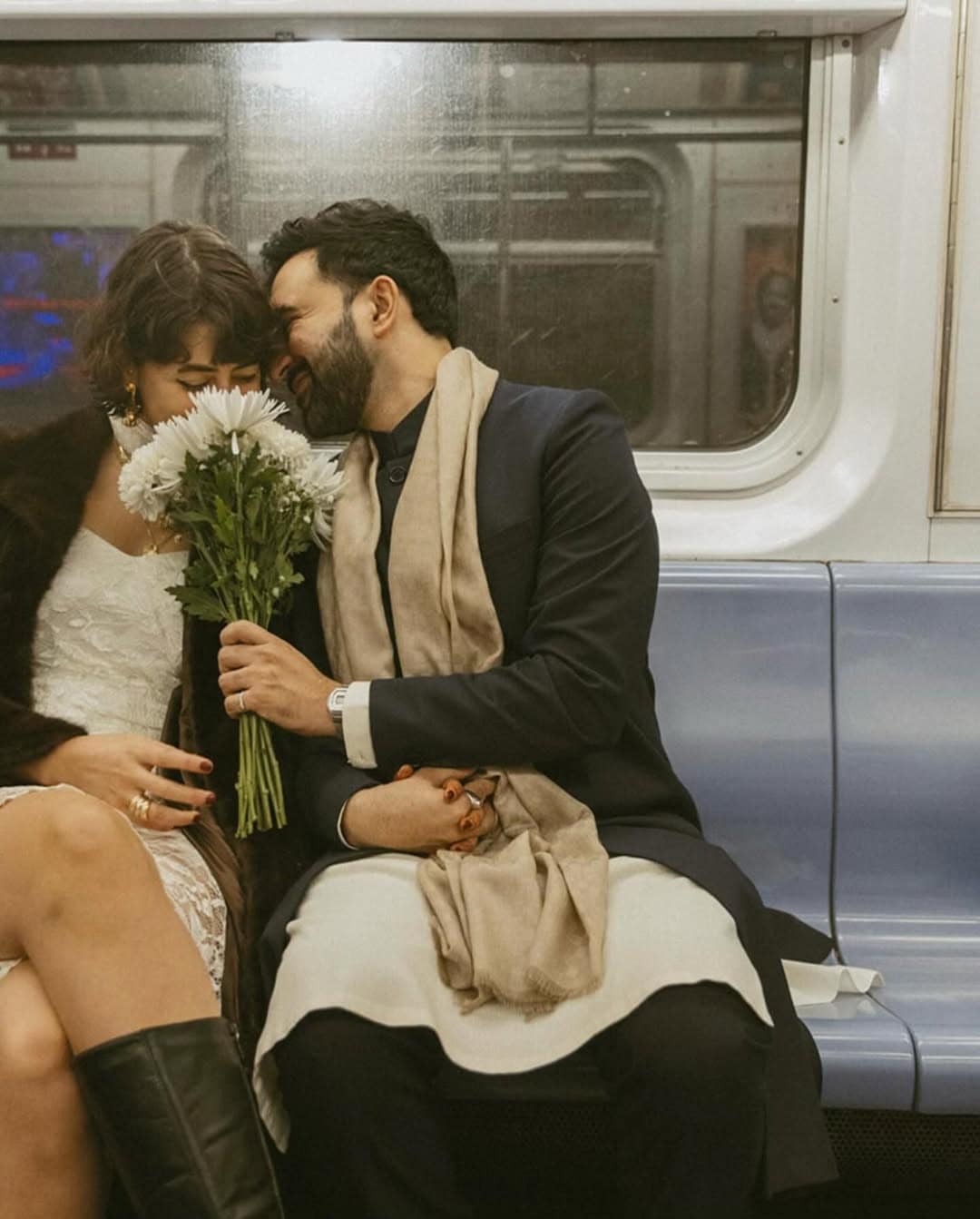 Zohran Mamdani and his wife, Rama Duwaji (Instagram/Zohran Mamdani)
The answer hit more than just a campaign check box. It spoke to a generation which has just begun venturing into the political arena. A 2023 survey found that one-third of Gen Z voters wished they had known more about the candidates running in the 2022 US midterm elections, compared to 21 per cent of Millennials and 11 per cent of those from Generation X.
A lot has already been written about Mamdani’s earnest, no-holds-barred social media clips. The boomers may sneer at his ‘flippant’ campaign style, but the youngsters have been hooked.
Mamdani calls his approach the “politics of no translation”, meaning direct communication without intermediaries. As he explained to The Guardian: “We believe in a politics of no translation, one that is both direct to the struggles of working people’s lives and also delivered directly.”
For decades, campaigns of largely older sections of political leaders operated through carefully controlled information flows: press releases and heavily media-trained public appearances. Personal details were either completely off-limits or structured to serve narratives. Politicians spoke about their families in terms that revealed nothing genuinely candid.
Mamdani broke this mould. He has owned up to his immigrant story (he moved to New York when he was seven), cringed at his rap past as ‘Mr Cardamom’ and even used a mango lassi analogy to explain the electoral process to his desi voters. From Deewar edits and Karz dialogues to a reel making fun of himself for awkward hand-waving in videos, Mamdani is a man after the Gen Z heart.
When Mamdani shared how he navigated (and successfully at that) the awkward realities of modern-day romance, he validated an entire generation’s lived experiences.
It was also a nod to a crucial demographic. Most dating app users are in their late 20s and early 30s, which overlaps almost perfectly with the age group now becoming the most politically active.
A 2023 article on ‘TikTok’s influence over Generation Z’s Political Behavior’ in the Journal of Social Media in Society demonstrates that social media can be an important instigator of political participation, depending on how it is used.
Mamdani’s approach taps into this reality with an awareness that voters who meet partners online, build careers through LinkedIn, and organise communities via social media seek leaders operating in the same digital ecosystem. It’s also a strategic recognition of the ‘chronically online’ Gen Z’s tendency to form parasocial relationships with Internet icons, now including politicians.
The generational disconnect isn’t unique to New York City. In India, Parliament has been getting older significantly over time. The average age of elected representatives rose from 46.5 years in 1952 to 55.6 years in 2024. This growing gap explains the lack of youth participation both as leaders and voters.
When enamoured young Indians comment, “My mayor (I’m from India)” or “I live in New Delhi. Can I still vote for him?” on Mamdani’s posts on social media, they express a desire for political leaders who understand their reality. These voters are drawn to someone speaking their language, acknowledging the digital-first “normal” they inhabit.
The ‘window’ of possibilities
Mamdani’s Hinge story suggests that the ‘Overton Window of Political Possibility’, a model based on how ideas in society change over time and influence politics, has shifted. What could once be put away as “too personal” for politics is now validating and even relatable. It points to a need to acknowledge that younger voters’ “normal” experiences include digital-mediated relationships and social media-driven community building.
For information-hungry voters, the trust built by “keeping it real” has the potential to extend credibility to policy discussions. Now, voters who believe the Democratic nominee is open enough to be honest about his dating life are more likely to listen keenly to his political platform about rent freezes, free city buses, and public childcare. When communication across the board is not conventionally packaged, complex policy stances feel accessible.
Mamdani’s success offers a blueprint for leaders to allow themselves to be real people with real experiences, even if that means a perfect ‘swiped right’ story. A generation growing up online demands leaders who meet voters where they are rather than where age-old political playbooks suggest they should be.