7 min read


© IE Online Media Services Pvt Ltd



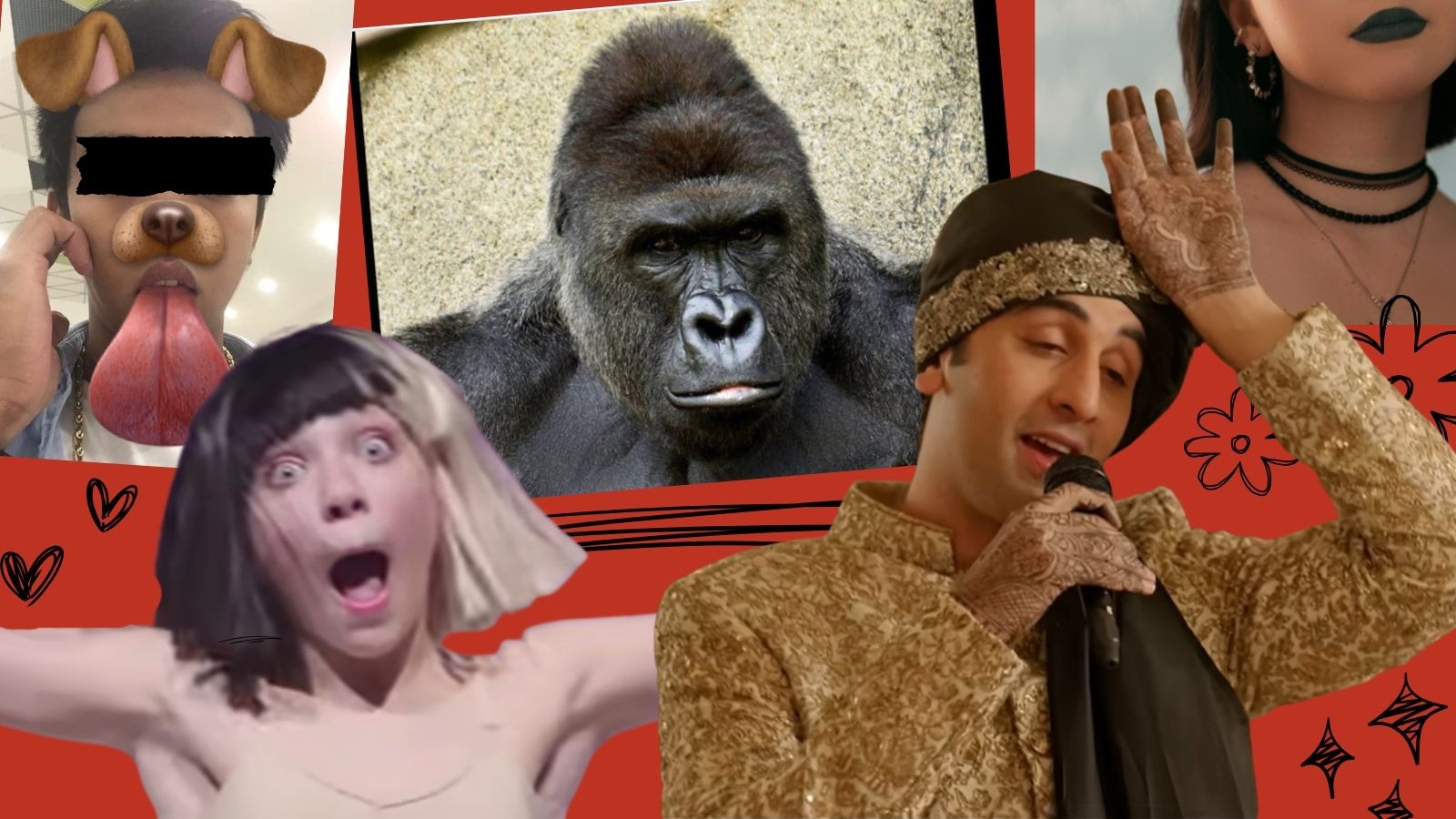 2016 was the year of Harambe memes, Channa Mereya edits, chokers and Sia's Cheap Thrills.
2026 began with a longing for the past. The internet would have you convinced that 2016 was arguably the best year. Blurry, Snapchat-edited photos dominate our timelines today, with long captions reminiscing on the gone-by simpler times. As I scroll from post to post, I couldn’t help but wonder: Did everyone collectively have a great 2016?
The answer lies partly in who dominates our digital spaces. Data shows that 15 to 25-year-olds make up the largest cohort of active internet users, which means Generation Z dominates the online culture. For most Gen Z, born between 1997 and 2012, the year 2016 was when they were either wrapping up the last years of schooling or already in college. Thus, as the generation now navigates an uncertain job market, amid a shaky economy, a world order in flux, and increasingly non-porous borders, nostalgia for a time unburdened by responsibility feels almost inevitable.
The 2016 trend speaks to the anxieties of a generation that would rather look back than look forward to a future that’s becoming increasingly difficult to imagine.
The golden year?
We were wearing ripped jeans and chokers. Snapchat’s dog filter and Retrica’s yellow-tinged photos were all the rage. Arijit Singh was at his peak, and we were all listening to ‘Channa Mereya’ to get over our teenage break-ups. In fact, the 2016 soundtrack remains unmatched. If Justin Bieber’s ‘Love Yourself’ was the generation’s anthem, Sia’s ‘Cheap Thrills’ and Rihanna’s ‘Work Work Work’ became the go-to ragers. Then there were the Bollywood party hits, ‘Baby Ko Bass Pasand Hai’, ‘DJ Waaley Babu’, and ‘Saturday, Saturday’. Pokémon Go fever had gripped the world, with people out on the streets looking for Pikachu or Mewtwo. The killing of a gorilla, Harambe, in a US zoo, captured most of the internet’s imagination, fuelling memes that remain culturally relevant even today.
In the latter half of 2016, Jio’s launch would make data cheaper for students, and demonetisation would usher in the GPay-Paytm wave.
2016 wasn’t as cheerful for all generations. Many, especially millennials and boomers, remember it for long queues at banks and ATMs. It was another year marked by global upheaval. With Brexit, the United Kingdom left the European Union, causing global uncertainty. In the United States, 2016 proved to be the most polarising election, bringing Donald Trump to power. It was the year that also saw the deaths of cultural icons from the ‘70s and ‘80s — David Bowie and Prince. Alan Rickman, most celebrated for his portrayal of Professor Snape in the Harry Potter series, dealt a blow to millennials, who grew up on the books and movies.
With the spotlight back on 2016 in 2026, the internet is understandably divided. Reddit discussions have some calling the nostalgia for 2016 “weird or wrong”. One user said, “The romanticization (sic) of 2016 makes me feel like I’m being gaslit”.
For millennials, the simpler times were in earlier years, the late ‘90s and the early 2000s. This longing gave rise to “Y2K fashion” — midriff-baring tank tops, low-rise jeans, and denim supremacy — which became trendy once again in recent years. The Y2K nostalgia fuels reruns of shows like Friends and Sex and the City, and sequels of hit films from the time, such as Scream, Final Destination, and Legally Blonde. It’s what drives crowds at concerts of older pop stars like Sunidhi Chauhan and Enrique Iglesias. The millennial craze for Coldplay, the band with a 48-year-old frontman, Chris Martin, seeped into Gen Z’s FOMO, creating a shared nostalgia economy that transcends generational boundaries.
Evidently, nostalgia has long influenced pop cultural trends, birthing an economy of its own, with brands that make a comeback, stars that turn Gen Z favourites, or TV show franchises that find a second wind. Pop culture critic and journalist Simon Reynolds has called it “retromania”. In his 2011 book, Reynolds writes, “There has never been a society in human history so obsessed with the cultural artifacts of its own immediate past.”
The fascination with the past plays out in many ways. The recent Labubu craze was seen as a way for adults to feel childlike again. And nothing says childhood more than soft toys and collectibles (think tazos or WWF trading cards). A digitally-saturated Gen Z is moving beyond Instagram and Snapchat to document their lives in more tangible ways. Instant film cameras (most commonly identified as ‘Polaroids’), vision boards (with Pinterest printouts), and scrapbooking (which ultimately end up on social media) have found new takers.
This shift towards analogue points to another reality: Unlike previous generations, who could own DVDs of their favourite films, cassettes of their favourite songs, or trading cards, digitally native Gen Z relies largely on subscription-based platforms. These systems sell access rather than ownership. You have the ability to stream a film, listen to a playlist, or tune into a podcast without ever possessing the object itself. So when a show disappears from a streaming platform or a music service loses the streaming rights of a particular artist, there’s no physical collection that anchors your connection with culture.
The term ‘nostalgia’ was coined by physician Johannes Hofer in 1688, combining the Greek words ‘nostos’ (homecoming) and ‘algos’ (pain), and originally referred to homesickness. It was once regarded as a psychological disorder, characterised by symptoms such as lethargy and depression. Over time, however, nostalgia has shifted from a medical diagnosis to a universal emotional experience, felt across age groups and social backgrounds.
Contemporary research highlights nostalgia’s positive psychological effects. It has been shown to increase optimism, social efficacy, and a sense of purpose in life, positioning nostalgia as an emotion rooted in the past, yet one that meaningfully shapes the future. A 2008 paper published in Psychological Science further suggests that nostalgia, often triggered by loneliness, can help counter its effects by enhancing perceived social support.
In today’s era of constant digital connection, increasing numbers of people report feeling isolated. Humanity, many argue, is in the midst of a loneliness epidemic. As algorithms increasingly replace human decision-making, artificial intelligence shapes thought processes, and platforms built on convenience remove friction from everyday life, the nostalgia economy can be understood as an attempt to hold on to humanness. On social media platforms, shared nostalgia for vintage artefacts such as Orkut, Cadbury Bytes, and shows like Shaktimaan and Karishma ka Karishma functions as a form of “cultural glue,” fostering a sense of belonging and community. We return to reruns of beloved television shows, demand their sequels, spend extravagantly on rock concerts and collectibles, and cherish a Polaroid photograph over a carefully curated Instagram feed.
In this context, nostalgia for Gen Z resembles a modern form of homesickness: a longing for permanence and tangibility.