


© The Indian Express Pvt Ltd
Tags:


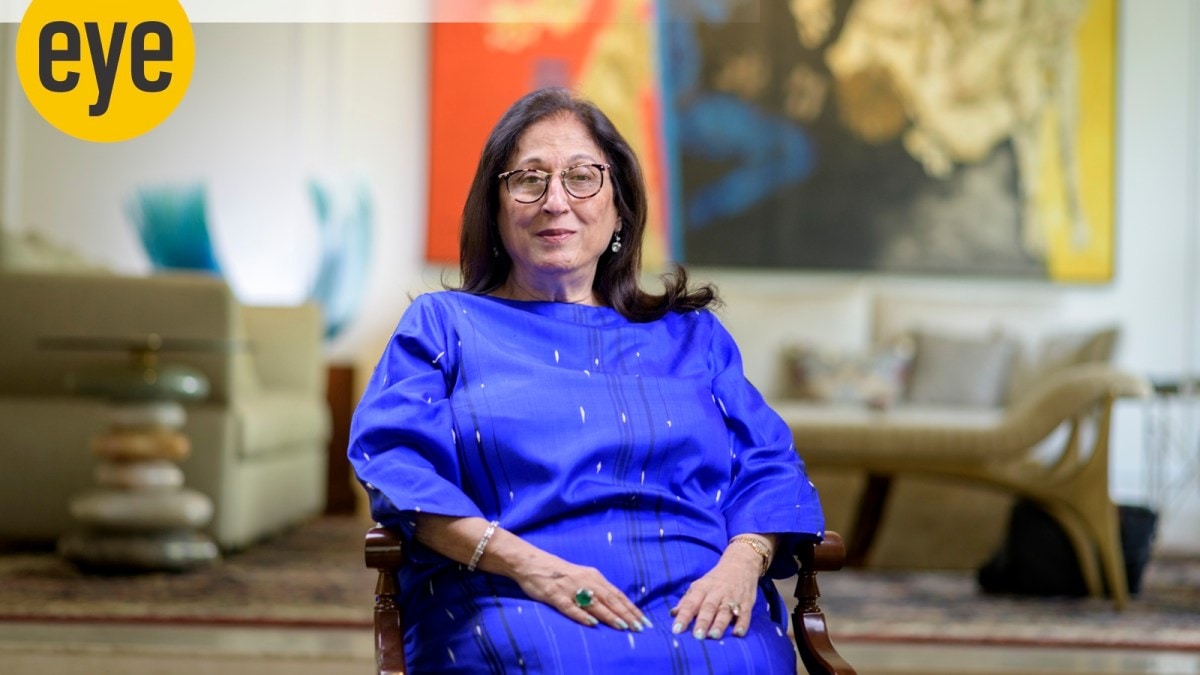
One of India’s foremost art collectors and chairperson of the Kiran Nadar Museum of Art (KNMA), India’s first private museum of modern and contemporary art, Kiran Nadar, 72, owns some of the most spectacular works of Indian art, including SH Raza’s Saurashtra and FN Souza’s Birth. Wife of industrialist Shiv Nadar, she has supported several landmark exhibitions of Indian art at international institutions and is now set to open a new museum and culture centre in Delhi in 2026. Nadar was the recipient of the Padma Shri in the art category this year. Edited excerpts from an interview:
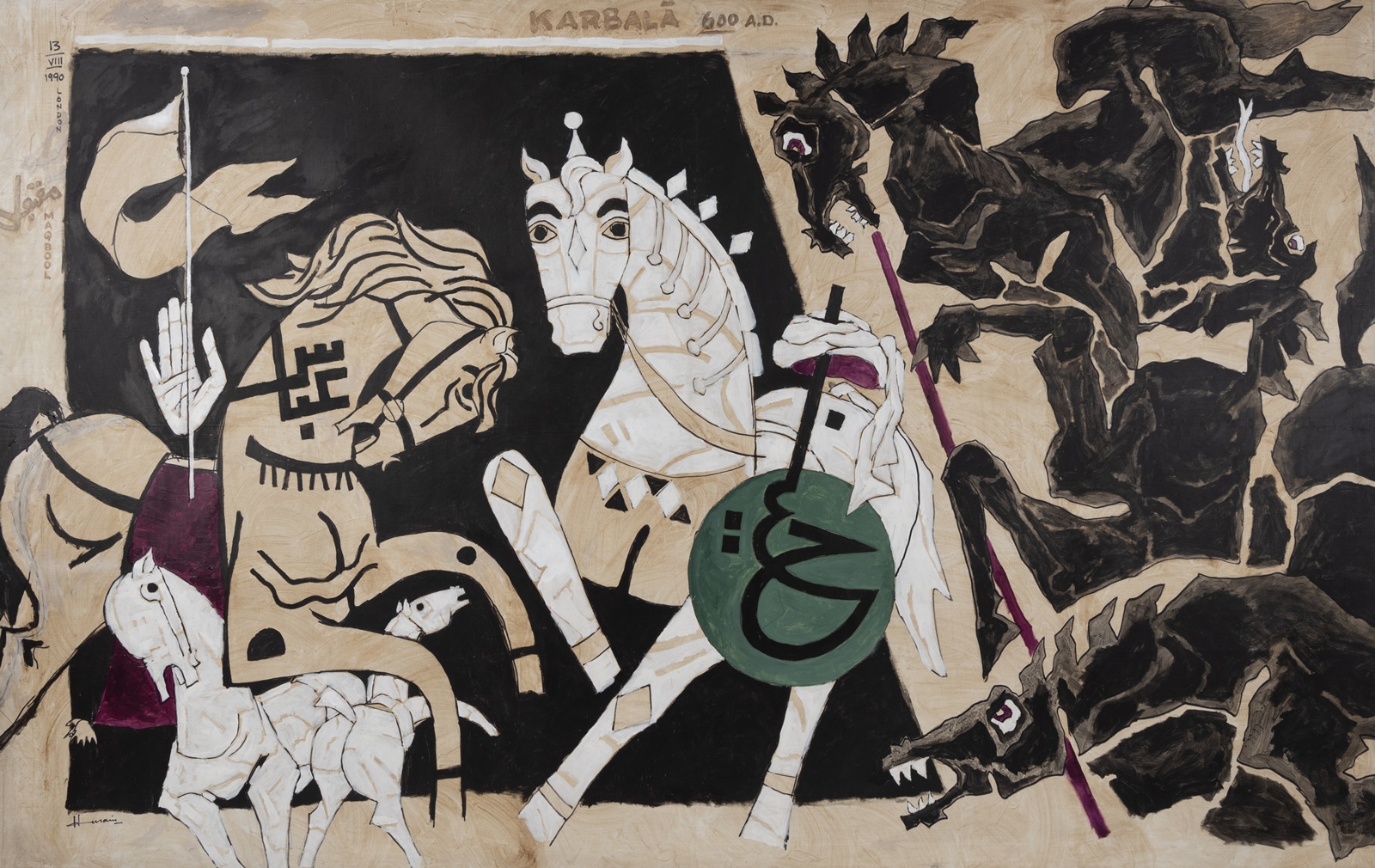
My mother did her masters in microbiology and we were posted in Chandigarh when she met artist Balraj Khanna who got her interested in art. She started painting and also acquired some works but she wasn’t a major collector because even at that time it required a lot of money. So I grew up in that environment, but I really got interested in buying art when I was building a home. One of the earliest works I bought was a Rameshwar Broota monochromatic male nude. We (she and Shiv Nadar) also bought two MF Husain works — Mother Teresa and Mahabharata, and the latter is still in my house. We also got a Manjit Bawa.


I need to, but so far I haven’t had the heart. A lot of collectors do sell, but I haven’t sold a single work.
When you are in the room, you are conspicuous. Everyone knows it is you who was bidding; they might come to know later but being in that room can also be very stressful.
There have been works that I have missed at auctions but strange things have happened to me and many of them have somehow come to me later. For instance, I had bid for MF Husain’s Battle for Ganga and Jamuna at an auction but lost as an underbidder. Much later, when the Government was selling Nirav Modi’s art collection I realised that the work was there, and I acquired it.
I had set a limit for myself which was lower, but being at an auction can be addictive and this was a major work. I have a good collection of Amrita, but I always regretted missing a particular work that was offered to me for Rs 1.70 crore around 2003. I had taken the advice of someone who said it was too much and I, personally, was a bit scared as I had never paid more than a crore for an artwork till then. So I let it go and the same work was later auctioned for Rs 6 crore. Missing that work pinched me and when I saw The Story Teller it was of a similar genre and I wanted it to be part of the collection.
We are much more open today than we were five-six years ago, but some paintings I still wouldn’t show. I get a little nervous and don’t know if it would be a good idea to put banners like ‘Do not Enter’ and so on. We have shown some Souza works that have been explicit, but Rape I still might not. That would be the case with some other works as well.
I was simply involved with the project in an advisory capacity.
KNMA is also exhibiting in Venice this year, coinciding with the Biennale. Could you share details of the exhibition?
We will be showing MF Husain. We are doing this show at the Magazzini del Sale in Dorsoduro. The exhibition is curated from the KNMA collection and includes his wooden toys and works such as Yatra. We are also presenting an immersive exhibition on Husain, designed by Visioni Eccentriche, that we later plan to exhibit at our new museum in Delhi.
I would hope so. The art and culture centre is on a 100,000-square-metre site, with about 170,000-sq ft exhibition space, which is about the size of MOMA. It would allow us to show our permanent collection, curated exhibitions from the collection and also borrow shows.
Art, at the moment, is on an upswing but when we compare ourselves to the world, we are still far away in terms of prices. There are some artists who have received great recognition but there is still great scope for Indian art. After the 2007 crash, the prices of Indian art also came down. The prices have certainly not peaked and there is a long way to go as is evident with every auction where prices are going higher.
My husband has been very supportive. Now my daughter Roshini is also involved with the museum. She has in fact started building her own collection, paying for the works with her earnings.
People should like what they are buying and investment should not be the immediate goal. One can hope that it goes up, but that can’t be a priority.


