5 min read


© The Indian Express Pvt Ltd



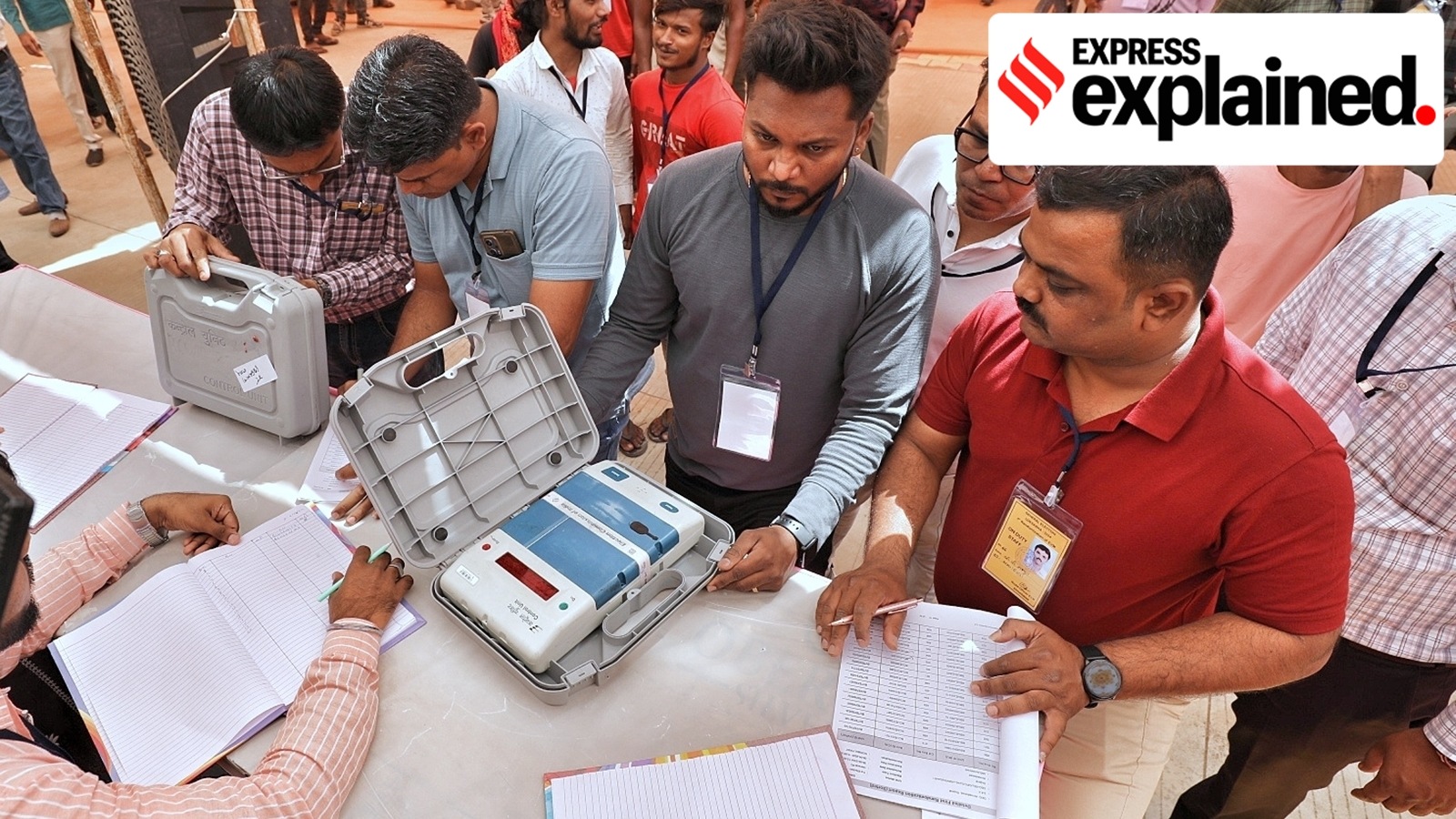 Jairam Ramesh, Congress general secretary in-charge of communications, said that some Congress candidates had flagged that the party was winning on EVMs with 60-70% battery charge, but losing on EVMs showing 99% battery charge.
The Election Commission of India (EC) on Tuesday rejected the Congress’ allegations of irregularities in the counting of votes in the recent Haryana Assembly polls.
As votes were being counted in Haryana on October 8 — and BJP headed to a somewhat unexpected victory — Congress expressed concerns regarding the counting process, particularly the battery life of Electronic Voting Machines (EVMs) in 20 constituencies.
Jairam Ramesh, Congress general secretary in-charge of communications, said that some Congress candidates had flagged that the party was winning on EVMs with 60-70% battery charge, but losing on EVMs showing 99% battery charge. Later that day, in a press conference, Ramesh said that the party could not accept the poll results.
A delegation of Congress leaders met the EC on October 9 to convey its concerns, and submitted an updated memorandum on October 11. The complaints contained allegations of EVM tampering, and in one case, replacement of the control units. Congress’ primary question: how could the EVM battery still be at 99% after polling and counting?
After seeking reports from each Returning Officer (RO) and the Haryana Chief Electoral Officer, the EC responded to Congress’ allegations on Tuesday in a letter to party president Mallikarjun Kharge. In this letter, the EC categorically denied Congress’ “baseless” allegations, which it said had the potential to cause “turbulence”.
The EC said that the ROs of all 26 constituencies in which Congress candidates had filed complaints did not find evidence of any wrongdoing. It said that these ROs had also recorded the presence of the Congress candidates or their representatives during important processes pertaining to EVMs — from their commissioning six to eight days before polling and the installment of new batteries in EVMs’ control units, to the sealing of the EVMs after polling and counting.
The EC also updated the Frequently Asked Questions (FAQs) section on its website to address some questions raised by Congress. This, for the very first time, has brought to the public domain details regarding the batteries used in EVMs, the reason for this choice, and what the battery percentage on EVMs’ display units means.
Choice of alkaline cells: The control unit of the EVM and the Voter Verifiable Paper Audit Trail (VVPAT) both use non-rechargeable alkaline cells as their power source. These primary cells are different from the secondary or rechargeable cells used in devices like mobile phones, that need repeated charging. The EVM control unit has a power pack of five single-use alkaline cells which have a shelf-life of five years, while the VVPAT has 30 such cells. The system is designed to use power packs of 5.5 volts (V) to 8.2V.
Reason for choice: Since the EVM is a stand-alone unit meant to function without external power source, it was decided to not to use rechargeable cells. Moreover, alkaline batteries can operate in extreme temperatures and are reliable, giving a gradual decrease in voltage output. The EC said that these types of cells are frequently used in portable electronics, emergency power back-ups for medical devices, military radios, and GPS systems.
Why EVM showed 99% charge after polling: The EC clarified that the 99% shown on the display of the control unit does not mean that the battery charge is actually at 99%. When the battery voltage drops between 8.2V and 7.4V, the display shows “99%”. It is only once it drops below 7.4V that the actual battery life is displayed. At a voltage below 5.8V, the display flashes a “change battery” sign, and below 5.5V, the EVM stops working (although stored data remains intact).
The power pack of the control unit “is sufficient to meet the requirements of power consumption of the EVM during poll day and counting day,” the EC said.
“The voltage falls very gradually when the capacity is high but falls rapidly when the battery capacity reduces below a threshold. In case of lighter current load like with a single ballot unit and less than 1,000 votes being cast, the battery current drain is low and output voltage may not drop below 7.4V,” the EC said, explaining why some EVMs may have displayed 99% battery life even after counting. The EVM power pack can support up to four ballot units and one control unit, in which upto 2,000 votes can be cast in total, the EC FAQ says.
The EC said that the EVM does not consume any power during the long storage period unlike mobile phones, which remain connected to mobile towers irrespective of whether they are in use, and thus see a continuous drain of the battery.
Any battery change in an EVM is done only in the presence of a candidate’s polling agents, and is recorded in a prescribed form, the EC said.