Journalism of Courage
Advertisement
Premium

Caesium-137: A radioactive isotope that was lost and found in Andhra

The mysterious disappearance of the 1 ft × 1 ft box had triggered concern and some panic, as both police and ONGC officials searched frantically for it. Here's why.

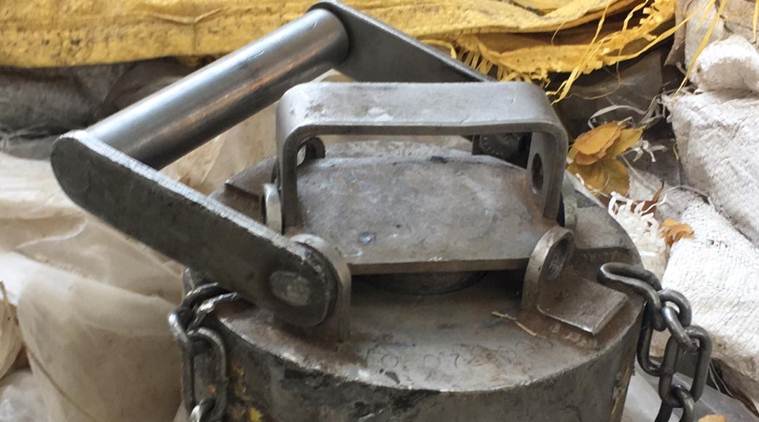
Caesium-137: A radioactive isotope that was lost and found in AndhraCaesium-137: A radioactive isotope that was lost and found in Andhra Container of Cs-137 found safe.

A small container of radioactive Caesium-137, which went missing on January 16 from a truck ferrying machinery and tools from an ONGC exploration site near Machilipatnam to Rajahmundry 120 km away, was retrieved from a scrap shop at Kalindindi village in Krishna district of Andhra Pradesh late Wednesday evening. The mysterious disappearance of the 1 ft × 1 ft box had triggered concern and some panic, as both police and ONGC officials searched frantically for it. However, the container was found intact, and the isotope safe.

Caesium-137 (atomic mass 137) is a heavier, radioactive isotope of Caesium (Cs) whose most stable form is Cs-133. Silvery white, soft, and malleable, Cs-137 is one of the very few metals that exist in liquid form at room temperature.

(A more common example is mercury.) Cs-137 is most commonly produced as a byproduct in fission reactions of uranium and plutonium in nuclear plants or nuclear explosions. It is, thus, part of the spent fuel. One of the biggest contaminations of Cs-137 happened during the Chernobyl accident of 1986, when about 27 kg of the metal entered the atmosphere. Cs-137 has a half-life of about 30 years.

It decays through the emission of beta particles (a high-energy electron or positron, or positive electron) and gamma rays (a form of electromagnetic radiation like X-rays). Any danger from Cs-137 emanates from these natural emissions of beta particles and gamma rays. Exposure to very small amounts of Cs-137 is not harmful.

Such exposure happens through presence of the metal in very small amounts in the atmosphere and in the soil. However, accidents like Chernobyl or Fukushima can contaminate water bodies with Cs-137, and the metal can then be ingested along with food and water. Very high exposure — an extremely rare occurrence, according to the US Environment Protection Agency — can result in an increased risk of cancer.

Cs-137 is used in a variety of measuring instruments in the construction and other industry. It is also used, as in ONGC’s case, in well-logging devices in the drilling industry for the characterisation of rocks.

The substance that went missing in Andhra has a radioactivity of 80 GBq (giga or billion becquerel), according to the Atomic Energy Regulatory Board (AERB). This means that about 80 billion atoms in the substance was decaying every second. ONGC said the substance was encased in a box that had a lead shield to absorb all the gamma rays that were emitted. Unless the box was opened — which was not easy — there was no harm of exposure, the AERB said. “AERB would like to inform the general public, (that) the radioactive source is in a heavily shielded rigid container and well secured, and hence not easily retrievable. Moreover, the source is in non-dispersible form,” it said in a statement.

Curated For You

Sreenivas Janyala is a Deputy Associate Editor at The Indian Express, where he serves as one of the most authoritative voices on the socio-political and economic landscape of Telangana and Andhra Pradesh. With a career spanning over two decades in mainstream journalism, he provides deep-dive analysis and frontline reporting on the intricate dynamics of South Indian governance. Expertise and Experience Regional Specialization: Based in Hyderabad, Sreenivas has spent more than 20 years documenting the evolution of the Telugu-speaking states. His reporting was foundational during the historic Telangana statehood movement and continues to track the post-bifurcation development of both Telangana and Andhra Pradesh. Key Coverage Beats: His extensive portfolio covers a vast spectrum of critical issues: High-Stakes Politics: Comprehensive tracking of regional powerhouses (BRS, TDP, YSRCP, and Congress), electoral shifts, and the political careers of figures like K. Chandrashekar Rao, Chandrababu Naidu, and Jagan Mohan Reddy. Internal Security & Conflict: Authoritative reporting on Left-Wing Extremism (LWE), the decline of the Maoist movement in former hotbeds, and intelligence-led investigations into regional security modules. Governance & Infrastructure: Detailed analysis of massive irrigation projects (like Kaleshwaram and Polavaram), capital city developments (Amaravati), and the implementation of state welfare schemes. Crisis & Health Reporting: Led the publication's ground-level coverage of the Covid-19 pandemic in South India and major industrial incidents, such as the Vizag gas leak. Analytical Depth: Beyond daily news, Sreenivas is known for his "Explained" pieces that demystify complex regional disputes, such as river water sharing and judicial allocations between the sister states. ... Read More


Tags:
  • Express Explained
Edition
Install the Express App for
a better experience
Featured
Trending Topics
News
Multimedia
Follow Us
Express Premium8,000 aspirants, 183 jobs and an airstrip: Inside Odisha’s Home Guard rush
X