Premium

Surat property sealed over sale to Muslim woman: What is the Disturbed Areas Act in Gujarat

Under the Disturbed Areas Act, the district Collector notifies a particular area of a city or town as ‘disturbed’. After this, the transfer of immovable property in those areas requires express permission of the Collector. Here's why, and how this works

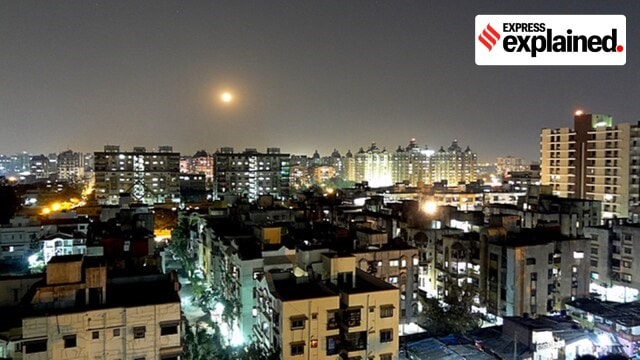
Disturbed Areas Act, SuratParts of Surat fall under the Disturbed Areas Act. (Photo: Wikimedia Commons)

Recently, the Surat district collector sealed a property in the Salabatpura area of the old city, as its owner, a Hindu woman, had sold it to a Muslim woman in what the collector termed was a violation of the Disturbed Areas Act.

The sale, though incomplete, was seen as violating Section 5 of the Gujarat Prohibition of Transfer of Immovable Property and Provision of Tenants from Eviction from Premises in Disturbed Areas Act, popularly known as the Disturbed Areas Act.

Under the Act’s Section 5 (a) and (b), the person intending to sell the property has to apply to the Collector for sanction. The Collector holds a formal inquiry, hears various parties, and has the right to clear or reject the deal.

What is the Disturbed Areas Act?

Under the Disturbed Areas Act, the district Collector notifies a particular area of a city or town as ‘disturbed area’. This is generally on the basis of the history of communal riots in the area.

Following this notification, the transfer of immovable property in those areas requires express permission of the Collector. In the application, the seller has to attach an affidavit stating that he/she has sold the property of his/her free volition and that he/she has got a fair market price.Violation of the Act’s provisions invites imprisonment and fine.

According to the Gujarat government, the Act is aimed at checking communal polarisation in parts of the state.

Amendments in 2020 gave more power to Collector, government

In 2020, the Gujarat government amended certain sections of the Act, giving the Collector more powers.

Story continues below this ad

This was following reports of anti-social elements allegedly bypassing the Collector and selling and buying properties in the “disturbed areas” by threatening people or luring them with high prices.

Before the amendments, the Collector would give permission for the transfer of property following an affidavit by the seller that he/she was selling the property voluntarily and at a fair value.

The amended Act gave the Collector more powers to ascertain if there was a likelihood of ‘polarisation’ or ‘improper clustering’ of people belonging to a particular community through the sale, disturbing the ‘demographic equilibrium’ of an area. It also gave the state government authority to review and probe a collector’s decision even if there was no appeal filed against it.

The amendments raised the imprisonment for violation from six months to between three and five years.

Challenges in the High Court

Story continues below this ad

Several cases of property transfers in “disturbed areas” were challenged in the Gujarat High Court.

In Vadodara alone, five cases of property sale between communities since 2016 were challenged after neighbours filed petitions objecting to the sale. In at least three of these cases, the court drew a line on third-party interference and gave orders favouring the deal.

In October 2023, the Gujarat government told the HC it was reconsidering the amendments and would come out with fresh amendments. This was in response to a petition challenging the constitutionality of the amendments.

Among the petitions was one moved by Jamiat Ulama Welfare Trust and Nisar Ahmed Mohammad Yusuf Ansari, who is the general secretary of JU-e-H Gujarat, in 2020. This primarily challenged the concept of “improper clustering of persons” as has been defined under the newly introduced Section 2(d) of the Disturbed Areas (Amendment) Act, 2020.

Which areas are covered under the Act?

Story continues below this ad

Several areas in the districts of Ahmedabad, Vadodara, Surat, Anand, Amreli, Bhavnagar, Panchmahals and others remain under the purview of the Act, with newer areas being added. The Gujarat government last month extended the application of the Act in existing areas of Anand district for another five years.

Parimal A Dabhi works with The Indian Express, focusing on the state of Gujarat. Leveraging his seniority and access, Dabhi is recognized for his reporting on the complex interplay of law, politics, social justice, and governance within the region. Expertise & Authority (E-E-A-T) Core Authority (Social Justice and Law): Dabhi is a key source for in-depth coverage of caste-based violence, discrimination, and the state's response to social movements, particularly those involving Dalit and OBC communities. His reporting focuses on the societal and legal fallout of these issues: Caste and Discrimination: He has reported extensively on social boycotts and instances of violence against Dalits (such as the attack on a Dalit wedding party in Patan), the community's demands (like refusing to pick carcasses), and the political responses from leaders like Jignesh Mevani. Judicial and Legal Affairs: He tracks significant, high-stakes legal cases and judgments that set precedents in Gujarat, including the convictions under the stringent Gujarat Animal Preservation Act (cow slaughter), and developments in cases involving former police officers facing charges of wrongful confinement. Political and Administrative Oversight: Dabhi provides essential coverage of the inner workings of the state government and the opposition, ensuring a high degree of Trustworthiness in political analysis: State Assembly Proceedings: He frequently reports directly from the Gujarat Assembly, covering Question Hour, debates on budgetary demands for departments like Social Justice, and ministerial statements on issues like illegal mining, job quotas for locals, and satellite-based farm loss surveys. Electoral Politics: His work details key political developments, including election analysis (voter turnout records), party organizational changes (like the end of C R Patil’s tenure as BJP chief), and campaign dynamics. ... Read More


 

Latest Comment
Post Comment
Read Comments
Advertisement
Advertisement
Advertisement
Advertisement