4 min read
© IE Online Media Services Pvt Ltd



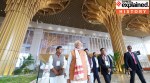
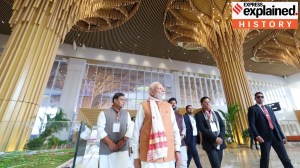
 Smart Cities: File photo – PM Narendra Modi and Venkaiah Naidu at the launch of Smart Cities Mission (Atal Mission for rejuvenation and urban transformation) and Housing for All (Urban) in New Delhi on June 25, 2015. (Source: Express photo by Ravi Kanojia)
The refrain from the beginning has been that there would be no politics in the selection of Smart Cities. The union government maintained that 100 cities will be chosen for the mission purely based on how much the cities score on certain parameters.
On Tuesday, the list burgeoned to 109 to include seven capital cities and two cities in Jammu & Kashmir and Uttar Pradesh each.
And therein lies the tale of how politics did, after all, sneak into the mission.
Officials at the ministry of Urban Development concede that despite the stated objectivity of the mission selection process, geopolitics cannot be wished away. The central government had assigned each state a quota for making nominations based on 50:50 weightage for their urban population density and the number of statutory cities.
Accordingly, all union territories, the North Eastern States, small states and states with fewer urban areas such as Kerala and Jammu and Kashmir are each allowed only one Smart City while Uttar Pradesh could nominate the maximum numbers at 13 Smart cities.
READ: Smart Cities list increased: Lucknow tops, Ranchi, Faridabad, Shimla also make the cut
True to their word, when the list of 98 Smart City contenders was first announced in August 2015, it was based on the nomination sent by the states, of the best performing cities, within their set quota.
However, the name of one city each from Jammu and Kashmir and Uttar Pradesh, is missing from the list. The Jammu and Kashmir government wanted Srinagar as well as Jammu to be included considering the political sensitivity of the region. In UP, both Raebareli and Meerut scored 75 out of the 100 marks. The initial choice of the Akhilesh Yadav government was Raebareli, the parliamentary constituency of Congress President Sonia Gandhi.
READ: How Lucknow was selected as a Smart City
This led to the BJP MP from Meerut officially lodging his protest with Naidu following which the latter decided to keep the matter in abeyance. Less than a month after she was sworn in as the J&K CM of the BJP-PDP alliance government, Mehbooba Mufti visited union Urban Development minister Venkaiah Naidu asking for the quota to be increased to two; earlier Yadav too had met Naidu with a similar demand.
On Tuesday, Naidu announced that two cities from both states will be allowed to compete. Similarly, seven capital cities which include Patna, Shimla, Itanagar, Bengaluru and Thiruvananthapuram that didn’t score enough to make it to the list last year, have now been allowed to compete for Smart Cities mission. The newly created capital cities of Amaravati in Andhra Pradesh and Naya Raipur in Chhattisgarh have also been included in the fray. Ministry sources state that Chief Ministers of at least half of these states have personally requested the union minister to include these cities.
While political considerations have been accommodated, the problem now is that of funding which will have to be increased by another Rs 4500 crore and for that the proposal has to go back to the union cabinet. For now, ambiguity prevails as Naidu maintains that only 100 cities will be part of the competition, and in the same breath has also said that if the fiscal position improves, funds might be released for all.