5 min read


© The Indian Express Pvt Ltd



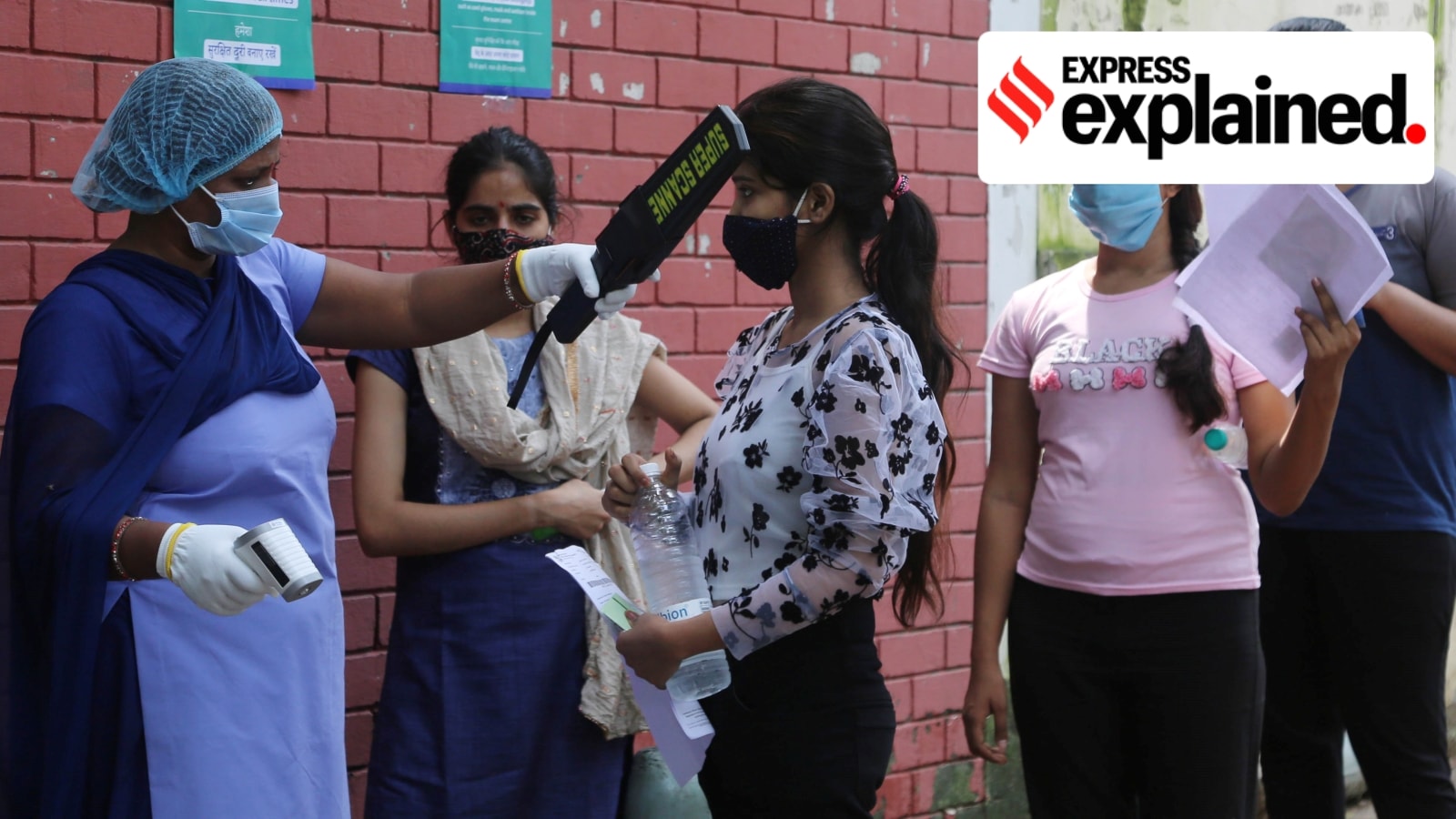 A security guard frisks candidates outside the NEET-UG exam centres. Express Archive/ Prem Nath Pandey
 A third-party review of a sample of the exam centres where NEET-UG was conducted on May 5 found glaring gaps. As reported first by The Indian Express, these included the absence of the mandated two working CCTVs in exam rooms and instances of strong rooms, where question papers are stored at the exam centre, being left unguarded.
The findings of the review, which were shared with the National Testing Agency (NTA), have brought to the spotlight the agency’s process of selecting centres for the examination.
This year’s NEET-UG exam saw a sharp increase in the number of exam centres.
The undergraduate medical entrance test was conducted at 4,750 exam centres across the country in 571 cities, including 14 cities abroad. In 2023, 4,097 centres in 499 cities were designated to conduct the test on behalf of NTA. The year before, the total number of exam centres was 3,547 in 497 cities.
According to NTA and Education Ministry sources, the rationale for the increase in the total number of test centres was to ensure more coverage of rural areas so that candidates from rural regions do not have to travel long distances before the day of the exam.
The NTA identifies test centres for a pen-and-paper public exam from a base list of centres it already has. This list consists of government schools that have been conducting exams on behalf of bodies such as CBSE and NTA, without reporting any problems or malpractices in the past.
If the base list does not have enough schools, NTA can enlist AICTE-recognised institutes and colleges. Even if a school or higher education institution has successfully conducted exams for NTA in the past, the agency must seek their consent every year. This process takes place on NTA’s dashboard, where the base list of all test centres is uploaded, and they must give their consent to hold an exam on NTA’s behalf.
But every time new centres are added to this list, there is a set of criteria that they have to fulfill. In fact, this criteria is also applicable to the existing centres, and the NTA employs a third party to review a sample of all exam centres, a little ahead of the day of the exam.
INFRASTRUCTURE: Centres must have appropriate infrastructure, such as classrooms, exam halls, and meet specific criteria regarding seating capacity, lighting, ventilation, and security. An integral part of NTA’s evaluation is comparing the actual candidate seating capacity of the centre against the sanctioned capacity, to prevent overcrowding.
NO CONFLICT OF INTEREST: Another key criterion set forth by the NTA is that exam centres must not be operated by coaching institutes or similar chains. This aims to prevent conflict of interest and ensure a fair testing environment for all candidates. The third-party background checking agency is responsible for verifying the independence of the exam centres from any coaching institutes.
ACCESSIBILITY: The third party also evaluates the ease of access to the centre, ensuring that it is accessible for all candidates, including those with disabilities. The availability of clean facilities, essential life safety equipment, and other necessary amenities such as wall clocks in every room, and availability of big enough benches which can accommodate adults, etc. are observed during the check.
In addition to these criteria, the NTA also considers past experiences with regards to proposed exam centres. Usually, centres are blacklisted if they do not have a good past record, an NTA official told The Indian Express.
The NTA also requests a virtual tour of the centre to ensure that the SoP is being followed. In addition to checking exam rooms, this virtual tour also checks if the proposed exam centre has a male and female candidates’ frisking places, whether the bathrooms / toilets for male / female candidates are hygienic etc. Presence of security personnel at gates and availability of a ramp for PwD candidates is also checked.
A centre is given the nod to conduct the exam only if the exam centre passes the quality check in all the above mentioned parameters. This year, a third-party agency was appointed by the NTA for pre-exam, during exam and post-exam audit.