


Tags:


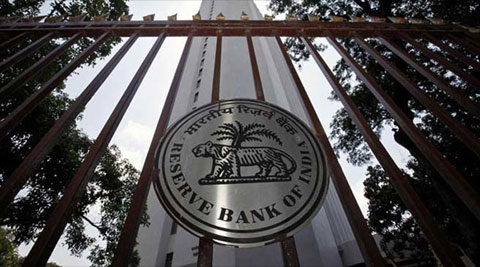
Two years after the East Asian currency crisis of 1997, the IMF adopted a code of good practices on transparency in monetary and financial policies, which was endorsed by many countries, including India. In December 1999, the Reserve Bank of India constituted a standing committee on international financial standards, chaired alternately by Deputy Governor Y V Reddy and Economic Affairs Secretary C M Vasudev.
But some of the main recommendations on monetary policy management came from an advisory group headed by former RBI Governor M Narasimham. Much of what the group said is relevant in the context of the current debate on a Monetary Policy Committee or MPC, based on a revised draft of the Indian Financial Code released last week.


Many central banks had, at that time, adopted inflation targeting as a policy goal. The suggestion in India came almost five years after the move, in May 1997, by Tony Blair’s Labour government in the UK to free the Bank of England on setting interest rates.
The group also recommended that the government consider setting RBI a single objective for monetary policy, the inflation rate, on the lines of what governments elsewhere had done. Earlier this year, the government and RBI concluded a monetary policy framework agreement outlining an inflation target, to be achieved over three years. In 2002, the group had said that the inflation rate target could be defined, illustratively, as an average over a three-year period starting from a year earlier. The inflation target should be in a range, it said — an average over a stipulated period, with tolerance limits, beyond which interest rates could be raised or lowered, as required. Unlike the 2015 agreement, the 2002 recommendation pushed for setting the inflation target based on Wholesale Price Index (WPI) inflation.
The advisory group recommended changes to the law that had created the Reserve Bank, arguing that transparency in monetary policy and greater responsibility and accountability for the central bank would be meaningful only if the RBI Act was amended to give it greater autonomy.
While marking out the RBI’s responsibilities, the group argued for a reasonable security of tenure for its top management, which, it said, was essential if the bank was to have specific monetary policy responsibilities, and be accountable to the wider public. The RBI Governor is normally appointed for a three-year term that can be extended; though, like other regulatory chiefs, he can be fired by the government. In the US, by contrast, Senate endorsement is needed for the appointment of the head of the Federal Reserve.
The group suggested the setting up of a seven-member MPC, consisting of the RBI Governor, the three Deputy Governors, and three other members drawn from the RBI Central Board, with some executive directors and departmental heads dealing with monetary policy, internal debt, exchange rate management and economic analysis as permanent invitees. The tenure of non-executive members, the group said, could be coterminous with that of the Central Board directors — four years, with a clause for reappointment.
Some of these terms are now mirrored in the revised draft of the Indian Financial Code. To guard against possible conflicts of interest, the group recommended that the three Board members on the MPC should be independent professionals.
Once the single objective had been set, the advisory group said, the MPC’s remit would be clear, and RBI should have unfettered instrument freedom and be held accountable for attaining this objective. An overriding provision could be included to ensure the government had the right to give a specific directive on monetary policy to the RBI, applicable for a specific time, with parliamentary consent.
Taking a cue from the group’s recommendations, the RBI under Y V Reddy formed a Technical Advisory Committee (TAC), which had external members. The approach appeared to be that since the central bank was not fully independent, obtaining external advice, though not spelt out in law, was desirable in the interest of accountability.
Minutes of the group’s meetings and, subsequently, voting patterns, were released — the effort being to improve transparency, even though the recommendations were not binding on the Governor. The TAC met before each monetary policy review. Subsequently, during D Subbarao’s time, the frequency of reviews increased to eight annually, the TAC met less, and that has been the pattern ever since.
While the Financial Sector Legislative Reforms Commission (FSLRC) report on the Indian Financial Code did, in 2013, suggest an MPC, the trigger for the government to move ahead on this recommendation appears to have been the report of a committee headed by RBI Deputy Governor Urjit Patel, appointed to review and suggest ways to strengthen the monetary policy system.
The panel recommended more internal members on the MPC, with the two external members also being decided by the bank. The conflict now triggered by the revised draft of the IFC — which has built a case for more external members in the MPC who are nominated by the government — is fast developing into an us-versus-them battle.
Significantly, central banks in the US and UK, as also the ECB, have no external members. But the members do have voting powers. One argument is that a diversity of views in an MPC helps; the counter-argument is that making views public leads to less nuanced and less informed positions. On balance, it is a huge judgment call — which will be proved right or wrong only later.
What makes the exercise less convincing, in some ways, is the fact that it comes after nearly a decade of sharp differences on policy issues between the Finance Ministry and successive RBI chiefs, and the patchy record of the government on fiscal prudence. Indeed, any government would have been on strong moral and intellectual ground to press for high levels of transparency and accountability, had its own fiscal record been stellar.
Which is why it is instructive to go back to what British Prime Minister Tony Blair had said when his government freed the Bank of England on setting interest rates.
He had seen governments calibrate interest rate movements with election cycles, Blair has recorded in his autobiography, and to him, it was not a question of whether the Governor of the Bank of England was any more or less intelligent than the Chancellor of the Exchequer. Rather, what had persuaded him and his then Chancellor, Gordon Brown, was their recognition that the decision-making process at the UK central bank was of superior objectivity.
For politicians to set interest rates was to confuse economics and politics, the long term with the short term, the expedient with the sensible, Blair wrote. It is reasoning that ought to resonate 11,000 km away, in India today.
shaji.vikraman@expressindia.com


